
Intensified drone warfare in Kordofan region marks pivotal new front line in Sudan conflict
The Sudan civil war has entered a dangerous new phase as intensified drone attacks hammer the resource-rich Kordofan region, leaving dozens of civilians dead and reshaping the battlefield.
Once concentrated in the capital Khartoum and the western Darfur region, the nearly three-year conflict has now shifted decisively toward south-central Sudan. The fight for control of Kordofan, an area rich in gold and oil, is rapidly becoming the war’s most pivotal front line.
Civilian Areas Hit in Escalating Drone Warfare
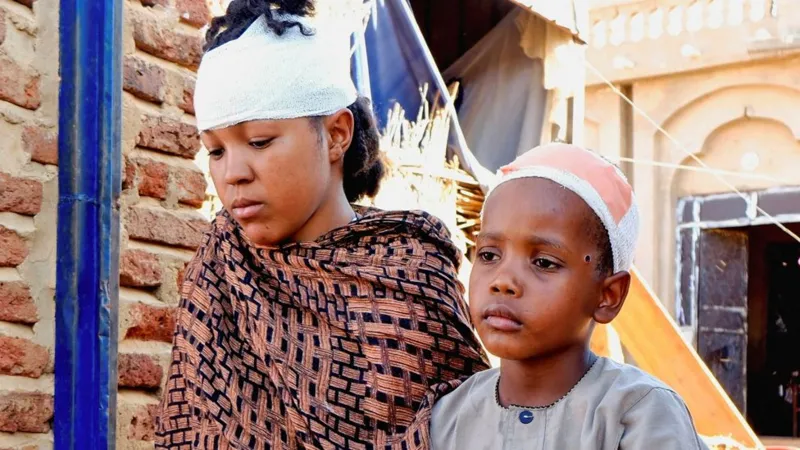
In recent weeks, near-daily drone strikes have targeted markets, health facilities, aid convoys and residential neighborhoods across North and West Kordofan. According to reports, more than 50 civilians were killed in just two days of attacks earlier this month.
The conflict pits the Sudanese Armed Forces (SAF) against the paramilitary Rapid Support Forces (RSF), and both sides face accusations of striking civilian infrastructure.
UN Human Rights Chief Volker Türk condemned the violence and urged all parties to stop targeting civilian objects and take urgent measures to protect non-combatants.
The war, which erupted in April 2023 following a power struggle between military leaders, has already become one of Africa’s deadliest conflicts for civilians. Despite US-led diplomatic efforts, fighting shows no signs of easing.
Why Kordofan Matters in the Sudan Civil War
Greater Kordofan consists of North, South and West Kordofan and serves as a strategic corridor linking Darfur in the west to central and eastern Sudan. Control of this region would allow the RSF to reconnect its stronghold in Darfur with areas closer to the Nile Valley.
The conflict intensified in Kordofan after the army regained control of Khartoum last year. The RSF later consolidated its grip on Darfur, including the capture of el-Fasher in October, shifting the war’s epicenter.
The RSF has also formed a parallel administration in western Sudan in alliance with the Sudan People’s Liberation Movement-North (SPLM-N), a long-running rebel movement based in South Kordofan. The alliance has provided the RSF with experienced fighters and strategic territory near border regions.
However, in recent weeks, the SAF has made significant advances, breaking prolonged sieges of Kadugli and Dilling in South Kordofan. UN-backed monitors said the blockades had created famine-like conditions.
High-Tech Drones and Foreign Involvement
Drone warfare has become central to the Sudan civil war.
The RSF has relied on Chinese-made long-range CH-95 drones, reportedly supplied by the United Arab Emirates, a claim the UAE denies. The Sudanese military operates drones manufactured by Turkish defense contractor Baykar, including advanced Akinci combat models. Turkey says it does not provide direct support to the SAF.
Earlier this month, Sudan’s army claimed it destroyed RSF drones and air defense systems in Kordofan and Darfur. Turkish media reported that an Akinci drone struck a Chinese-made FK-2000 air defense system in Sudan, although independent verification remains limited.
Military analysts say that if the RSF’s air defense capabilities collapse, the balance of power in the Sudan civil war could shift significantly.
Regional Tensions Rise
The fighting threatens to spill beyond Kordofan.
Recent clashes in Blue Nile State, bordering Ethiopia and South Sudan, have raised fears of a broader regional conflict. Sudan’s army has accused both neighboring countries of allowing RSF fighters to launch cross-border attacks. Addis Ababa and Juba have denied the accusations.
Investigations by international media outlets suggest Egypt has increased its involvement in recent months, concerned about RSF advances in Darfur.
Meanwhile, RSF leader Gen. Mohamed Hamdan Dagalo signaled efforts to expand operations eastward, potentially opening another front to relieve pressure in Kordofan.
Peace Efforts Falter
Earlier this month, US envoy Massad Boulos expressed hope for a ceasefire agreement by Ramadan, which began on 18 February. Instead, violence intensified.
On the first day of the Muslim holy month, a drone strike blamed on the Sudanese military hit families gathered at a water collection point in West Kordofan. Young children were among the victims.
With drone attacks intensifying and both sides digging in, the battle for Kordofan may determine the next chapter of the Sudan civil war and the fate of millions caught in the crossfire.
Source: BBC