
Saudi humanitarian support expands in Gaza as food crisis deepens during Ramadan
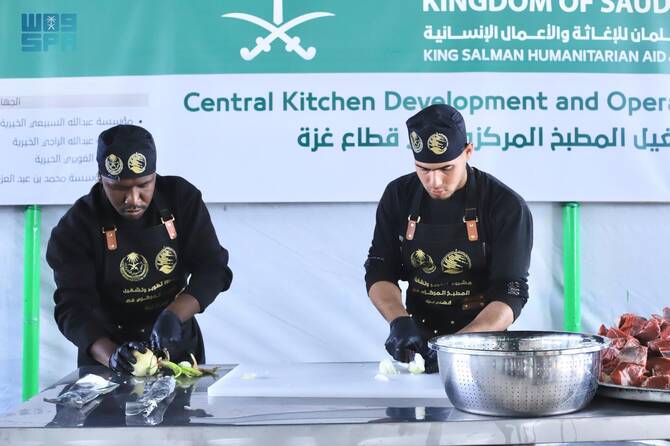
Saudi Arabia has stepped up its Gaza humanitarian aid efforts by launching a large central kitchen that is providing 24,000 hot meals daily to Palestinians in the war-affected enclave.
The kitchen, established by the King Salman Humanitarian Aid and Relief Center (KSrelief), began operations at the start of Ramadan, delivering meals to residents in central Gaza, including Deir Al-Balah and Al-Qarara.
3.6 Million Meals Planned
According to the Saudi Press Agency, the initiative aims to produce and distribute 3.6 million meals by the end of the campaign. The project will also create employment opportunities for 40 local workers, helping to support families amid the ongoing crisis.
The effort is part of the Saudi Popular Campaign for the Relief of the Palestinian People in the Gaza Strip, carried out in cooperation with the Saudi Center for Culture and Heritage.
Dr. Abdullah Al-Rabeeah, general supervisor of KSrelief, described the situation in Gaza as “one of the largest humanitarian crises in history.”
He noted that 90 percent of Gaza’s population lives below the poverty line, lacking reliable access to food, water, medicine, and basic necessities, particularly for children and infants.
Expanding Saudi Humanitarian Support
The Saudi kitchen is expected to serve more than 36,000 families and has been described as the largest central kitchen dedicated to displaced people in Gaza.
Saudi Arabia was among the first countries to launch a comprehensive relief effort following the escalation of violence in October 2023, delivering humanitarian aid through more than 80 aircraft, dozens of sea vessels, and land convoys via Jordanian and Egyptian crossings. KSrelief also carried out airdrops to ensure assistance reached Gaza when traditional delivery routes were inaccessible.
As the humanitarian situation in Gaza continues to deteriorate, Saudi officials say the Kingdom remains committed to expanding its Gaza aid operations and addressing urgent needs on the ground.
Source: Arab News