
Deadly Landslide at Congo Coltan Mine After Heavy Rains Leaves Children Among Victims
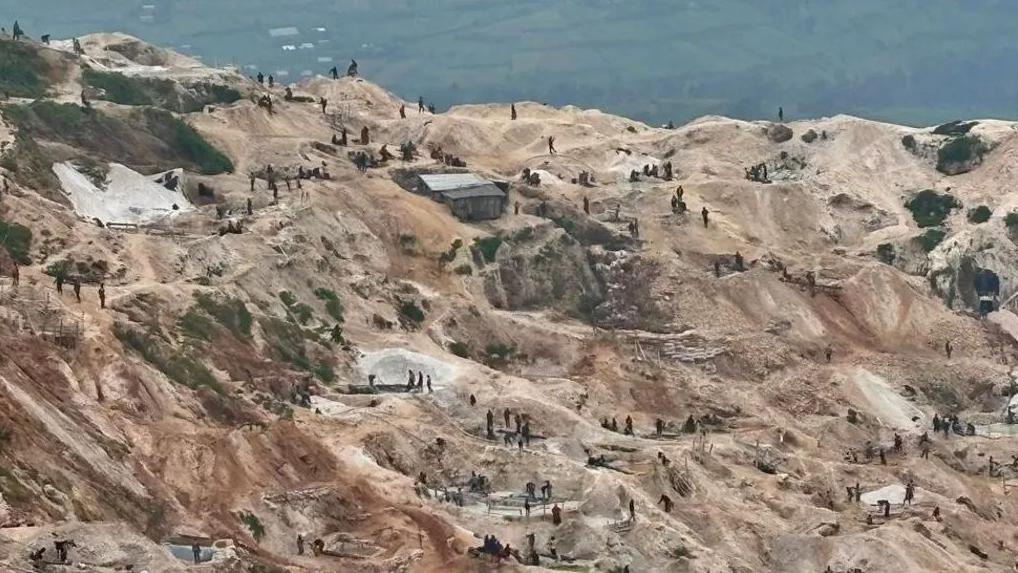
A deadly landslide at a coltan mine in the Democratic Republic of the Congo (DRC) has killed more than 200 people, including around 70 children, after heavy rains triggered the collapse at the Rubaya mining site in the country’s east.
The DRC Ministry of Mines confirmed the tragedy on Wednesday, stating that the victims were working at or near the Rubaya coltan mine in North Kivu province when the ground suddenly gave way. Several injured miners were rushed to medical facilities in Goma, the provincial capital.
Conflicting Claims Over Cause of Collapse
While government officials say the disaster was caused by heavy rainfall, a senior figure from the M23 rebel group, which currently controls the mining area, disputed the report.
Fanny Kaj, an official linked to the M23 movement, claimed the incident was not a landslide but the result of bombings, adding that the death toll was far lower.
“There was no landslide; there were bombings. The death toll isn’t what people are saying. It’s simply about five people who died,” Kaj said.
However, eyewitnesses and miners working at the site described a far more devastating scene.
Miners Describe Massive Casualties
Ibrahim Taluseke, a miner who helped search through the debris, said workers had already recovered more than 200 bodies.
“We are afraid, but these are lives that are in danger,” Taluseke told the Associated Press. “The owners of the pits do not accept that the exact number of deaths be revealed.”
Officials from the Congo River Alliance (AFC)/M23, a Rwanda-backed rebel group controlling the mine since 2024, said operations at the site had already been discouraged due to safety concerns and unstable ground conditions.
They added that the disaster likely occurred due to days of heavy rainfall, which weakened the mining pits.
Repeated Disaster at Key Global Mineral Site
This is not the first deadly collapse at the Rubaya mine. In late January, another landslide triggered by heavy rain killed more than 200 people, with Congolese authorities blaming the tragedy on illegal mining operations and poor safety standards.
The Rubaya mine is globally significant, producing around 15 percent of the world’s coltan. The mineral is processed into tantalum, a critical material used in mobile phones, computers, aerospace components, and gas turbines.
The site has also recently gained international attention after the Congolese government offered key mining assets to the United States under a minerals cooperation framework.
As recovery efforts continue, concerns remain over safety conditions, illegal mining, and the human cost of extracting critical minerals in one of the world’s most resource-rich but conflict-affected regions.
Source: Al Jazeera