
Rising Israel-Hezbollah Conflict Raises Fears of Wider Middle East War
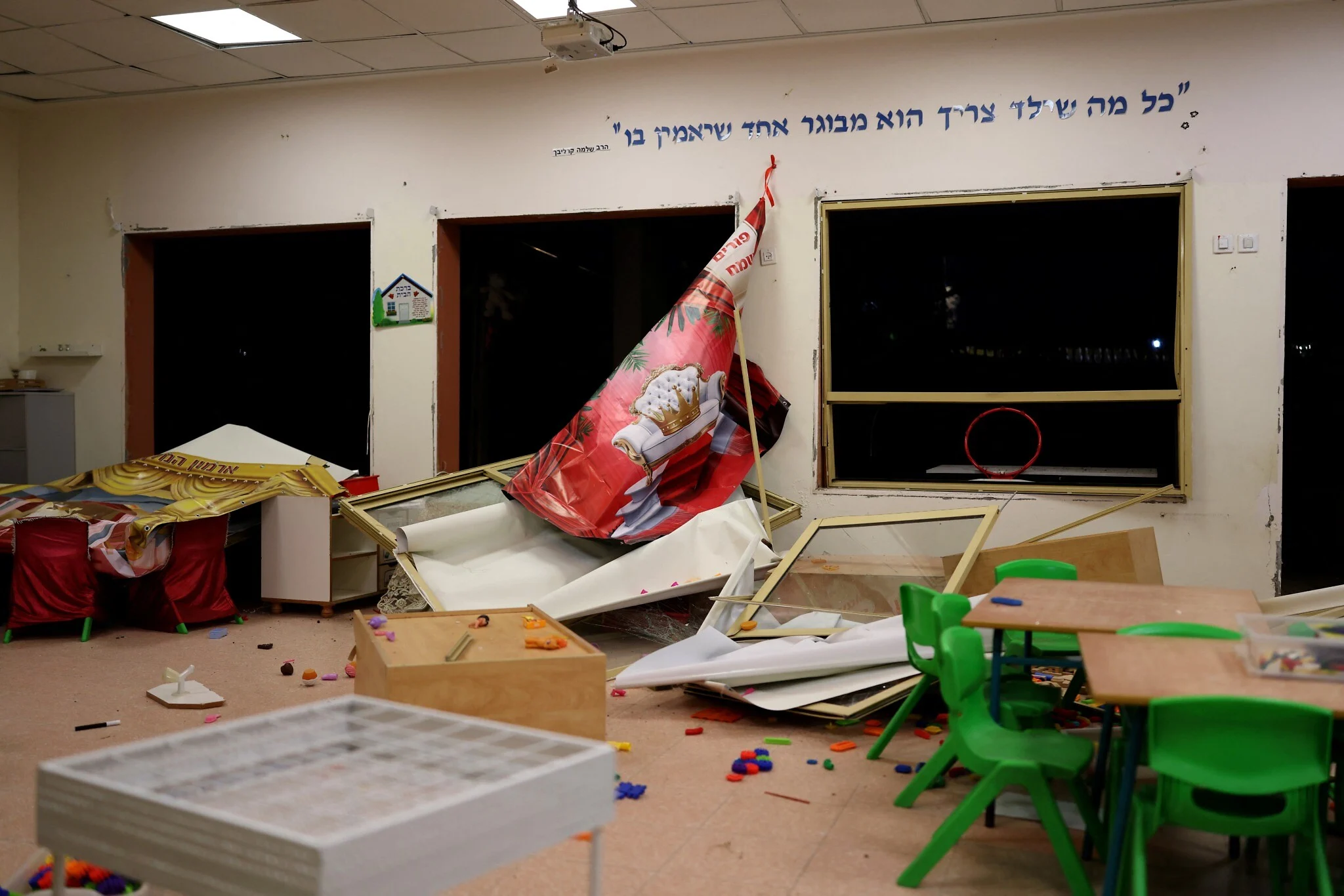
A Hezbollah missile attack struck central Israel on Monday, injuring 16 people and damaging a daycare facility and infrastructure, according to Israeli authorities. The incident marks one of the deepest strikes into Israel since hostilities between Israel and the Iran-backed militant group intensified last week.
The Israel Defense Forces (IDF) said several missiles launched from Lebanon were intercepted by air defense systems, while others landed in open areas. However, one missile struck the city of Ramle, causing injuries and property damage.
Emergency responders from Magen David Adom confirmed that 14 people were lightly wounded in Ramle. The missile impact also damaged a daycare center, raising concerns about civilian safety. Authorities noted that no warning sirens sounded before the strike, and the military’s Home Front Command is investigating the incident.
Elsewhere in central Israel, a missile hit an open area near the Mateh Yehuda Regional Council, causing minor injuries to two people and damage to local infrastructure, police said.
Hezbollah Claims Strategic Targets
Hezbollah claimed responsibility for the attack, stating that it launched a barrage of “precision missiles” targeting the IDF Home Front Command headquarters in Ramle, known as Rehavam Base, as well as a satellite communications station in the Haela Valley near Beit Shemesh.
The militant group alleged that the satellite facility belonged to the Israeli military’s Communications and Cyber Defense Division. However, officials clarified that the site is actually a civilian commercial installation operated by European satellite company SES.
In response, the IDF said it destroyed three Hezbollah missile launchers used in the attack within an hour through targeted airstrikes in Lebanon.
Escalation Linked to Iran Tensions
Hezbollah has intensified rocket and missile attacks on Israel since last week, claiming they are retaliation for the killing of Iran’s Supreme Leader, Ali Khamenei.
Israel has responded with hundreds of strikes on Hezbollah positions across Lebanon, including dozens of targets in Beirut. The IDF has also pushed ground forces deeper into southern Lebanon, describing the move as a defensive operation to protect northern Israeli communities.
Lebanese media reported that an Israeli airstrike hit a building linked to the Hezbollah-affiliated Al-Qard al-Hasan (AQAH) financial organization in the village of Aaqbiyeh, south of Sidon.
Before the strike, the IDF issued evacuation warnings for the building and surrounding areas, stating that AQAH operates as a financial network used by Hezbollah.
Founded in 1983, AQAH presents itself as a charitable organization offering interest-free loans under Islamic financial principles. However, the US Treasury Department sanctioned the group in 2007, accusing it of acting as a front for Hezbollah’s financial operations and helping the group access international banking systems.
Fears of Increasing Attacks
Israeli defense officials warned Prime Minister Benjamin Netanyahu and Defense Minister Israel Katz that Hezbollah may intensify rocket and drone attacks in the coming days.
According to Israeli media reports, the group could launch larger volumes of missiles and UAVs targeting strategic facilities in an attempt to distract Israel from its ongoing confrontation with Iran.
Security officials believe Hezbollah is attempting to wear down Israel’s civilian front, particularly in northern regions, while also escalating pressure on the Israeli military.
Diplomatic Efforts and Possible Negotiations
Amid the rising violence, reports suggest the Lebanese government has explored the possibility of direct negotiations with Israel to end the conflict.
Sources told Axios that Lebanese officials approached US envoy Tom Barrack, asking him to mediate talks with Israel that could potentially lead to a ceasefire or broader peace agreement.
The proposal reportedly included ministerial-level discussions in Cyprus. However, both Israel and the United States reacted skeptically, with officials questioning whether Lebanon could realistically disarm Hezbollah.
Meanwhile, Lebanese President Joseph Aoun called for international support to disarm Hezbollah and establish a full truce with Israel. His plan includes direct negotiations under international supervision.
Hezbollah leaders, however, rejected such efforts. Mohamed Raad, head of the group’s parliamentary bloc, said the organization would “defend its existence whatever the cost.”
Regional Tensions Continue to Rise
The current escalation follows a November 2024 ceasefire that ended a year of clashes between Israel and Hezbollah. That conflict began after Hamas launched its attack on Israel in October 2023, triggering the Gaza war.
Despite the ceasefire, Israel continued to strike Hezbollah positions, accusing the group of violating the agreement and threatening Israeli communities near the border.
With missile attacks expanding deeper into Israel and Israeli forces operating inside Lebanon, analysts warn that the Israel–Hezbollah conflict could grow into a broader regional crisis if diplomatic efforts fail.
Source: The Times of Israel