
IDF Hits Tehran Nuclear Site as Iran Targets Gulf Shipping
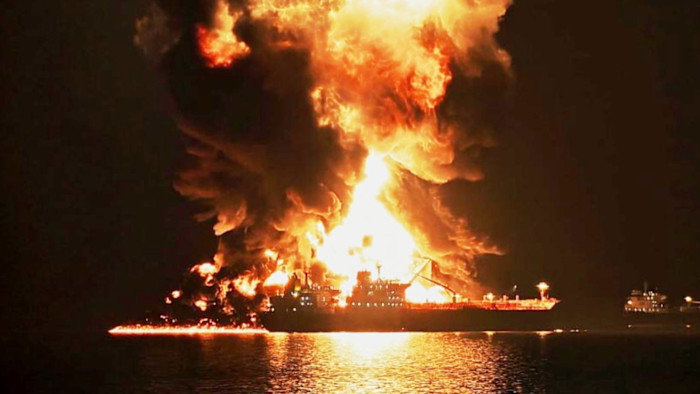
Tensions in the Middle East escalated sharply on Thursday as Iran struck two oil tankers in the Gulf and launched five missile barrages at Israel, amid ongoing U.S.-Israeli strikes on Iranian targets. At least one crew member was killed, and dozens were rescued as regional fears over global oil supply disruptions mounted.
The conflict, now in its 13th day, began on February 28 with U.S.-Israeli airstrikes on Iran, and quickly expanded when Iran and its Lebanese proxy Hezbollah fired rockets at Israel. Tehran has warned of a prolonged war capable of disrupting the world economy.
“Iran has continued its missile attacks, targeting shipping and infrastructure across the Gulf,” said a regional security analyst. “The Strait of Hormuz is increasingly at risk.”
Oil Tankers Targeted Near Iraq
The two vessels attacked near Iraq included the Thai-flagged Mayuree Naree. One crew member was killed, 38 rescued, and others remain missing. Iran acknowledged striking one tanker, while Iraq believes both attacks were Iranian operations.
Operations at Iraqi oil terminals were temporarily halted, and Oman suspended operations at its Salalah port after drone attacks damaged fuel tanks. Shipping around the Strait of Hormuz also came under renewed threats, with a container ship near the UAE hit by an “unknown projectile,” causing a minor fire but no casualties.
Israel Strikes Iranian Nuclear Site
The Israel Defense Forces (IDF) reported strikes on a critical nuclear site near Tehran known as the Taleghan compound, which Israel claims is part of Iran’s alleged nuclear weapons development program, AMAD. Israel said the site had been rehabilitated since a previous attack in October 2024, and recent strikes were aimed at damaging Iran’s nuclear capabilities.
The IDF also conducted airstrikes in Tehran, targeting facilities linked to missile and explosives programs. Iran continues to deny developing nuclear weapons, though it has enriched uranium beyond peaceful thresholds and obstructed international inspections.
Regional Attacks and Civilian Impact
Iranian strikes extended across the Gulf, with incidents reported in Bahrain, Kuwait, UAE, and Saudi Arabia. Explosions and drone attacks damaged residential areas, fuel tanks, and airports, though most caused minor injuries or structural damage.
In Israel, the Health Ministry reported 179 injuries over 24 hours, most sustained during evacuations and sheltering, bringing total war-related hospitalizations since February 28 to 2,745, including 14 deaths.
Global Oil Prices Surge
The attacks on tankers and Gulf infrastructure have sent crude prices soaring, with Brent crude surpassing $100 a barrel. The International Energy Agency (IEA) announced the release of 400 million barrels from strategic reserves, while the U.S. followed with 172 million barrels from its reserve. Despite these releases, the Gulf region’s total oil output is down 10 million barrels per day, marking the largest supply disruption in global oil market history.
U.S. Military Operations in Iran
The U.S. military released footage showing strikes on Iranian cargo planes, including C-130 Hercules, P-3 Orion, and Il-76 aircraft, demonstrating ongoing efforts to degrade Iran’s air capability. CENTCOM stated that U.S. forces are methodically dismantling Iran’s military aviation assets, emphasizing the intensity and scale of operations.
Source: The Times is Israel