
Caspian Sea attack targets Iran-Russia weapons trade, slowing drone and artillery shipments
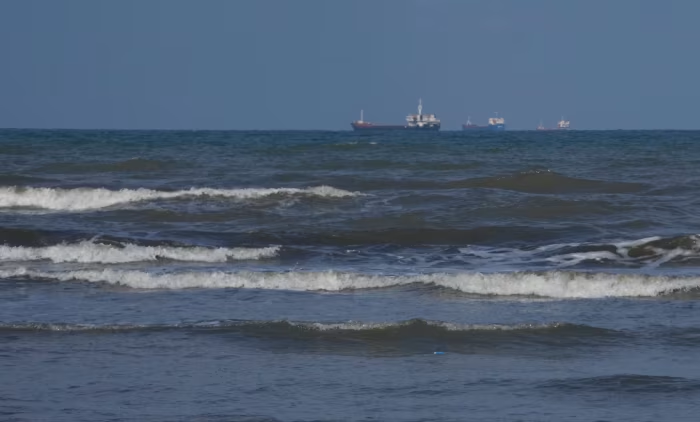
TEL AVIV: Recent Israeli airstrikes on the Caspian Sea have targeted a critical Iranian-Russian shipping route, disrupting the transfer of weapons and military supplies between the two countries, according to The Wall Street Journal. The strikes focused on the port city of Bandar Anzali, hitting Iranian Navy vessels, a corvette, missile boats, auxiliary ships, a shipyard, and a command center.
The route has long been used by sanctioned countries to transfer drones, artillery shells, and ammunition. Iran has supplied Russia with Shahed drones and over 300,000 artillery shells since the start of the war in Ukraine in February 2022, while Russia has provided Iran with satellite imagery, drone technology, and spare parts to improve Shahed drone capabilities.
The Israeli Defense Forces (IDF) said the strikes aimed to weaken Iran’s military infrastructure, although Israel has not publicly acknowledged the impact on Russia. Analysts note that Israel likely avoided mentioning Russia to maintain careful diplomatic ties.
Although the strikes are unlikely to completely halt Iran-Russia sea trade, experts say they will slow operations, forcing both countries to rely on alternate ports. The move comes amid a complex regional conflict, including Israel’s ongoing military actions against Iran and US interests, as well as tensions over Iran’s nuclear program at Bushehr.
Russia’s government has expressed concern over the Caspian Sea strikes. Foreign Minister Sergei Lavrov spoke with Iranian counterpart Abbas Araghchi, warning of the “dangerous spread of conflict” and the potential risks to Russian personnel and the environment. Kremlin spokesman Dmitry Peskov added that any escalation in the Caspian Sea region would be viewed “extremely negatively” by Moscow.
Despite the rising tension, Israel continues to maintain a cautious stance toward Russia, with regular communications between Prime Minister Benjamin Netanyahu and President Vladimir Putin focusing on Iran and Syria, where Moscow supports Bashar al-Assad’s regime.
Experts say the strikes may temporarily slow weapons transfers, but the broader Iran-Russia partnership, particularly in military and drone collaboration, is likely to continue, albeit at a reduced pace.
Source: The Times of Israel & WSJ