
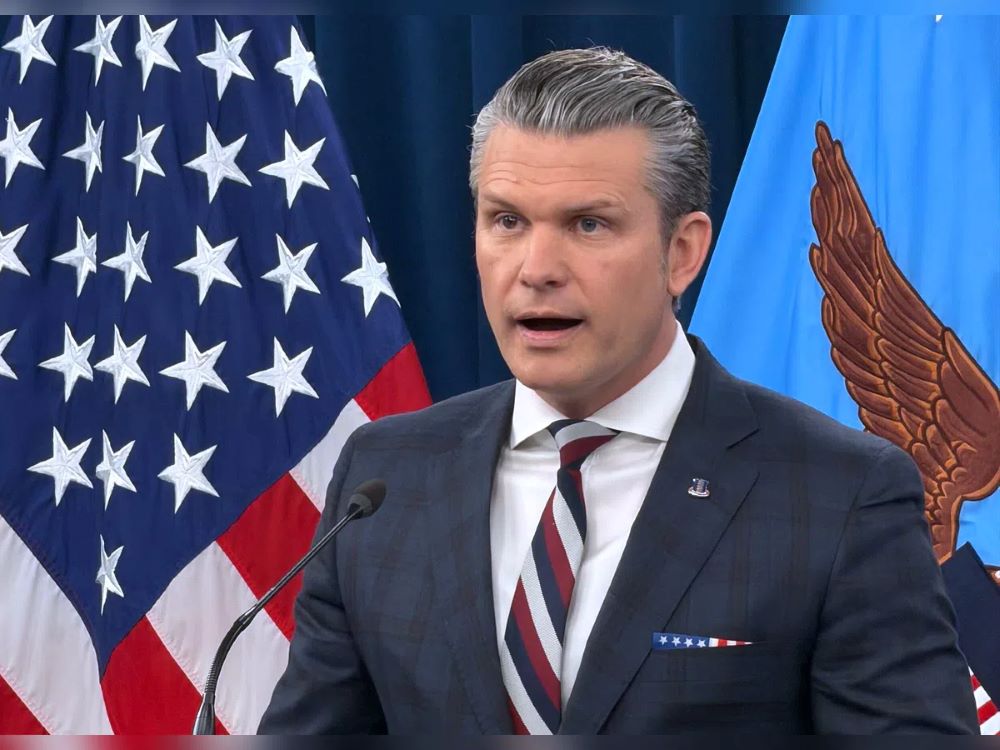
US Defense Department rejects report of Hegseth broker seeking defense investment before Iran war
The Pentagon has firmly denied allegations that a broker connected to US Defense Secretary Pete Hegseth sought to make a multimillion-dollar defense investment ahead of the Iran war, calling the report “false and fabricated.”
The US Department of Defense on Monday demanded an “immediate retraction” of a report published by The Financial Times, which claimed that a wealth manager associated with Hegseth had approached BlackRock about investing in a defense-focused fund shortly before the outbreak of hostilities.
According to the report, the proposed investment involved an exchange-traded fund (ETF) with holdings in major defense contractors such as Lockheed Martin and Northrop Grumman. However, the broker at Morgan Stanley ultimately did not proceed with the investment, reportedly because the fund was not yet available for purchase.
Pentagon spokesman Sean Parnell strongly rejected the claims in a public statement, saying: “This allegation is entirely false and fabricated. Neither Secretary Hegseth nor any of his representatives approached BlackRock about any such investment.”
Parnell further described the report as a “baseless” and “dishonest smear”, emphasizing that Hegseth and the Defense Department remain committed to strict ethical standards and full compliance with all laws and regulations.
The report has surfaced amid growing scrutiny over suspicious financial activity linked to the Iran conflict, with speculation that individuals with insider knowledge could be attempting to profit from military developments. However, there is currently no independent confirmation of the claims regarding Hegseth.
Market data also suggests that even if such an investment had occurred, it may not have yielded gains. While the iShares Defense Industrials Active ETF has seen a 25% rise over the past year, it has dropped nearly 13% since the US-Israel strikes on Iran began on February 28.
As of now, BlackRock, Morgan Stanley, and The Financial Times have not issued further comments, and the situation remains under close observation.
Source: Al Jazeera