
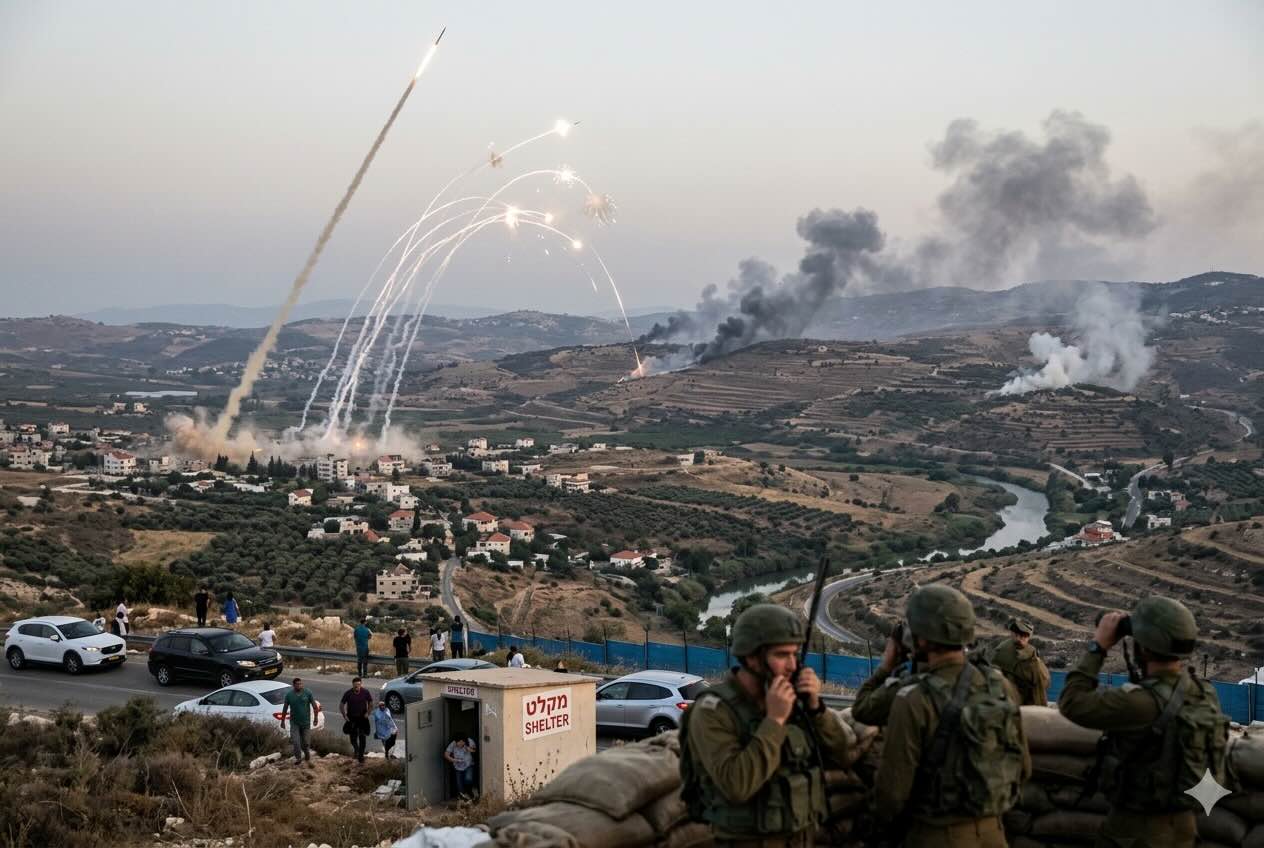
Tactical escalations reported south of the Litani River as Israel expands its “search and destroy” mission.
Published: April 14, 2026 Last Updated: 18:45 GMT
By Global War News Editorial
The border region between Israel and Lebanon has seen a sharp intensification of hostilities over the last 24 hours. Hezbollah has launched one of its most expansive rocket barrages of the year, targeting urban centers across Northern Israel, while Israeli ground forces report the “widening” of their operations in the rugged terrain south of the Litani River.
According to the Israeli Defense Forces (IDF), more than 150 projectiles were fired from Lebanese territory on Tuesday, with several impacts reported in the Galilee panhandle and the port city of Haifa. While the Iron Dome aerial defense system reportedly intercepted the majority of the incoming fire, Magen David Adom (Israel’s national emergency service) confirmed that several civilians were treated for shrapnel injuries and smoke inhalation.
The Battle for the Central Sector
On the Lebanese side of the Blue Line, the conflict has shifted from a series of targeted raids to sustained ground engagements.
- Litani Maneuvers: Reports from the National News Agency (NNA) in Lebanon indicate that Israeli armored units have pushed further into the central sector, moving beyond the initial border villages. The IDF states these maneuvers are part of a mission to dismantle Hezbollah’s tunnel networks and launch sites that have been used to target northern Israeli communities.
- Hezbollah Resistance: Hezbollah’s media wing, Al-Manar, released statements claiming that their “Islamic Resistance” units successfully ambushed an Israeli patrol near the village of Aita al-Shaab. The group asserts it is utilizing anti-tank guided missiles (ATGMs) and short-range mortars to contest the Israeli advance.
- Casualty Disclosure: As per editorial standards, casualty figures from both sides remain unverified. The Lebanese Health Ministry reported 12 fatalities in the latest round of strikes, though they did not distinguish between combatants and civilians. The IDF has acknowledged that three soldiers were wounded in today’s skirmishes.
Regional Displacement and Humanitarian Impact
The escalation is compounding an already severe humanitarian crisis.
- Civilian Flight: According to the UN Refugee Agency (UNHCR), an additional 40,000 people have fled Southern Lebanon in the past 48 hours as the fighting moves closer to major towns like Tyre.
- Northern Israel: In Israel, municipal authorities in Kiryat Shmona and Metula have issued “stay in shelter” orders, with approximately 80,000 residents already displaced from the border region for several months.
- Infrastructure Damage: Satellite imagery analyzed by the United Nations Satellite Centre (UNOSAT) shows significant damage to agricultural lands and power infrastructure on both sides of the border, leading to widespread electricity outages in Southern Lebanon.
Analysis: The “Security Buffer” Strategy
Observers note that the Israeli government appears to be pursuing the creation of a physical “security buffer” south of the Litani River. By pushing Hezbollah’s elite Radwan units back toward the river line, the IDF aims to fulfill the long-stalled requirements of UN Security Council Resolution 1701.
However, analysts from the International Institute for Strategic Studies (IISS) suggest that a deeper ground incursion carries the risk of a “mission creep.” The more territory the IDF attempts to hold, the more vulnerable its supply lines become to the guerrilla tactics that Hezbollah has refined over decades. Conversely, Hezbollah’s decision to intensify rocket fire—even as its border infrastructure is targeted—signals to the Israeli leadership that the group retains significant “second-strike” capabilities despite the ongoing ground pressure.
What to Watch
The primary concern for international mediators is whether the fighting will expand into a full-scale assault on the city of Tyre or the Bekaa Valley. While the U.S. and France continue to advocate for a “diplomatic off-ramp,” the current momentum on the ground suggests that both parties are currently prioritizing tactical gains over a return to the negotiating table.
Sources: Reuters, Associated Press, Al-Manar News, IDF Official Press Service, National News Agency (NNA) Lebanon, UNHCR Situation Report, Magen David Adom.
This article is based on publicly available reporting from named international news agencies and attributed official statements. All claims about ongoing events are attributed to their original sources. Analysis sections represent the editorial interpretation of reported facts and do not constitute advocacy for any party to the described conflict. AI tools may be utilized for image generation to assist in explaining complex concepts, as well as for refining grammar, spelling, and other linguistic enhancements. However, all original content is produced, fact-checked, and revised by the editorial team. This publication does not take political positions on active military conflicts.