
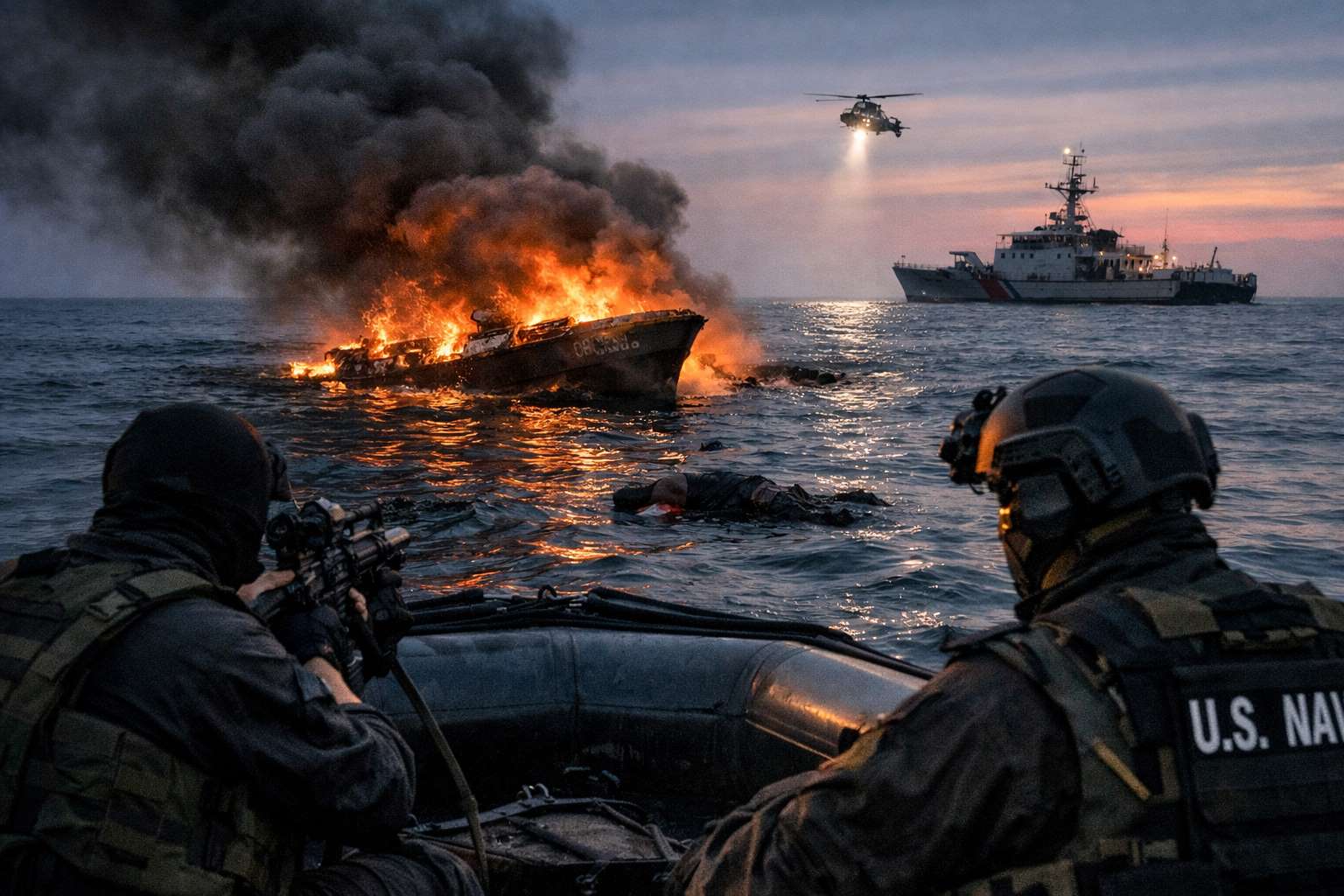
Humanitarian organizations express concern over “extrajudicial” actions as the death toll from the Trump administration’s anti-narcotics campaign surpasses 170.
April 16, 2026
Last Updated: 09:15 AM
By Staff Writer, Global War News
The United States military has confirmed a third lethal engagement in the Eastern Pacific within the span of four days, reporting the deaths of three individuals following a strike on a vessel on Wednesday. In a statement released by the U.S. Southern Command (SOUTHCOM) on the social media platform X, officials alleged that the targeted vessel was operated by “Designated Terrorist Organizations,” though the specific groups were not identified by name.
The strike is the latest in an intensified maritime campaign by the administration of President Donald Trump, which has increasingly utilized military assets to intercept vessels suspected of transporting narcotics toward the North American market. According to official reports, more than 170 people have been killed in similar operations since September 2025.
Escalation of Maritime Force
Wednesday’s operation follows a pattern of high-frequency strikes in the region this week. On Tuesday, the U.S. military reported four fatalities in a separate Eastern Pacific engagement, while a strike on Monday resulted in two deaths. SOUTHCOM described those killed in the most recent action as “male narco-terrorists” and stated that no U.S. military personnel were harmed during the encounter.
“Intelligence confirmed the vessel was transiting along known narco-trafficking routes in the Eastern Pacific and was engaged in narco-trafficking operations,” the SOUTHCOM statement read. The military did not provide specific details regarding the evidence used to determine the vessel’s cargo or the affiliation of the crew prior to the application of lethal force.
Legal and Human Rights Objections
The administration’s shift toward the use of military strikes against suspected drug traffickers has drawn sharp criticism from legal experts and international human rights advocates. Organizations such as Human Rights Watch have formally characterized these actions as “unlawful extrajudicial killings,” arguing that suspects should be apprehended and tried under civilian or international maritime law rather than being targeted with military munitions.
The American Civil Liberties Union (ACLU) has similarly challenged the administration’s rhetoric, describing the claims made against those targeted as “unsubstantiated.” Critics argue that the designation of “narco-terrorist” is being used to bypass traditional law enforcement protocols, raising significant questions regarding the legality of these operations under both U.S. and international law.
Analysis: The Militarization of the “War on Drugs”
The current strategy represents a significant departure from previous decades of U.S. maritime interdiction, which generally prioritized the seizure of vessels and the arrest of crews. Analysts suggest that the shift to lethal strikes reflects a “warfooting” approach intended to act as a high-stakes deterrent. However, observers note that this approach carries substantial diplomatic risks, particularly with regional partners in Central and South America who may view these unilateral strikes as a violation of sovereign maritime rights.
From an economic perspective, the militarization of these trade routes has led to increased insurance premiums for commercial shipping in the Eastern Pacific. While the U.S. military maintains that its targets are strictly criminal in nature, the potential for misidentification in high-traffic corridors remains a primary concern for maritime industry analysts.
Regional Impact and Accountability
As the death toll continues to rise, there are growing calls from members of Congress for greater transparency regarding the “intelligence” cited by SOUTHCOM. To date, the administration has released limited forensic evidence following these strikes, often citing national security and the protection of classified sources as reasons for the lack of detailed public reporting.
The U.S. Southern Command has reiterated its stance that these operations are a necessary component of national security, aiming to dismantle the financial foundations of transnational criminal organizations. However, with 170 confirmed deaths in seven months and no sign of the pace slowing, the legal debate over the boundaries of military authority in the Eastern Pacific is expected to intensify.
Sources: This article is based on official statements from the U.S. Southern Command, reporting from Reuters, and public statements from Human Rights Watch and the American Civil Liberties Union (ACLU).
This article is based on publicly available reporting from named international news agencies and attributed official statements. All claims about ongoing events are attributed to their original sources. Analysis sections represent the editorial interpretation of reported facts and do not constitute advocacy for any party to the described conflict. AI tools may be utilized for image generation to assist in explaining complex concepts, as well as for refining grammar, spelling, and other linguistic enhancements. However, all original content is produced, fact-checked, and revised by the editorial team. This publication does not take political positions on active military conflicts.