
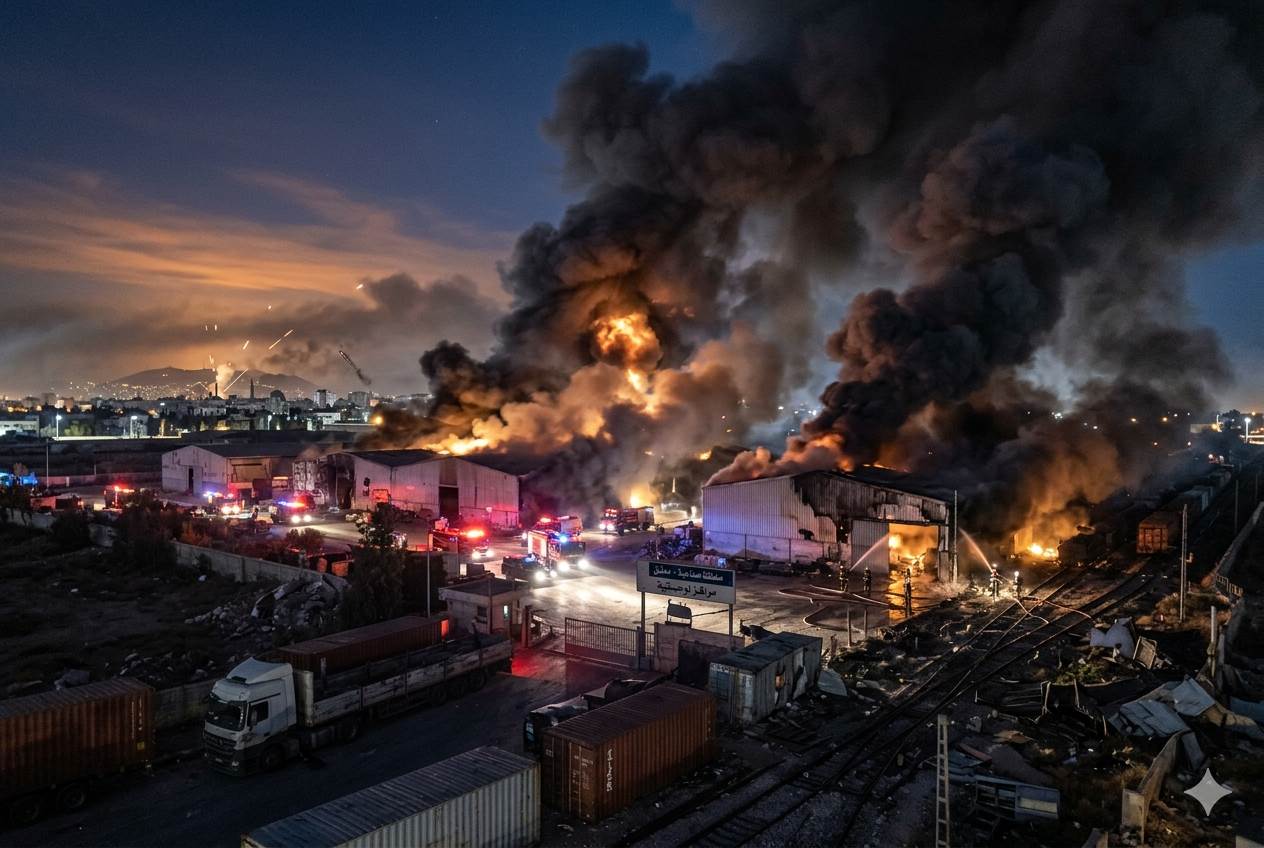
Reports from the Syrian capital indicate strikes on transport infrastructure as regional tensions involving Iran and non-state groups intensify.
April 22, 2026
Last Updated: April 22, 2026
By Global War News Editorial
The Israeli Air Force reportedly carried out a series of targeted air strikes in the vicinity of Damascus in the early hours of Wednesday. According to the Syrian state news agency, SANA, missiles were launched from the direction of the occupied Golan Heights, striking multiple locations in the southern countryside of the capital.
The Syrian Ministry of Transport has since announced a temporary suspension of operations at Damascus International Airport to assess damage to technical equipment and communication towers. While the Israeli military has not issued a specific statement regarding this morning’s mission, it has historically maintained a policy of striking infrastructure it claims is used for the transfer of advanced weaponry by Iranian-linked groups.
This latest development follows a week of heightened military activity across the Levant, occurring shortly after reports of a fragile ceasefire attempt between major regional powers.
Targeted Sites and Damage Assessments
The strikes reportedly focused on industrial and logistics zones near the town of Al-Kiswah and the outskirts of Damascus International Airport. Local residents described hearing multiple large explosions that illuminated the night sky, followed by the activation of Syrian air defense systems.
According to a report from Al Mayadeen, citing Ministry sources, the damage to the airport’s infrastructure includes radar systems and a section of the taxiway. One civilian was reportedly injured during the barrage, though this figure has not been independently verified by international medical organizations.
The Syrian Network for Human Rights (SNHR) issued a statement noting that these strikes represent a “continued escalation” that threatens the stability of the new transitional administration in Damascus, which took office following the collapse of the previous regime in late 2024.
Regional Context: The Wider Conflict
These air strikes do not occur in isolation. According to reports from Reuters and Agence France-Presse (AFP), the broader region has been gripped by a “US-Israeli war on Iran” since late February 2026. This conflict has resulted in significant disruptions to maritime shipping and a series of reciprocal strikes across several borders.
Analysts have suggested that the targeting of Damascus-area hubs is specifically aimed at disrupting land-based supply lines. With the Strait of Hormuz facing ongoing closures due to naval blockades, overland routes through Syria have become critical for the transport of industrial and military goods across the Middle East.
Analysis: Economic and Sovereignty Implications
The repeated targeting of Syrian transport hubs carries significant economic weight for the transitional government. By disabling Damascus International Airport, even temporarily, the strikes impede the flow of humanitarian aid and commercial trade necessary for the country’s post-war reconstruction.
Observers note that Israel appears to be employing a strategy of “maximum pressure” on Iranian logistics. This involves striking not just military warehouses, but the dual-use infrastructure—such as bridges, runways, and fuel depots—that facilitates movement.
“This raises questions about the long-term viability of Syrian neutrality,” says one regional defense analyst. “As long as the territory is used as a transit corridor for contested shipments, the infrastructure remains a target, regardless of the political leadership in Damascus.”
What to Watch For
It remains unclear whether the Syrian administration will seek formal international intervention through the UN Security Council. Recent reports indicate that the new government has been attempting to distance itself from regional proxy conflicts to focus on internal stability, yet the geography of the country keeps it at the center of the current friction.
In the coming days, the focus will likely shift to whether the temporary ceasefire negotiations between Washington and Tehran—which reportedly excluded Lebanese and Syrian theaters—will be expanded to prevent a total collapse of regional civil aviation.
Sources: This article is based on reporting from SANA (Syrian Arab News Agency), Al Mayadeen, Reuters, AFP, and the Syrian Network for Human Rights (SNHR).
This article is based on publicly available reporting from named international news agencies and attributed official statements. All claims about ongoing events are attributed to their original sources. Analysis sections represent the editorial interpretation of reported facts and do not constitute advocacy for any party to the described conflict. AI tools may be utilized for image generation to assist in explaining complex concepts, as well as for refining grammar, spelling, and other linguistic enhancements. However, all original content is produced, fact-checked, and revised by the editorial team. This publication does not take political positions on active military conflicts.