
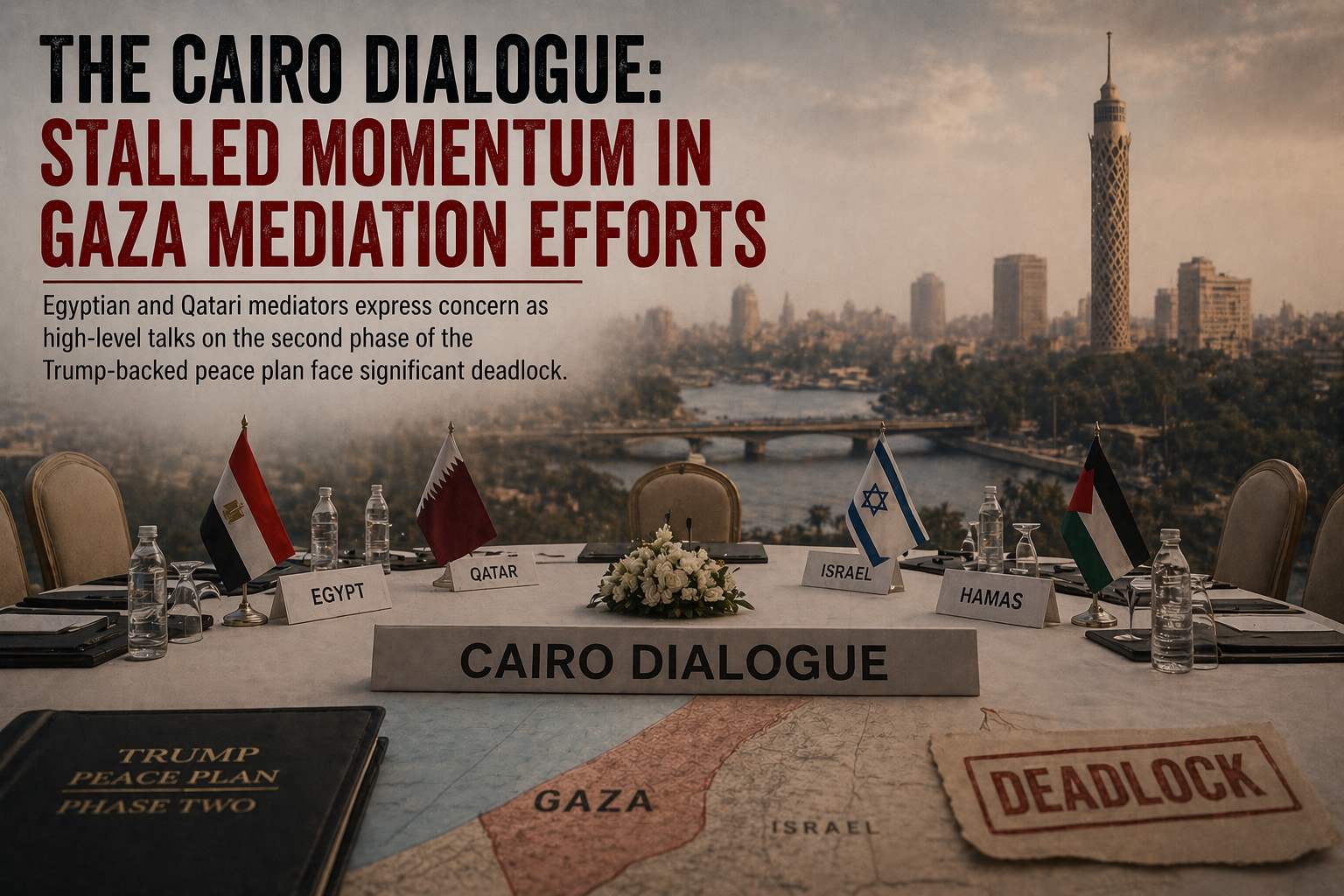
Egyptian and Qatari mediators express concern as high-level talks on the second phase of the Trump-backed peace plan face significant deadlock.
April 23, 2026
Last Updated: 16:30 GMT
By Global War News Editorial
Diplomatic efforts in Cairo have reached a critical juncture as Egyptian and Qatari mediators struggle to bridge the gap between the primary parties to the Gaza conflict. Despite the implementation of a multi-phase peace plan in late 2025, recent sessions aimed at transitioning to the “second phase” have concluded without a breakthrough. The current impasse centers on disagreements over the withdrawal of Israeli forces, the governance of the enclave, and the verification of ceasefire terms established in the first phase.
Status of the Peace Plan
According to a statement from the Egyptian Foreign Ministry on Wednesday, Foreign Minister Badr Abdelatty emphasized that regional escalations must not divert international attention from the Gaza peace plan. The plan, sponsored by the United States and endorsed by UN Security Council Resolution 2803, is currently in a transitional state between Phase One—which established a ceasefire in October 2025—and Phase Two.
According to Egyptian officials, the proposed second phase includes:
- The deployment of an international stabilization force within Gaza.
- The formal establishment of a National Committee for the Administration of Gaza (NCAG) to replace current administrative structures.
- The initiation of comprehensive reconstruction programs.
Mediators Report Lack of Tangible Progress
Despite intensive hosting of delegations, Qatari and Egyptian mediators have acknowledged significant friction. According to reports from Anadolu Agency citing Palestinian sources, recent direct discussions in Cairo involving US senior advisor Aryeh Lightstone and Hamas Gaza chief Khalil al-Hayya ended “without tangible progress.”
The primary point of contention, according to Egyptian diplomatic sources, is the alleged failure to fully implement Phase One commitments. Hamas representatives have stated publicly that Israel has not adhered to the stipulated withdrawal to the perimeter of the enclave and has continued localized military operations. Conversely, Israeli officials have reportedly expressed concerns regarding the security oversight of the proposed international force and the vetting process for members of the new administrative committee.
Governance and Hostage Exchange Concerns
The role of the NCAG remains a central theme of the Cairo Dialogue. According to UN envoy Nickolay Mladenov, discussions are focused on ensuring a “smooth transition” to this technocratic body. While the return of the remaining hostages held by Hamas was largely secured during the first phase in late 2025, mediators note that the specific terms for the long-term release of Palestinian prisoners—a key component of Phase Two—remain unresolved.
Analysts suggest that the introduction of new military corridors within the enclave, such as the Morag Corridor reported earlier this month, has complicated negotiations by further dividing the territory and raising new questions about the feasibility of a full Israeli withdrawal.
Analysis: The Threat of Regional Diversion
Observers note that the mediation is currently being overshadowed by wider regional tensions, specifically the aftermath of the brief but intense conflict in the Strait of Hormuz in February 2026. According to analysts, Egypt and Qatar are concerned that the international focus on global energy security and maritime trade is diluting the pressure required to finalize the Gaza settlement.
It remains unclear whether the “Cairo Dialogue” can survive the current atmosphere of mutual distrust. Mediators have warned that without a clear roadmap for the second phase, the October 2025 ceasefire, which has already seen numerous localized violations—may become unsustainable.
Sources: This report is based on official statements from the Egyptian Foreign Ministry and the Qatari Shura Council. Operational updates were sourced from Al-Qahera News, Middle East Monitor, and Anadolu Agency. Contextual data on the peace plan was provided by UN Security Council records and IMF regional briefings.
This article is based on publicly available reporting from named international news agencies and attributed official statements. All claims about ongoing events are attributed to their original sources. Analysis sections represent the editorial interpretation of reported facts and do not constitute advocacy for any party to the described conflict. AI tools may be utilized for image generation to assist in explaining complex concepts, as well as for refining grammar, spelling, and other linguistic enhancements. However, all original content is produced, fact-checked, and revised by the editorial team. This publication does not take political positions on active military conflicts.