
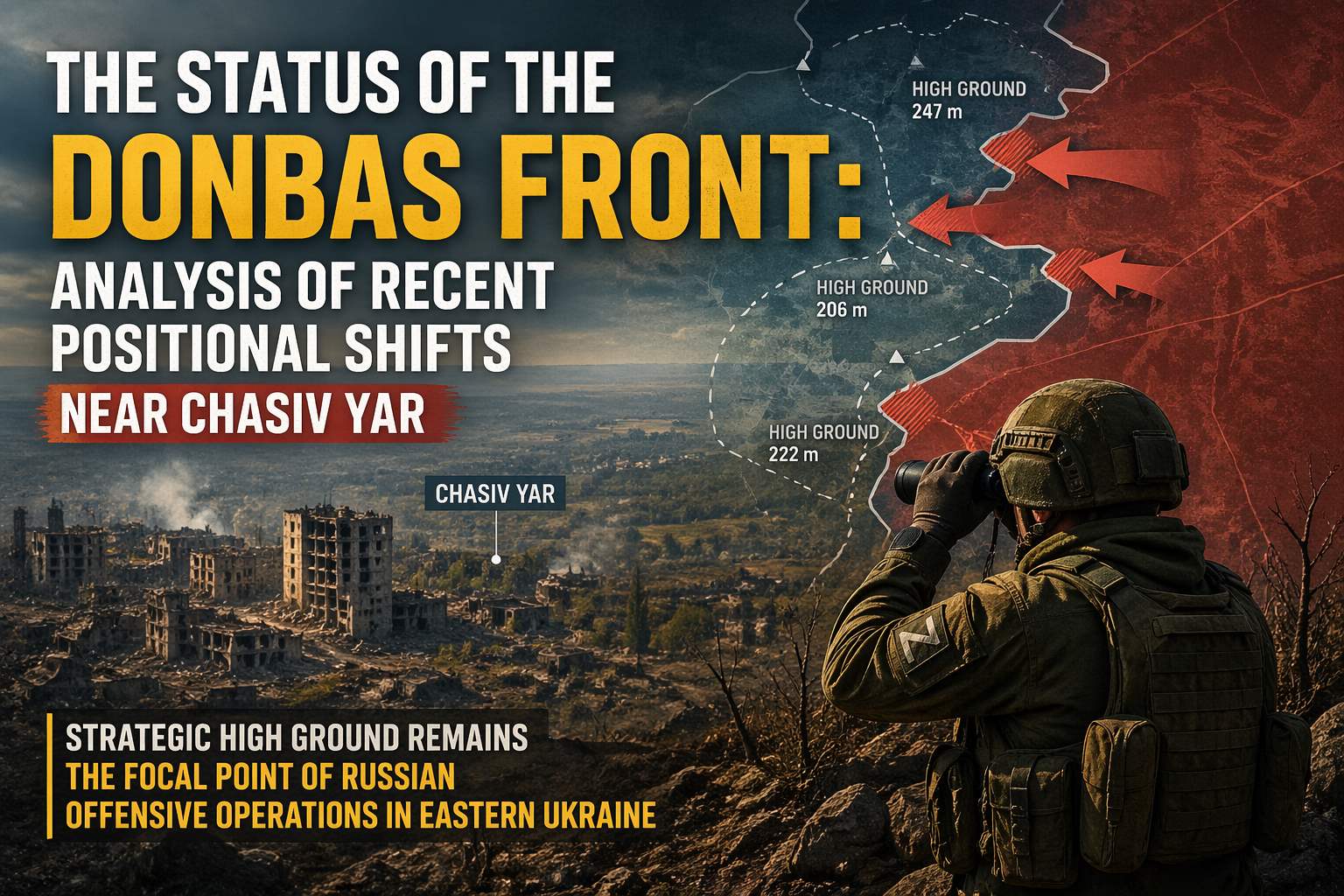
Strategic high ground remains the focal point of Russian offensive operations in Eastern Ukraine
April 24, 2026
Last Updated: 14:10 UTC
By Global War News Editorial
The frontline in the Donbas region has entered a phase of intensified kinetic activity, specifically centered on the strategic heights of Chasiv Yar. According to intelligence updates from the UK Ministry of Defence and localized reports from the conflict zone, Russian forces have adjusted their tactical approach, moving away from broad frontal assaults toward more concentrated positional shifts. This development follows months of static warfare and suggests a renewed effort to secure a foothold that would provide a significant artillery advantage over the surrounding Kramatorsk-Sloviansk urban belt.
Reports indicate that the Russian military has increased the use of glide bombs and heavy artillery to suppress Ukrainian defensive lines on the eastern outskirts of the city. While the frontline remains fluid, observers note that even minor territorial changes in this sector carry weight due to the elevated geography of the area.
Tactical Adjustments and Terrain
The importance of Chasiv Yar lies in its elevation. According to military analysts, the city sits on a ridge that serves as a natural defensive barrier for the wider Donetsk region. If Russian forces were to secure the city, they would effectively gain a direct line of sight and fire over the logistical hubs of Kostyantynivka and Kramatorsk.
Recent updates from the UK Ministry of Defence suggest that Russian units have made incremental gains in the forested areas east of the Siverskyi Donets-Donbas Canal. However, the canal itself continues to act as a significant obstacle. While local media outlets have reported that some Russian reconnaissance units have reached the canal’s edges, these claims could not be independently confirmed, and the main defensive lines reportedly remain intact.
Logistical and Economic Implications
The shift in the Donbas front is not merely a military concern but one that impacts the broader regional economy. According to data from independent economic monitors, the proximity of active fighting to railway junctions in the Donbas has further restricted the transport of industrial materials.
- Energy Infrastructure: Local authorities have reported that frequent shelling near the front has caused intermittent power outages, affecting the few remaining operational coal mines in the area.
- Trade Routes: The potential for a Russian breakthrough toward Kramatorsk raises questions about the long-term viability of the main H-20 highway as a supply route for civilian goods into the northern Donetsk region.
Analysts have suggested that the economic cost of maintaining these defensive lines is rising as infrastructure damage accumulates, requiring higher levels of international financial assistance to maintain basic services for the remaining civilian population.
Analysis: What This Means for the Spring Campaign
Observers note that the current positional shifts near Chasiv Yar reflect a “war of attrition” strategy. By focusing on high-ground targets, the Russian military appears to be attempting to force a Ukrainian withdrawal without the need for a full-scale urban battle, which would be costly in terms of manpower and equipment.
This raises questions about the sustainability of the current defensive posture if ammunition supplies and personnel rotations are not maintained. Conversely, if the Ukrainian forces hold the ridge through the coming weeks, the Russian offensive may lose momentum, leading to another period of relative stalemate. It remains unclear whether either side possesses the necessary reserves to turn these positional shifts into a decisive breakthrough.
Closing Summary
The situation near Chasiv Yar remains a critical point of interest for the 2026 spring campaign. While Russian forces have made marginal gains in the surrounding forests, the primary defensive structures of the city remain under Ukrainian control according to the latest verified reports. The coming days will likely see continued heavy use of standoff weaponry as both sides vie for control of the Donbas heights.
Sources: This report utilizes data and briefings from the UK Ministry of Defence, official statements from the Ukrainian General Staff, and reporting from Reuters and the Associated Press. Regional economic data was sourced from independent monitors covering the Donets Basin.
This article is based on publicly available reporting from named international news agencies and attributed official statements. All claims about ongoing events are attributed to their original sources. Analysis sections represent the editorial interpretation of reported facts and do not constitute advocacy for any party to the described conflict. AI tools may be utilized for image generation to assist in explaining complex concepts, as well as for refining grammar, spelling, and other linguistic enhancements. However, all original content is produced, fact-checked, and revised by the editorial team. This publication does not take political positions on active military conflicts.