
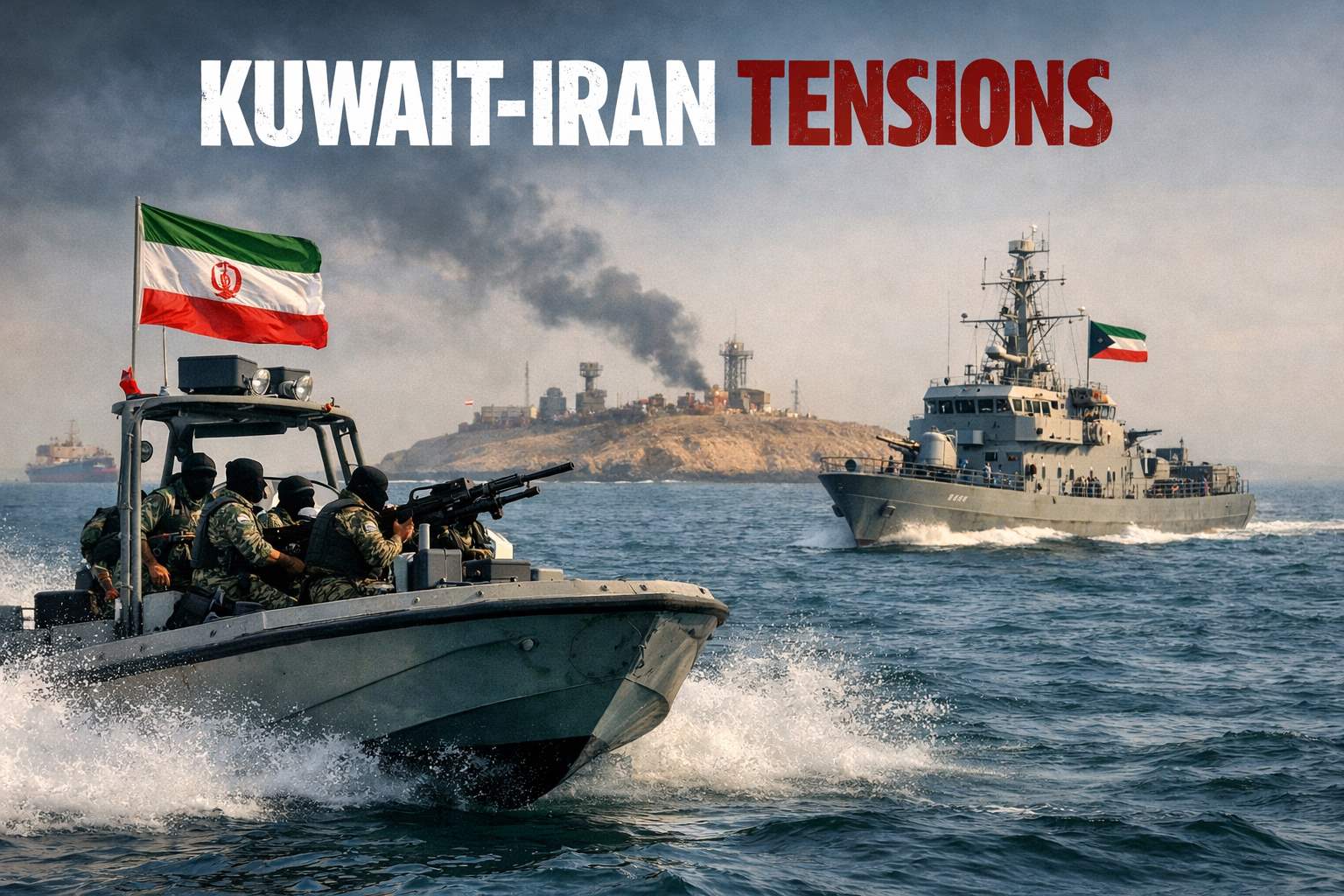
Incident raises maritime security concerns and triggers fluctuations in regional energy shipping insurance
May 13, 2026
Last updated: 14:00 GMT
By Global War News Editorial
Authorities in Kuwait have accused the Iranian Revolutionary Guard Corps (IRGC) of an attempted maritime incursion into sovereign Kuwaiti waters near the strategic islands of Warbah and Bubiyan. According to a statement released by the Kuwaiti Ministry of Interior, the nation’s Coast Guard intercepted several small, armed vessels late Tuesday evening that were reportedly attempting to bypass established maritime boundaries.
The incident has immediately resonated through global energy markets. While the Iranian government has not yet issued a formal response to the specific allegations, the reported friction in the northern Persian Gulf has led to a prompt increase in maritime insurance premiums for tankers operating in the region.
Observers note that this development occurs during a period of heightened sensitivity regarding the security of energy transit routes. Both Warbah and Bubiyan islands sit in close proximity to the Khor Abdullah waterway, a vital passage for both Kuwaiti and Iraqi maritime trade.
Details of the Reported Encounter
According to official reporting from the Kuwait News Agency (KUNA), the incursion involved three fast-attack craft allegedly operated by IRGC personnel. The Kuwaiti Ministry of Defence stated that its naval units were deployed to assist the Coast Guard after the vessels ignored repeated verbal warnings to change course.
The encounter reportedly lasted for approximately forty minutes before the intruding craft retreated toward Iranian territorial waters. While no shots were fired and no injuries were reported, Kuwaiti officials have characterized the event as a “provocative violation” of international law.
Independent maritime tracking data suggested a brief clustering of naval activity in the area at the time of the reported incident, though the specific identities of the vessels involved could not be independently verified.
Regional and Economic Context
The proximity of the reported incursion to the Iraqi border and the major Kuwaiti port infrastructure at Mubarak Al-Kabeer adds a layer of economic significance to the military tension. Analysts suggest that any perceived instability in this specific corridor threatens the logistics of oil exports and the import of essential goods into the northern Gulf states.
Energy market analysts reported a 1.2% rise in Brent Crude prices in the hours following the news. This shift is attributed primarily to fears that a sustained increase in naval friction could lead to broader disruptions in the Strait of Hormuz, through which roughly one-fifth of the world’s oil supply passes.
“While the physical scale of this encounter was limited, the location is highly sensitive,” said a regional analyst at a London-based security firm. “Insurance underwriters are particularly reactive to IRGC activity in these waters, as it often signals a shift in Tehran’s broader maritime posture.”
Analysis: What This Could Mean
The timing of the incident raises questions about its intent. Some observers note that the reported incursion follows a series of diplomatic disagreements between Kuwait and Iran regarding the shared Durra gas field. It remains unclear whether the naval activity was a localized navigational error or a calculated political signal.
If these incursions continue, the economic impact may manifest in higher freight costs for regional consumers. As insurance companies re-evaluate “war risk” zones, the cost of shipping out of Kuwaiti and Iraqi terminals is likely to rise, potentially affecting national budgets that are heavily dependent on oil revenues.
Kuwait has reportedly summoned the Iranian chargé d’affaires to deliver a formal protest note. Regional mediators, including officials from Oman, are reportedly monitoring the situation to prevent further escalation.
Source Disclosure Note: This report utilized official statements from the Kuwaiti Ministry of Interior and Ministry of Defence, reporting from the Kuwait News Agency (KUNA), and market data regarding energy prices and shipping insurance.
This article is based on publicly available reporting from named international news agencies and attributed official statements. All claims about ongoing events are attributed to their original sources. Analysis sections represent the editorial interpretation of reported facts and do not constitute advocacy for any party to the described conflict. AI tools may be utilized for image generation to assist in explaining complex concepts, as well as for refining grammar, spelling, and other linguistic enhancements. However, all original content is produced, fact-checked, and revised by the editorial team. This publication does not take political positions on active military conflicts.