
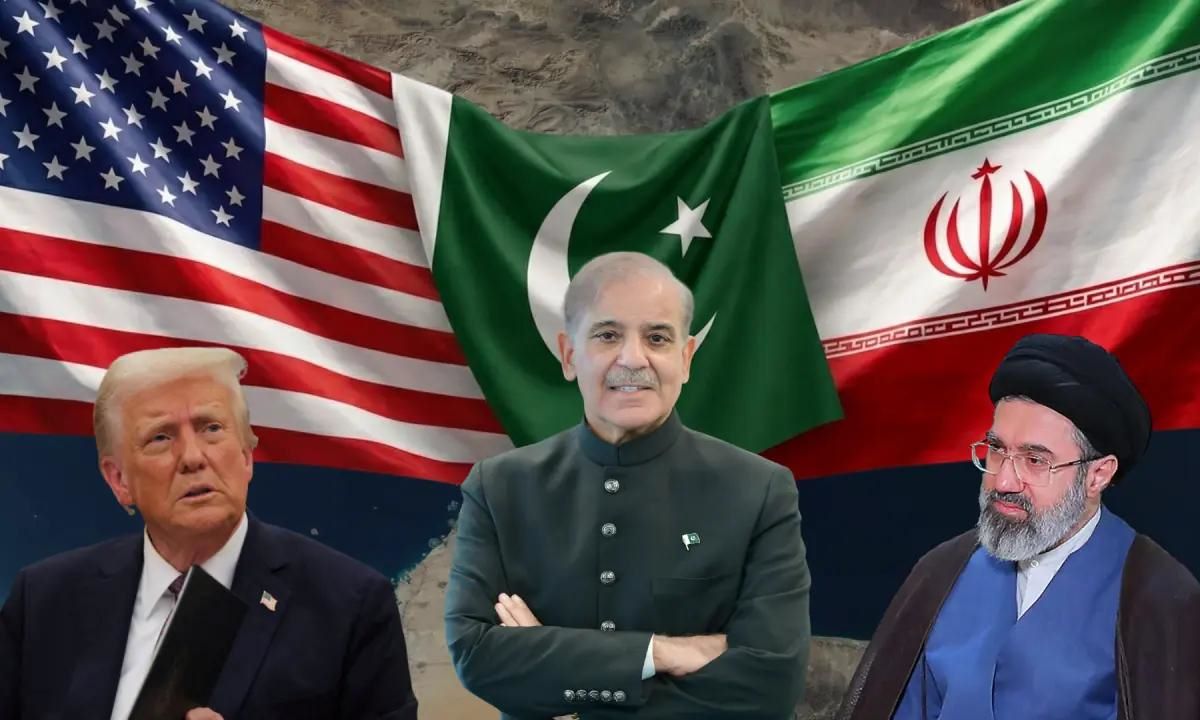
The US administration maintains support for Islamabad’s facilitation role despite congressional skepticism regarding alleged military shielding at Rawalpindi.
Publication Date: May 18, 2026
Last Updated: May 18, 2026
Byline: Global War News Editorial
US President Donald Trump has publicly reaffirmed his support for Pakistan’s role as the primary diplomatic mediator between Washington and Tehran, dismissing domestic political criticism and defense committee skepticism. The presidential endorsement follows a period of intense scrutiny from congressional allies regarding Islamabad’s neutrality and the broader viability of the stalled peace framework.
The diplomatic track, which yielded an initial two-week ceasefire on April 8 and a subsequent indefinite extension on April 21, has come under significant strain. Allegations surfaced regarding the presence of Iranian military assets on Pakistani soil, sparking sharp blowback from senior US lawmakers who questioned whether the mediation framework remained aligned with American strategic interests.
Despite these domestic disputes, the White House indicated that it will continue utilizing the channels established by Pakistani Prime Minister Shehbaz Sharif and Field Marshal Asim Munir. The decision to preserve Islamabad’s intermediary role comes as the Trump administration simultaneously explores parallel leverage points, including discussions with Chinese leadership in Beijing to pressure Tehran over maritime transit and nuclear enrichment constraints.
Congressional Friction and the Flight Controversy
The renewal of executive backing follows a contentious Senate defense subcommittee hearing where Senator Lindsey Graham, a close legislative ally of the president, called for an immediate re-evaluation of Pakistan’s mediator status. Graham cited a CBS News report alleging that Iran had transferred several military aircraft, including an RC-130 reconnaissance plane, to Pakistan Air Force Base Nur Khan near Rawalpindi shortly after the April 8 truce took effect. Critics argued the movement was designed to shield key Iranian assets from prospective US or Israeli airstrikes.
During the hearing, Pentagon chief Pete Hegseth and Chairman of the Joint Chiefs of Staff Gen. Dan Caine declined to comment publicly on the intelligence assessments, further fueling congressional dissatisfaction. Graham stated that if the reports of asset preservation were accurate, the United States should seek alternative third-party intermediaries to manage the negotiations.
Hours after the legislative remarks, President Trump dismissed the proposal to replace Islamabad. Speaking to reporters at the White House, the president stated that Pakistan’s leadership had been cooperative in managing the logistics of the initial talks. Trump explicitly praised Field Marshal Munir and Prime Minister Sharif, describing their facilitation efforts as reliable despite the slow progress of the broader treaty.
Islamabad’s Response and the Logistics Framework
The Pakistani Ministry of Foreign Affairs issued a formal statement rejecting assertions of a military preservation arrangement with Tehran, calling the allegations speculative and detached from the factual context of the talks. According to the ministry, both US and Iranian aircraft had utilized Pakistani airfields during April and May exclusively to support the diplomatic logistics of the bilateral delegations meeting in Islamabad.
Pakistani officials clarified that some transport and support aircraft remained stationed at the bases in anticipation of subsequent negotiation rounds. A CNN report published mid-week suggested that certain US officials remained wary, questioning whether Pakistani intermediaries were inadvertently downplaying the rigidity of the Iranian position to keep both sides at the table.
Chronology of Pakistani Mediation (2026)
- April 5: Pakistan introduces a draft proposal for a 45-day temporary truce.
- April 8: An initial two-week US-Iran ceasefire officially takes effect.
- April 11–12: The first formal round of negotiations is held in Islamabad.
- April 21: The ceasefire is extended indefinitely following Pakistan’s request.
- May 12: President Donald Trump rejects calls to replace Pakistan as the primary mediator.
Despite the friction, regional analysts suggest that Pakistan’s positioning remains vital for both combatants. Because Islamabad maintains direct channels to the Iranian political establishment while preserving institutional ties with Washington, it remains one of the few capitals capable of hosting the direct working groups led by US Vice President JD Vance and Iranian Foreign Minister Abbas Araghchi.
Context and Background: A Truce on “Life Support”
The conflict, which escalated sharply in early 2026 with a combined US-Israeli air campaign targeting Iranian infrastructure, was temporarily paused following a last-ditch diplomatic push pushed by the Financial Times to have Pakistan broker an operational window. While the April 8 truce succeeded in halting wide-scale bombardment, the diplomatic substance of the negotiations has failed to mature.
A primary round of direct talks held in Islamabad on April 11 and 12 concluded without an active agreement. The Trump administration has demanded the total cessation of enrichment activities, the physical transfer of specific enriched stockpiles to the US, and the immediate, unconditional reopening of the Strait of Hormuz to international shipping.
Iran delivered its formal counterproposal through Pakistani channels, rejecting what it termed “maximalist demands.” Tehran’s 10-point plan insists upon the synchronized lifting of international primary and secondary economic sanctions, financial reconstruction guarantees, and explicit recognition of its domestic civilian nuclear rights. The stark divergence led President Trump to remark on Truth Social that the current truce was on “massive life support,” describing the latest drafts from Tehran as entirely unacceptable.
Analysis: The Strategic Utility of Intermediaries
Observers note that President Trump’s defense of Pakistan highlights a pragmatic recognition of diplomatic limitations. While the White House frequently employs aggressive rhetoric and economic blockades, maintaining an active, verifiable channel of communication is essential to prevent unintended tactical escalations from turning into a broader regional war.
Replacing Pakistan at this stage would likely collapse the fragile architecture that has kept the ceasefire operational, however precariously. Furthermore, by keeping the Islamabad track open, the Trump administration retains a structured framework to receive formal Iranian proposals without appearing to soften its public stance of maximum pressure.
However, the domestic political blowback in Washington underscores the complications of relying on non-aligned intermediaries. As long as members of Congress view Pakistan’s security apparatus as playing a dual role in the region, any final treaty produced under Islamabad’s auspices will face deep skepticism within the US legislature, potentially complicating the domestic ratification of any long-term settlement.
What to Watch
The immediate focus shifts to whether Pakistani diplomats can successfully convene a second formal round of minister-level talks in Islamabad. Security footprints and logistical arrangements around Rawalpindi will provide an early indication of whether the two delegations intend to resume face-to-face contact.
Additionally, the degree to which Washington coordinates its diplomatic strategy with other regional actors, such as Qatar or China, will signal whether Pakistan will remain the exclusive mediator or if the administration intends to transition toward a multi-lateral pressure model.
Source Disclosure Note: This report is based on official transcripts from the US Senate defense subcommittee hearings, public remarks by President Donald Trump, and official press releases from the Pakistani Ministry of Foreign Affairs. Factual details regarding the aircraft movements and diplomatic timelines are drawn from reporting by CBS News, CNN, the Associated Press, and Reuters. Iranian positions are cited from official statements carried by the semi-official Mehr and Fars news agencies.
This article is based on publicly available reporting from named international news agencies and attributed official statements. All claims about ongoing events are attributed to their original sources. Analysis sections represent the editorial interpretation of reported facts and do not constitute advocacy for any party to the described conflict. AI tools may be utilized for image generation to assist in explaining complex concepts, as well as for refining grammar, spelling, and other linguistic enhancements. However, all original content is produced, fact-checked, and revised by the editorial team. This publication does not take political positions on active military conflicts.