
Air strike strains fragile Middle East truce as international atomic watchdogs voice grave concern over safety of Arab world’s sole nuclear facility.
Publication Date: May 18, 2026
Last Updated: May 18, 2026
Byline: Global War News Editorial
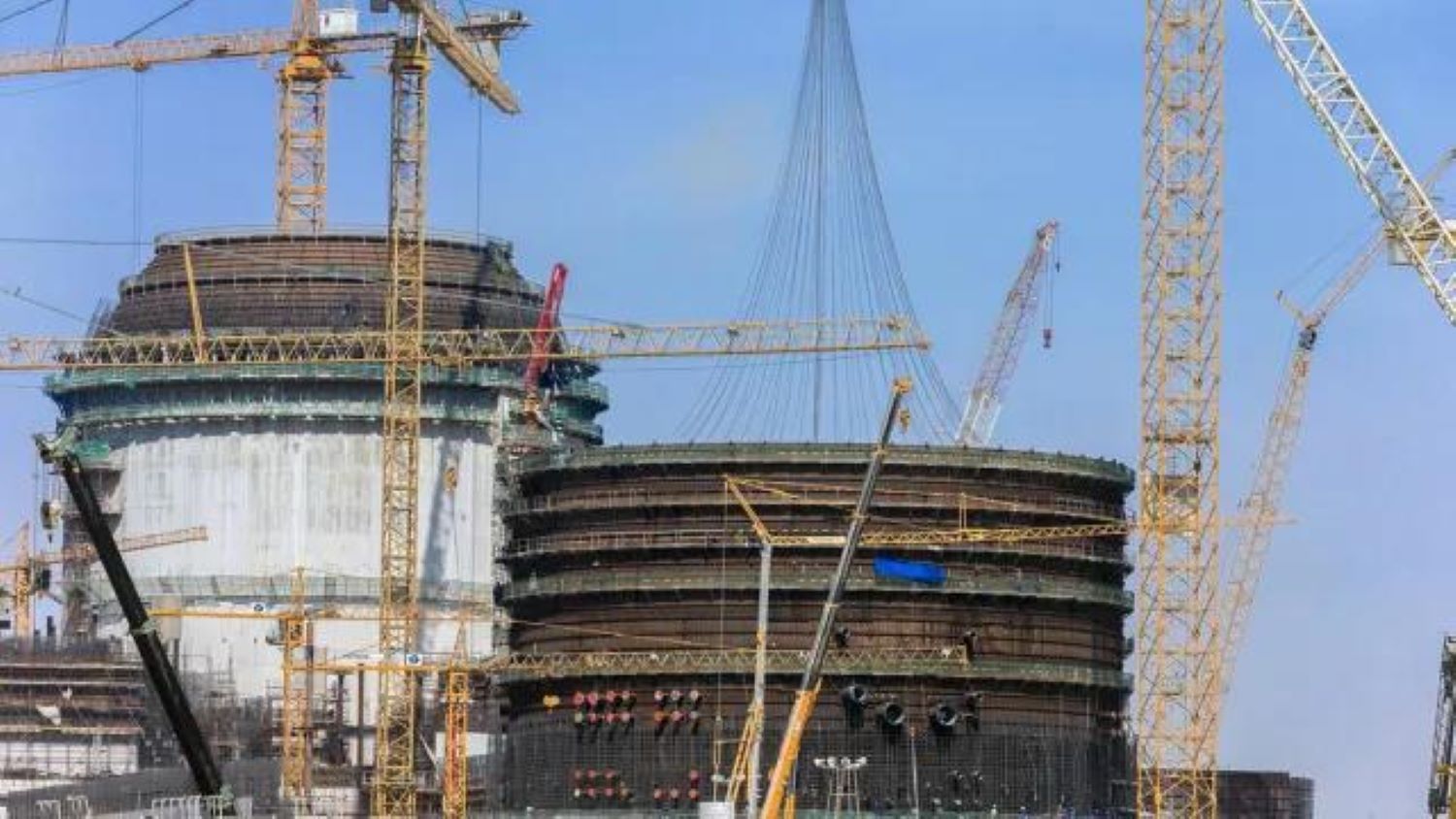
A hostile drone strike has targeted the periphery of the Barakah Nuclear Power Plant in the United Arab Emirates, triggering a localized fire and raising international anxieties regarding the vulnerability of civilian atomic infrastructure. The strike, which occurred on May 17, 2026, marks the first time the four-reactor facility has been directly subjected to an aerial assault since regional hostilities expanded earlier this year.
According to a public directive released by the Abu Dhabi Media Office, the attack targeted an auxiliary electrical generator situated outside the plant’s heavily fortified inner perimeter. Emergency response teams mobilized quickly to contain the resulting blaze. Authorities confirmed that the strike resulted in no human casualties and caused no structural damage to the primary reactor containment vessels.
The Federal Authority for Nuclear Regulation stated that radiological monitoring networks have detected no elevation in background radiation levels. While the state regulator maintained that all essential safety systems continue to operate normally, the incident has introduced severe strain onto the conditional regional ceasefire brokered in April.
Technical Impact and the Defensive Interception
The UAE Ministry of Defence reported that a flight of three unmanned aerial vehicles entered Emirati airspace from the western border. While air defense networks successfully intercepted two of the inbound drones, the third managed to penetrate local screens, detonating against an auxiliary power unit in the Al Dhafra region.
The International IAEA (International Atomic Energy Agency) subsequently released a technical update confirming that the strike forced the temporary separation of one operational unit from its primary external power link. The UN nuclear watchdog noted that the affected reactor automatically transitioned to emergency diesel backup generators to sustain its localized cooling infrastructure.
In Vienna, IAEA Director-General Rafael Mariano Grossi expressed deep concern over the development, emphasizing that any kinetic strike near an active atomic facility violates established international conventions on infrastructure safety. Grossi reportedly held urgent telephone consultations with the Emirati Ministry of Foreign Affairs to evaluate the long-term stability of the facility’s off-site power connections.
Attribution Discrepancies and Regional Reactions
No sovereign state or paramilitary organization has formally claimed responsibility for launching the drones. The Emirati government labeled the strike an unprovoked terrorist action, though official statements avoided directly assigning blame to a specific regional actor while independent investigations are conducted.
However, political figures within the Gulf have pointed toward external influence. UAE Presidential Adviser Anwar Gargash stated on social media that the targeting of the clean-energy facility represents a dangerous escalation, whether conducted by a principal adversary or through regional proxy groups. The assessment follows months of accusations from Abu Dhabi alleging that regional hostile factions have consistently used drone warfare to destabilize its vital civic utilities.
In Tehran, the response remained measured. Iranian Foreign Minister Abbas Araghchi did not address the strike directly in public updates, though state media confirmed he held a pre-scheduled phone call with international counterparts regarding broader maritime and security frameworks. Concurrently, regional analysts noted that state-affiliated television broadcasts in Iran have maintained highly nationalistic messaging over the past 48 hours, highlighting the ongoing geopolitical friction surrounding the Western naval presence in the Persian Gulf.
Context and Background: The Nuclear “Gold Standard” Under Fire
The $20 billion Barakah facility, constructed with extensive engineering support from South Korea’s KEPCO, commenced commercial operations in 2020. As the first operational nuclear power plant on the Arabian Peninsula, it provides roughly one-quarter of the total electricity needs for the United Arab Emirates, playing a pivotal role in the federation’s industrial diversification program.
Unlike other regional nuclear initiatives, the UAE’s atomic program functions under a strict bilateral agreement with the United States. Under this framework, known as a 123 Agreement, Abu Dhabi explicitly renounced domestic uranium enrichment and the reprocessing of spent nuclear fuel, opting instead to import all reactor fuel from verified international suppliers to eliminate proliferation risks.
The weekend strike breaks an unwritten understanding that had shielded civilian nuclear assets during the 11-week regional war, which began on February 28 following the collapse of maritime negotiations and subsequent air campaigns. While an April 8 truce halted large-scale bombardment, the underlying drivers of the conflict—most notably the ongoing US naval blockade of Iranian ports and sporadic skirmishes in the Strait of Hormuz—remain entirely unresolved.
Analysis: The Vulnerability of Connected Grids
Observers note that the tactical choice to target external electrical infrastructure rather than the fortified reactor domes demonstrates a calculated understanding of nuclear vulnerability. Modern atomic plants rely heavily on uninterrupted external power grids or localized generator fields to maintain the water circulation systems that cool reactor cores.
By disabling an auxiliary generator, the strike highlighted the potential for non-containment infrastructure attacks to cause operational disruption without requiring the physical penetration of heavily armored concrete structures. For the UAE, the incident underscores the severe economic vulnerability of its centralized power strategy; because Barakah generates a massive portion of domestic baseline electricity, prolonged operational suspensions would instantly stress commercial and industrial grids across Dubai and Abu Dhabi.
Furthermore, the diplomatic fallout threatens to terminate the fragile mediation process currently being managed by third-party intermediaries in Islamabad. If the UAE determines that its core economic infrastructure cannot be protected under the current truce parameters, the likelihood of Abu Dhabi authorizing retaliatory military measures or deepening its involvement with Western naval coalitions increases significantly.
What to Watch
The critical indicator of subsequent escalation will be the findings of the UAE military investigation regarding the exact launch origin of the three drones. If forensic analysis of the debris confirms the flight path originated from territory controlled by state-backed militias in Iraq or from Iranian soil, the UAE may find its policy of strategic restraint untenable.
Additionally, international energy markets will be monitoring whether the Emirates Nuclear Energy Company alters its current operational output at Barakah while maintenance teams work to repair or replace the damaged external generator unit.
Source Disclosure Note: This report is compiled from official public briefings issued by the Abu Dhabi Media Office, the UAE Ministry of Defence, and the Federal Authority for Nuclear Regulation. International diplomatic positions and technical assessments are drawn directly from official statements published by the International Atomic Energy Agency and wire reports from Reuters, the Associated Press, and Agence France-Presse. Further operational context regarding the Barakah facility is sourced via the Emirates Nuclear Energy Company and South Korea’s Yonhap News Agency.
This article is based on publicly available reporting from named international news agencies and attributed official statements. All claims about ongoing events are attributed to their original sources. Analysis sections represent the editorial interpretation of reported facts and do not constitute advocacy for any party to the described conflict. AI tools may be utilized for image generation to assist in explaining complex concepts, as well as for refining grammar, spelling, and other linguistic enhancements. However, all original content is produced, fact-checked, and revised by the editorial team. This publication does not take political positions on active military conflicts.