
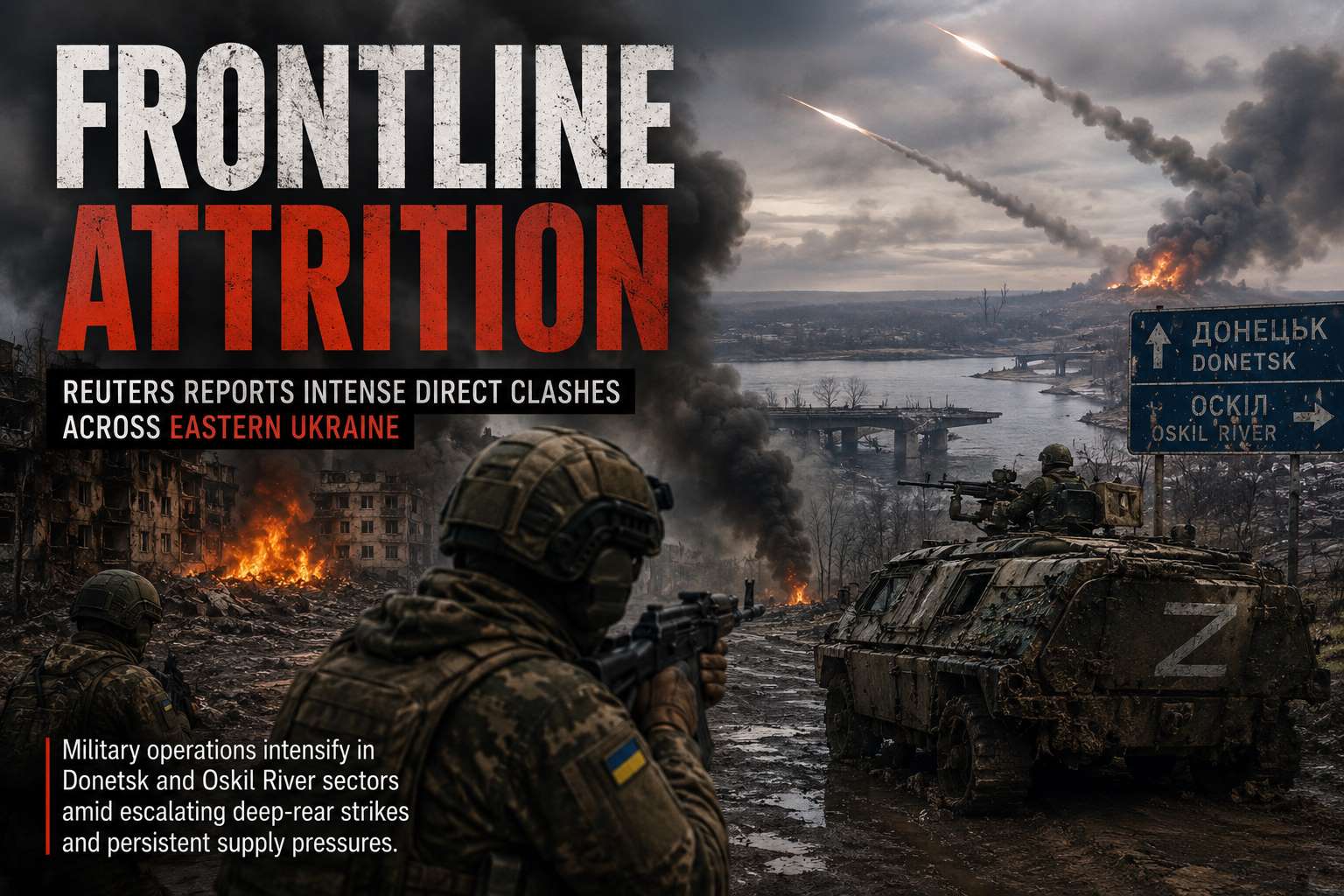
Combat intensifies in Khartoum and North Kordofan as humanitarian corridors remain blocked amid escalating food supply pressures.
Publication Date: June 3, 2026
Last Updated: June 3, 2026
Byline: Global War News Editorial
Direct infantry engagements and heavy artillery exchanges have escalated across multiple urban centers in Sudan. According to official statements from the combatant forces and updates from international monitoring bodies, intense fighting is concentrated within the capital region and key logistics hubs in North Kordofan. The synchronization of these urban battles coincides with a severe halt in aid distribution, further straining the country’s collapsing food supply networks.
Direct Engagements in the Urban Sectors
Official updates from the region indicate that the conflict between the Sudanese Armed Forces (SAF) and the Rapid Support Forces (RSF) has maintained a high level of intensity through the final weeks of May and into early June 2026. In the capital region of Khartoum, Omdurman, and Khartoum North, confrontations have centered on key military installations and bridging points across the Nile.
In a public statement, the Sudanese Armed Forces command asserted that its units carried out a series of coordinated artillery strikes against RSF positions in southern Khartoum. Conversely, representatives from the Rapid Support Forces issued a statement claiming that their units successfully repelled an SAF infantry advance near the Al-Shajara military complex, alleging that they inflicted structural damage on state defensive perimeters. Independent regional observers note that the use of heavy weaponry in densely populated neighborhoods has continued uninterrupted, forcing remaining local populations to seek shelter in basements and reinforced structures.
Further west, in North Kordofan, local administrative authorities confirmed that the state capital of Al-Ubayyid remains a primary point of friction. The United Nations Office for the Coordination of Humanitarian Affairs (OCHA) reported that localized skirmishes around the city’s outskirts have disrupted the primary highway corridors, restricting the movement of commercial goods and civilian vehicles. Neither side has established verified, definitive control over the region’s main transit junctions, leaving the area in a state of volatile positional attrition.
Context and Background: The War of Attrition
The current security posture reflects structural realities shaped by more than three years of continuous domestic conflict. Since the outbreak of hostilities in April 2023, the theater has transformed into a highly fragmented battlefield where traditional military maneuvers are limited by urban density and decentralized paramilitary tactics.
This environment has elevated the strategic importance of supply lines, fuel depots, and transport nodes. Throughout the spring of 2026, tactical ground operations have been heavily influenced by campaigns to control or interdict major roadways connecting Port Sudan on the Red Sea coast to the interior states. Analysts from independent research institutions note that the faction capable of securing ammunition replenishments and protecting its local supply hubs retains the capacity to hold long-term defensive perimeters. This dynamic has turned the war into an industrial and logistical endurance struggle rather than a conflict defined by rapid geographic breakthroughs.
The Humanitarian Impasse and Supply Logistics
The direct clashes along the urban frontlines are deeply linked to a worsening humanitarian crisis in the rear. On June 2, the World Food Programme (WFP) issued an operational update stating that intense fighting and bureaucratic obstacles continue to block the delivery of emergency food supplies to millions of trapped civilians. The agency noted that key agricultural zones have been severely disrupted by the ongoing violence, raising significant concerns regarding the upcoming harvest cycle.
Concurrently, local emergency response rooms, run by civilian volunteers, confirmed that utility networks have suffered extensive damage. In parts of Khartoum North, water and electricity infrastructure has been non-functional for consecutive weeks following artillery impacts on processing plants. Local media reported that medical facilities in Al-Ubayyid are facing critical shortages of basic surgical supplies and fuel for generators, though the full extent of the shortages could not be independently confirmed due to widespread telecommunications disruptions.
Analysis: What This Means for the Frontline
The persistence of heavy urban combat alongside the blockage of humanitarian corridors suggests a deliberate operational focus from both commands.
Observers from regional policy research groups indicate that the concentration of clashes around major logistics hubs like Al-Ubayyid is directly tied to supply sustainability. By maintaining pressure on these junctions, the RSF aims to isolate SAF garrisons in the western and southern regions, cutting off their access to reinforcements originating from eastern command centers.
Conversely, the SAF’s reliance on long-range artillery and aerial strikes within Khartoum appears designed to offset the RSF’s numerical presence on the ground. However, analysts suggest that conducting heavy bombardments within built-up areas carries severe structural consequences, destroying the very infrastructure required to sustain any long-term administrative presence. With both forces heavily restricted by supply bottlenecks, any prolonged disruption to fuel or ammunition transport can rapidly immobilize mechanized units, rendering specific neighborhoods vulnerable to localized infantry incursions.
Summary and Outlook
The conflict in Sudan remains locked in a high-intensity equilibrium. While regional diplomatic efforts remain stalled, the primary urban centers bear the brunt of continuous mortar duels and sniper activity.
In the coming weeks, observers should monitor two primary indicators: the structural stability of civilian volunteer supply networks under continuous urban siege, and the measurable impact of transport route blockages on the operational capabilities of both the SAF and RSF in the western states. Neither side shows signs of reducing operational tempo, pointing toward a continuation of this costly war of attrition.
Source Disclosure Note: This report relies on official public statements issued by the Sudanese Armed Forces (SAF) and the Rapid Support Forces (RSF); operational updates from the United Nations Office for the Coordination of Humanitarian Affairs (OCHA) and the World Food Programme (WFP); public reports from local administrative authorities; and assessments from regional independent monitoring groups.
This article is based on publicly available reporting from named international news agencies and attributed official statements. All claims about ongoing events are attributed to their original sources. Analysis sections represent the editorial interpretation of reported facts and do not constitute advocacy for any party to the described conflict. AI tools may be utilized for image generation to assist in explaining complex concepts, as well as for refining grammar, spelling, and other linguistic enhancements. However, all original content is produced, fact-checked, and revised by the editorial team. This publication does not take political positions on active military conflicts.