
Fragile ceasefire strained by disagreements over nuclear enrichment limits and a proposed shipping toll in the Strait of Hormuz.
Publication Date: May 18, 2026
Last Updated: May 18, 2026
Byline: Global War News Editorial
Negotiations between the United States and Iran aimed at establishing a permanent peace framework have reached a critical impasse, prompting US President Donald Trump to issue renewed public warnings of severe military consequences. The friction comes despite a temporary ceasefire, originally brokered via Pakistani mediation on April 8, which paused a 40-day campaign of intensive aerial bombardment of Iranian military and infrastructure targets by US and Israeli forces.
The current diplomatic deadlock centers on what both sides describe as irreconcilable positions regarding Iran’s nuclear infrastructure and ballistic missile capabilities. In a series of public statements, President Trump indicated that while communications remain open, Washington will resume wide-scale military actions targeting vital Iranian civic and energy infrastructure if Tehran refuses to comply with US terms.
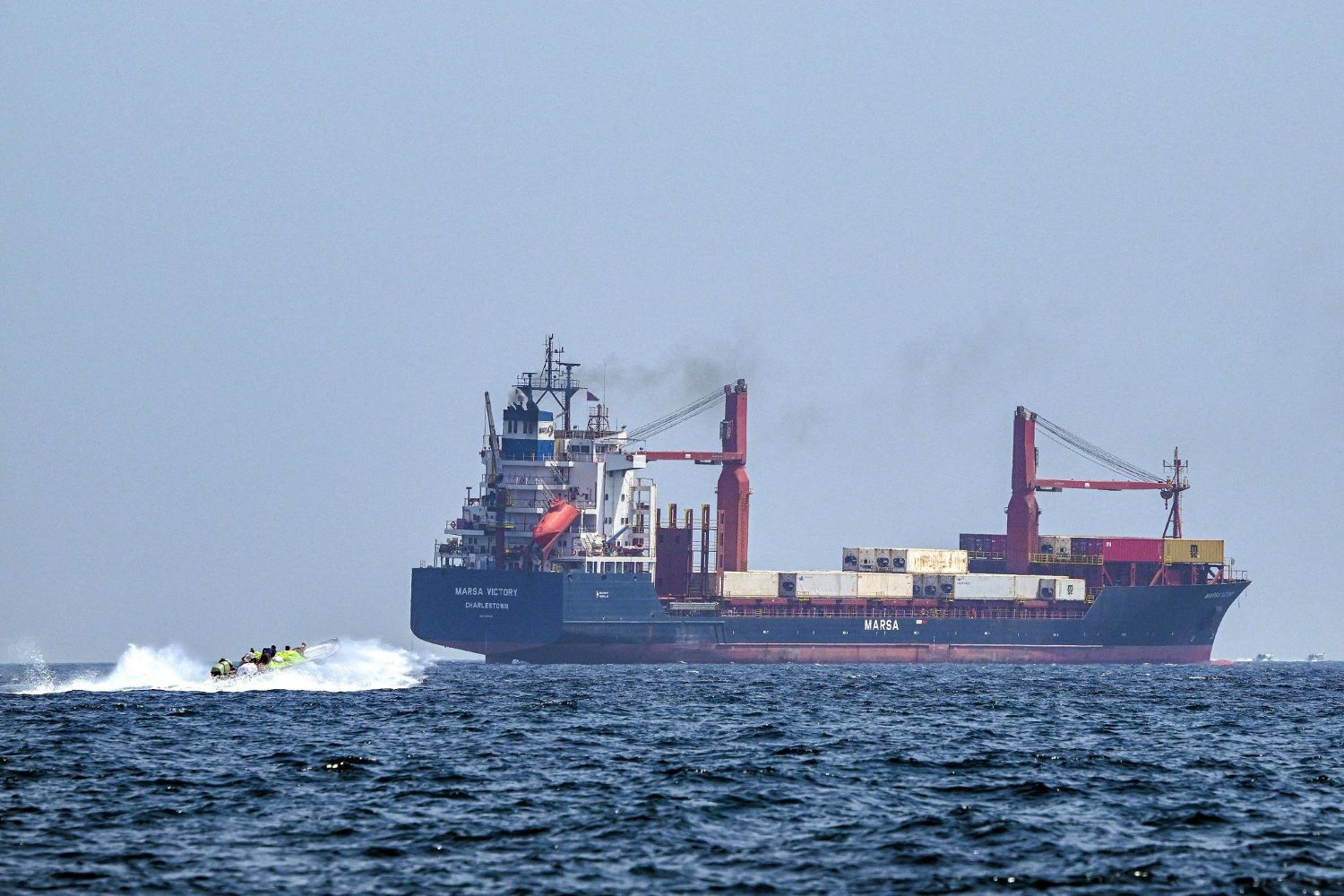
Concurrently, tensions have mounted over control of regional shipping lanes. Iran has announced plans to implement a transit fee and regulatory approval mechanism for commercial vessels passing through the Strait of Hormuz, a move that the US military and its allies view as an unlawful challenge to freedom of navigation in a waterway vital to global energy markets.
The Core Elements of the Diplomatic Impasse
The current negotiations follow the high-level talks held in Islamabad in April, which failed to secure a permanent treaty. According to a report by Iran’s semi-official Fars news agency, the Trump administration has presented five specific preconditions for a final agreement. Chief among these is a demand that Iran operate only one civilian nuclear facility and transfer 400 kilograms of its enriched uranium stockpile directly to the United States.
The US framework also reportedly stipulates that Washington will not pay financial reparations for damage incurred during the recent hostilities, will withhold the release of frozen Iranian state assets, and will condition any permanent cessation of military action on compliance across all regional fronts. Vice President JD Vance recently reiterated that the core objective of the United States remains securing an affirmative, verifiable commitment that Iran will permanently halt all nuclear enrichment activity.
Iranian negotiators, led by parliamentary speaker Mohammad Bagher Ghalibaf and Foreign Minister Abbas Araghchi, have publicly rejected these terms, labeling them “maximalist demands.” Speaking via state-affiliated media channels, Ghalibaf insisted that Washington must accept Tehran’s own 14-point counterproposal, which seeks explicit recognition of Iran’s right to domestic civilian enrichment and the immediate lifting of international primary and secondary economic sanctions.
Escalating Rheotoric and the Strait of Hormuz Toll Plan
The breakdown in active diplomacy has been accompanied by increasingly sharp rhetoric from Washington. In a television interview broadcast by French network BFMTV, President Trump stated that while Iran maintains an interest in reaching an accord, the failure to do so quickly would result in a “very bad time” for the country. In separate remarks on the White House lawn and via social media, the US president threatened that the US military possesses the capacity to systematically disable Iran’s power grids, bridges, and transport infrastructure if the current deadlock is not broken.
Adding to the volatility is the ongoing blockade of the Persian Gulf. US Central Command reported that more than 20 American warships continue to enforce a naval blockade under “Operation Economic Fury,” aimed at stopping Iranian crude oil exports. According to military data released on social media, US naval forces have redirected dozens of commercial vessels attempting to service Iranian ports.
In response to the economic squeeze, Ebrahim Azizi, chairman of the Iranian parliament’s National Security and Foreign Policy Committee, confirmed that Tehran is finalizing an independent transit fee system for the Strait of Hormuz. Iranian officials stated that only commercial operators cooperating directly with Tehran would receive safe passage. In response, US Energy Secretary Chris Wright stated that while negotiations remain the preferred avenue to resolve the maritime crisis, the United States is prepared to use military force to ensure the strait is reopened to international commerce by the end of the summer.
Context and Background: From “Epic Fury” to the Ceasefire
The current conflict erupted on February 28, 2026, following the collapse of earlier indirect talks in Europe and the triggering of “snapback” UN sanctions by European signatories to the 2015 nuclear accord. The joint US-Israeli campaign, codenamed “Epic Fury” by Washington and “Roaring Lion” by Jerusalem, involved thousands of airstrikes targeted at Iranian air defense networks, ballistic missile storage sites, and command structures.
The initial 40 days of combat resulted in significant operational disruption within Iran, alongside the reported deaths of high-ranking political and military figures in Tehran. However, a recent intelligence assessment published by the New York Times suggested that despite the scale of the strikes, Iranian military units have successfully restored operational access to a substantial majority of their subterranean missile launch sites along the Persian Gulf coastline. This resilience underscores the tactical challenges facing Western coalition forces attempting to permanently neutralise Tehran’s regional strike capabilities through airpower alone.
Analysis: The Constraints of Strategic Coercion
Observers note that both administrations are operating under severe domestic and international constraints that make compromise difficult. For the Trump administration, the stated goal is to achieve what previous US presidencies could not: the complete, verifiable dismantling of Iran’s non-civilian nuclear potential and its ballistic missile programs. By utilizing severe economic degradation alongside overt threats to civilian infrastructure, Washington is employing a strategy of maximum coercion.
However, analysts suggest this approach risks a dangerous miscalculation. The introduction of the Strait of Hormuz shipping toll indicates that Tehran is actively seeking alternative methods to project power and disrupt global trade, thereby offsetting the impact of the naval blockade. If Iran begins actively disabling or seizing commercial vessels that refuse to pay the proposed transit fee, the United States may find itself compelled to escalate from a defensive blockade to an active, high-intensity naval engagement to maintain open sea lanes.
Furthermore, the public stance taken by Iranian leaders suggests that a complete capitulation on the nuclear enrichment issue remains politically unviable for the current leadership structure in Tehran. With both sides dug into opposing positions, the conditional ceasefire remains highly fragile, and the probability of a return to open kinetic warfare remains elevated.
What to Watch
In the coming weeks, international attention will focus on whether regional intermediaries can bridge the gap between the US five-point framework and the Iranian 14-point counterproposal. The unscheduled visit of Pakistan’s interior minister to Tehran indicates that behind-the-scenes diplomatic tracks remain active.
The critical marker for a renewed escalation will be the practical implementation of Iran’s maritime toll mechanism in the Strait of Hormuz. Any physical attempt by Iranian fast-attack craft or coastal batteries to enforce fee collection against international shipping will likely trigger a direct defensive response from the US Navy, effectively ending the current truce.
Source Disclosure Note: This report relies on official public statements issued by US President Donald Trump, Vice President JD Vance, and US Energy Secretary Chris Wright. Iranian positions are sourced from official statements by Foreign Minister Abbas Araghchi, Parliamentary Speaker Mohammad Bagher Ghalibaf, and the semi-official Fars and IRNA news agencies. Additional contextual data regarding military operations and shipping movements is drawn from official updates published by US Central Command and independent reporting by the Associated Press, Reuters, and the New York Times.
This article is based on publicly available reporting from named international news agencies and attributed official statements. All claims about ongoing events are attributed to their original sources. Analysis sections represent the editorial interpretation of reported facts and do not constitute advocacy for any party to the described conflict. AI tools may be utilized for image generation to assist in explaining complex concepts, as well as for refining grammar, spelling, and other linguistic enhancements. However, all original content is produced, fact-checked, and revised by the editorial team. This publication does not take political positions on active military conflicts.