
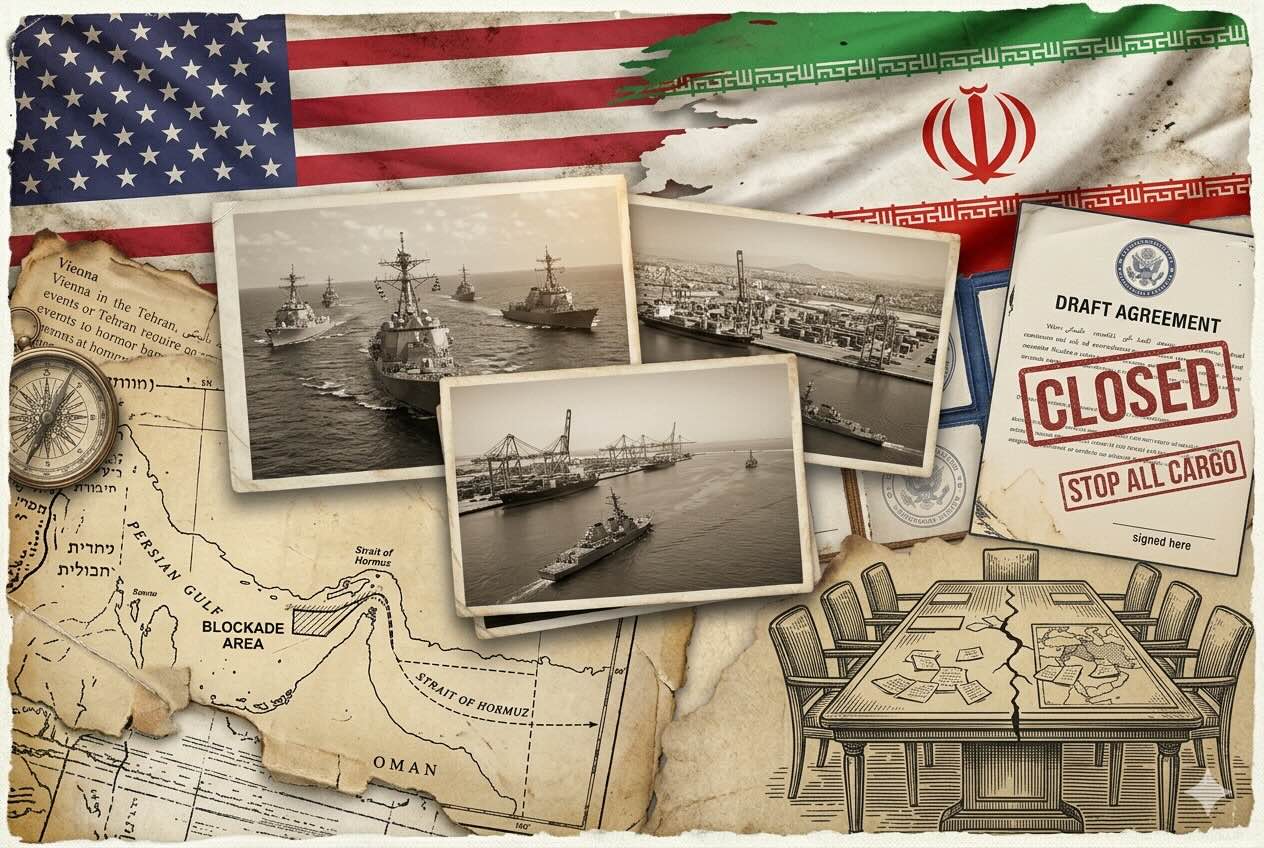
Failed peace talks in Pakistan lead to immediate maritime restrictions in the Strait of Hormuz, threatening energy supplies and driving oil prices upward.
Publication Date: April 13, 2026
Last Updated: April 13, 2026
By Global War News Editorial
The United States has announced a formal military blockade of all vessels entering or departing Iranian ports and coastal areas. This decision, confirmed by U.S. Central Command (CENTCOM) on Monday, follows the collapse of high-stakes peace negotiations in Islamabad, Pakistan. The failure to reach an agreement regarding Iran’s nuclear program has immediately reignited tensions in the Strait of Hormuz, one of the world’s most critical maritime chokepoints.
According to a report by the Associated Press, ship traffic within the strait appeared to halt following the announcement. While CENTCOM stated the blockade would not impede vessels transiting to non-Iranian ports, the maritime insurance industry has reacted with extreme caution. The declaration of the area as a high-risk zone has led to a sharp increase in protection and indemnity (P&I) insurance costs, prompting many commercial shipowners to anchor outside the waterway rather than risk passage.
In response to the U.S. measures, the Iranian Revolutionary Guard Corps (IRGC) stated that the strait remains under its “full control.” Iranian military officials warned that no port in the Persian Gulf region would be “safe” if Iranian ports were threatened, according to reports from Islamic Republic of Iran Broadcasting (IRIB). This escalating rhetoric has sent ripples through global energy markets, with oil prices resuming a steady climb as Asian markets recorded significant declines on Monday.
Economic Implications for South Asia and Beyond
The renewed closure of the strait has already begun to impact regional economies. According to official figures released Monday by Iraq’s state-run Organization for Marketing of Oil, Iraqi oil exports plunged to 18.6 million barrels in March, a stark drop from 99.87 million in February. Revenue similarly collapsed from over $6.81 billion to approximately $1.95 billion.
The International Monetary Fund (IMF) had previously warned of an “inflationary crisis” linked to the conflict. IMF Managing Director Kristalina Georgieva noted that the organization expects to downgrade its global growth forecast next week. The United Nations Development Programme (UNDP) added to these warnings on Monday, projecting that a prolonged military escalation in the Middle East could push an additional 32 million people into poverty worldwide, with the hardest impact falling on energy-importing developing nations.
Analysis: A Move Toward “Enduring” Conflict
The transition from a temporary ceasefire to a formal blockade suggests the conflict is moving from an acute phase into what the UN describes as an “enduring” phase. For global markets, this represents a shift from manageable disruption to a systemic threat.
Analysts suggest that the U.S. strategy of a “selective” blockade—targeting only Iranian-linked cargo—is a calculated attempt to pressure Tehran without causing a total global energy collapse. However, the effectiveness of this distinction remains in doubt. If insurance providers refuse to cover any vessel entering the Persian Gulf due to the risk of Iranian retaliation, the “selective” blockade could function as a de facto total closure. This would leave nations in South and Southeast Asia, which are heavily dependent on Middle Eastern crude, facing severe energy shortages and hyper-inflation.
What to Watch
- Diplomatic Responses: The UK has already signaled it will not participate in the blockade. Prime Minister Keir Starmer told the BBC on Monday that Britain’s focus remains on reopening the shipping route through diplomatic means.
- Energy Prices: If the blockade continues through the week, analysts expect a sustained rally in Brent crude prices, which could trigger emergency fuel rationing in several developing economies.
- The South China Sea: As global attention focuses on the Middle East, new tensions are surfacing elsewhere. On Monday, the Philippines accused Chinese vessels of using cyanide to “sabotage” fish populations in the Spratly Islands, potentially opening a second front of maritime instability.
Source Disclosure: This report incorporates data and reporting from The Associated Press, Reuters, the International Monetary Fund (IMF), the United Nations Development Programme (UNDP), and Al Jazeera. Official statements were cited from U.S. Central Command, the Iranian Ministry of Foreign Affairs, and the UK Prime Minister’s Office.
This article is based on publicly available reporting from named international news agencies and attributed official statements. All claims about ongoing events are attributed to their original sources. Analysis sections represent the editorial interpretation of reported facts and do not constitute advocacy for any party to the described conflict. This publication does not take political positions on active military conflicts.