
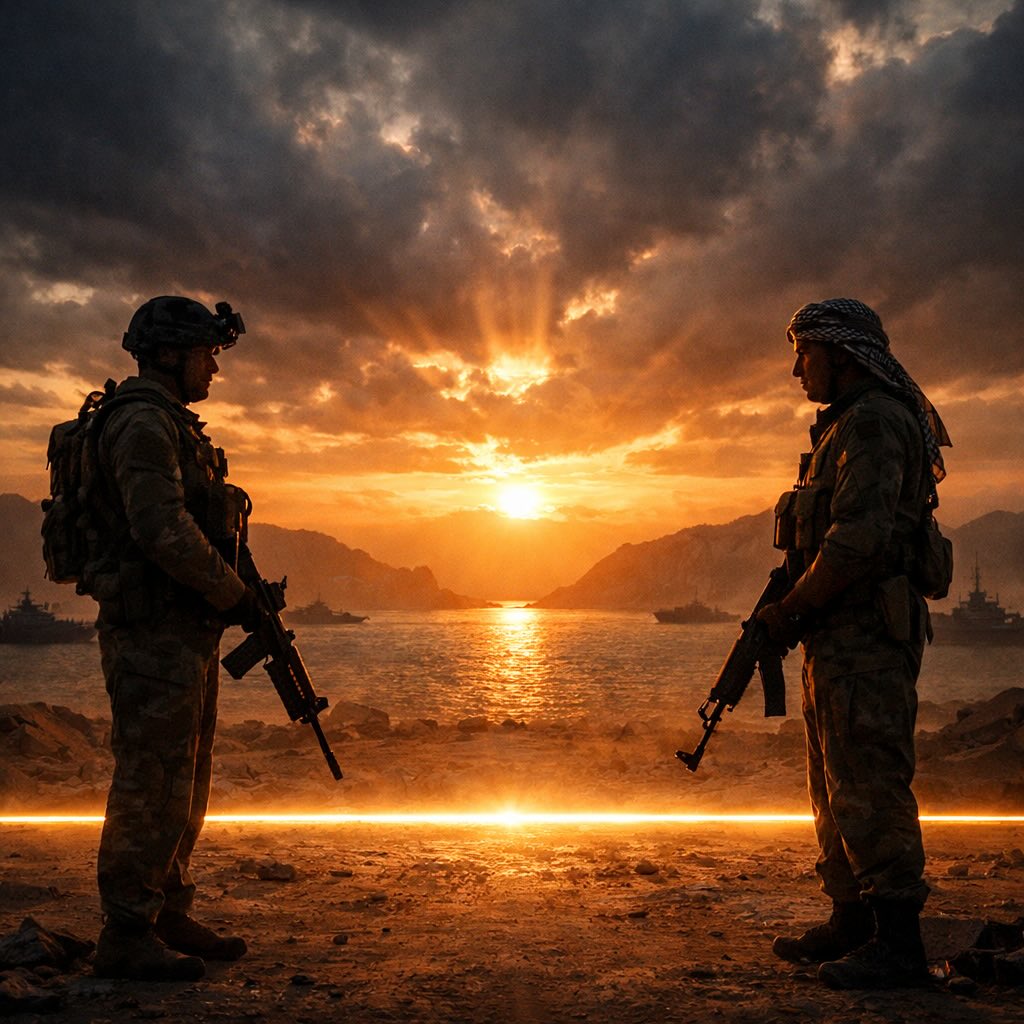
President Trump warns of military action against Iranian vessels as second round of Islamabad peace talks approaches.
Published: April 14, 2026
Last Updated: 16:22 GMT
By Global War News Editorial
The United States has officially commenced a naval blockade of Iranian ports, a move that comes even as a temporary, two-week ceasefire mediated by Pakistan remains nominally in place. US President Donald Trump defended the action on Tuesday, warning that any Iranian “attack boats” approaching the American blockade would be “eliminated.”
The blockade, which took effect at 1400 GMT, applies to all vessels attempting to leave or dock at Iranian harbors. While the ceasefire was intended to facilitate high-level negotiations in Islamabad, the enforcement of the blockade has introduced a significant new escalation. Iranian officials have characterized the move as “piracy” and a violation of international maritime law.
Despite the heightened tensions at sea, diplomatic channels remain open. Pakistani officials confirmed on Tuesday that they have proposed a second round of talks between Washington and Tehran, following what US Vice President J.D. Vance described as “some progress” in initial discussions. The upcoming negotiations, reportedly scheduled for April 16, are expected to focus on de-escalatory mechanisms around the Strait of Hormuz.
The Strait of Hormuz Standoff
The Strait of Hormuz remains the primary flashpoint of the current conflict. While a fragile truce is in effect on some fronts, the waterway—through which approximately 20% of the world’s oil flows—remains effectively blocked to most commercial traffic.
According to reports from Al Jazeera, the International Maritime Organization (IMO) has expressed deep concern over the continued disruption of innocent passage. Meanwhile, the Iraqi Oil Ministry stated on Tuesday that it has reached “understandings” with both the US and Iran to allow some Iraqi exports to bypass the blockade, though the details of these arrangements have not been made public.
Regional Escalations
The ceasefire between the US and Iran does not appear to extend to regional proxies. Israeli forces have continued operations against Hezbollah in Lebanon, with the Israeli military reporting strikes on over 100 headquarters and command centers in Beirut and the Bekaa Valley over the last week.
US officials have publicly stated that the campaign in Lebanon is a “separate skirmish” and is not covered by the Islamabad ceasefire agreement. Hezbollah, however, has reportedly rejected the exclusion, leading to fears that the conflict could expand even as direct US-Iran hostilities are paused.
Analysis: A Ceasefire Under Strain
Observers note that the current situation represents a high-stakes “pressure campaign” by the White House. By maintaining a naval blockade during peace talks, the US is attempting to force concessions on Iran’s nuclear program and its regional influence.
However, analysts at the UN Development Programme (UNDP) warn that a prolonged blockade could have catastrophic economic consequences. A preliminary assessment released today suggests that continued military escalation in the Middle East could push an additional 32 million people into poverty worldwide, with the Asia-Pacific region facing potential output losses of up to $299 billion due to energy price volatility.
What to Watch
The success of the second round of negotiations in Islamabad, expected this Thursday, will likely depend on whether Iran agrees to reopen the Strait of Hormuz in exchange for a softening of the US blockade. If talks fail, the risk of a direct kinetic engagement between US naval forces and the Islamic Revolutionary Guard Corps (IRGC) remains high.
Sources: Reuters, Al Jazeera, Associated Press, United Nations Development Programme (UNDP) Official Report, The Hindu (Live Updates), Institute for the Study of War (ISW).
This article is based on publicly available reporting from named international news agencies and attributed official statements. All claims about ongoing events are attributed to their original sources. Analysis sections represent the editorial interpretation of reported facts and do not constitute advocacy for any party to the described conflict. AI tools may be utilized for image generation to assist in explaining complex concepts, as well as for refining grammar, spelling, and other linguistic enhancements. However, all original content is produced, fact-checked, and revised by the editorial team. This publication does not take political positions on active military conflicts.