
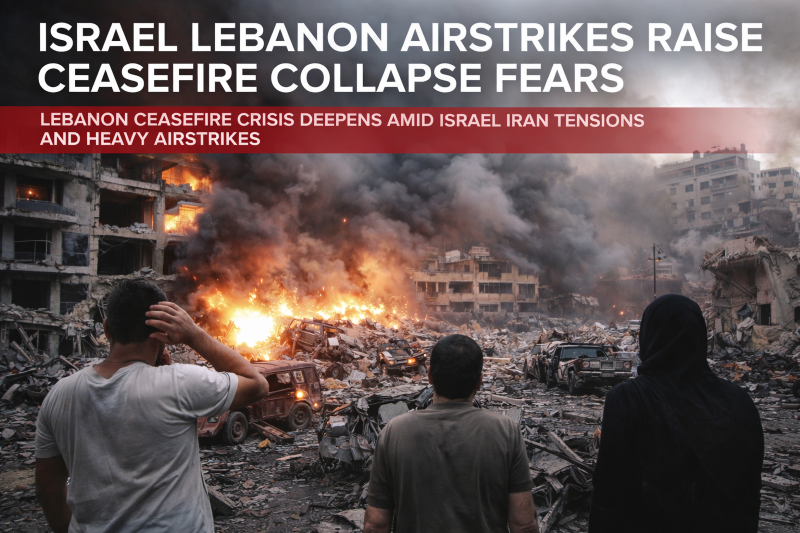
Lebanon Ceasefire Crisis Deepens Amid Israel Iran Tensions and Heavy Airstrikes
A fragile regional truce has come under intense strain after Israeli airstrikes on Lebanon killed hundreds and sparked accusations that the attacks were designed to undermine a recently announced ceasefire agreement involving Iran and United States.
More than 250 people were killed and thousands injured after Israel launched a massive wave of airstrikes across Beirut, southern Lebanon, and the Bekaa Valley. The strikes came just hours after a US-Iran ceasefire announcement, which had raised hopes of de-escalation in a wider regional conflict.
Dispute Over Ceasefire Terms
A major point of contention is whether Lebanon was included in the ceasefire agreement. Pakistan, which helped broker the deal, says it was included, while Israel insists it was not bound by the truce.
The United States has publicly supported Israel’s position, with former U.S. President Donald Trump describing the violence in Lebanon as a “separate skirmish,” despite claims that Hezbollah had entered the conflict in support of Iran.
Massive Strikes Across Lebanon
Within minutes, Israeli forces carried out over 100 airstrikes, hitting multiple locations and causing widespread destruction. Lebanese authorities reported hundreds killed, including civilians in Beirut and surrounding areas.
The attacks were widely condemned by several countries and international organizations, including the United Nations, France, the United Kingdom, Spain, and Pakistan.
Iran Responds With Strait of Hormuz Blockade
In response to the escalation, Iran reportedly reimposed restrictions on the strategic Strait of Hormuz, further raising fears of an expanded Iran Israel conflict affecting global energy markets.
Political Pressure Inside Israel
Inside Israel, Prime Minister Benjamin Netanyahu faces growing criticism over the handling of the war and its uncertain outcomes. Opposition leaders argue that the ceasefire deal—brokered without Israel’s full involvement—has weakened Israel’s strategic position.
Some analysts suggest the strikes may have been aimed at achieving military gains against Hezbollah fighters, while others argue they risk undermining broader peace efforts.
Accusations of Ceasefire Sabotage
Critics, including political analysts and former officials, have accused Israel of deliberately escalating tensions to disrupt the ceasefire process. They argue the strikes intensified civilian suffering and risk prolonging regional instability.
Opposition voices within Israel also claim the government is under political pressure and seeking military actions to regain public support ahead of upcoming elections.
Regional Uncertainty Grows
As accusations and counterclaims continue, the fragile Lebanon ceasefire crisis appears increasingly unstable. With multiple actors involved—including Israel, Iran, and the United States—the risk of further escalation remains high.
For now, hopes for lasting peace remain uncertain as diplomatic divisions deepen and violence continues to reshape the region.
Source: Al Jazeera