
North Korea strengthens nuclear policy and labels South Korea as most hostile state
North Korean leader Kim Jong Un has declared that the country’s nuclear status is irreversible, vowing to expand its nuclear arsenal while issuing a strong warning to South Korea.
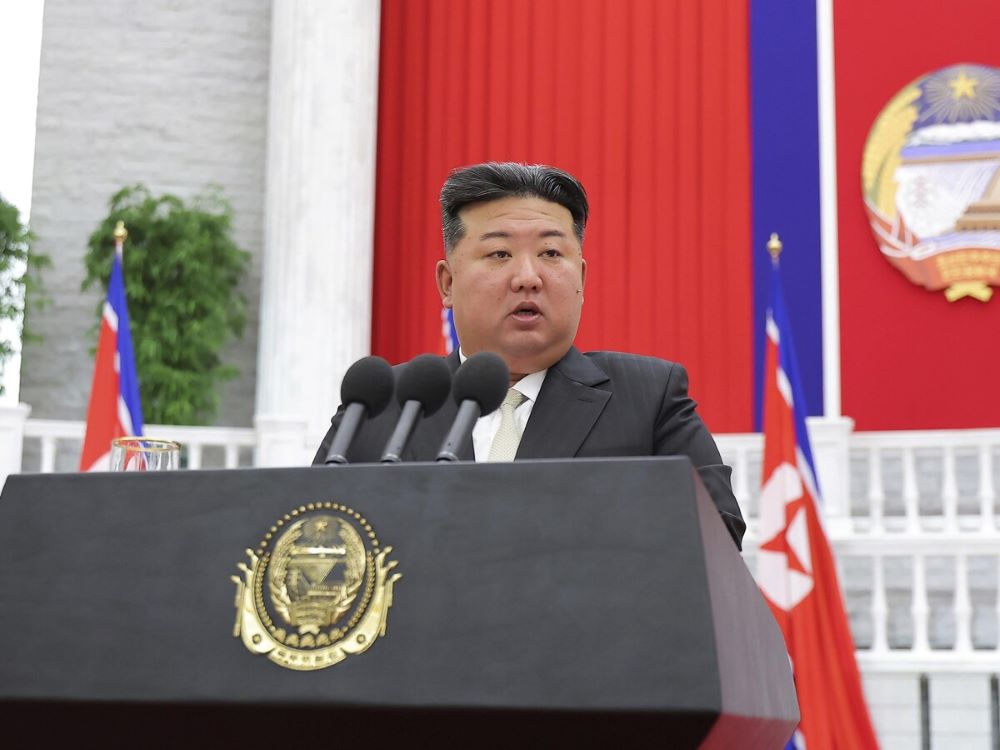
Speaking at the Supreme People’s Assembly, North Korea’s parliament, Kim emphasized that strengthening a “self-defensive nuclear deterrent” is essential for national security, economic growth, and regional stability.
Nuclear Policy “Non-Negotiable”
Kim rejected any possibility of nuclear disarmament in exchange for economic benefits or security guarantees, stating that North Korea’s strategy has already proven successful.
“The true guarantee of a state’s existence and peace,” Kim said, lies in maintaining strong nuclear capabilities.
Analysts believe the remarks also indirectly criticize global military actions, reinforcing Pyongyang’s long-standing position that nuclear weapons are essential for regime survival.
South Korea Labeled “Most Hostile State”
In a sharp escalation of rhetoric, Kim officially described South Korea as the “most hostile state”, warning that any violation of North Korea’s sovereignty would be met with a “merciless” response.
This marks a significant shift from decades of policy aimed at peaceful reunification, redefining relations between the two Koreas as those of open hostility.
South Korea’s presidential office responded by calling the remarks “undesirable for peaceful coexistence”, urging dialogue and cooperation instead.
Expanding Military and Economic Plans
Alongside security policy, Kim outlined a new five-year economic plan focused on:
Modernising industry
Increasing energy and coal production
Boosting food output
Expanding housing construction
North Korea also approved a 2026 budget, allocating 15.8% of total spending to defence, with a clear focus on strengthening nuclear and military capabilities.
Growing Strategic Alliances
During the session, Vladimir Putin sent a message praising Kim’s leadership and reaffirming plans to deepen strategic ties between Russia and North Korea, signaling a growing geopolitical alignment.
Source: Reuters