


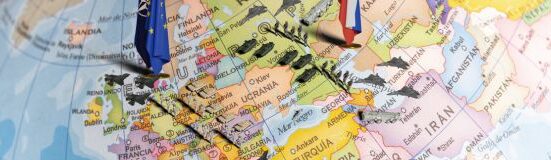


Belarusian President Alexander Lukashenko, one of the few leaders who have been in power for 30 years, has faced numerous accusations of election manipulation, suppressing dissent, and undermining democracy. While the UK, EU, and US do not recognize him as the legitimate leader of Belarus, Lukashenko is a close ally of Russian President Vladimir Putin. The two leaders meet frequently, making Lukashenko well-acquainted with Putin’s strategies.
During an interview with the BBC on the sidelines of the BRICS summit, Lukashenko, who seeks Belarus’ membership in the bloc, addressed reports that North Korea had sent troops to fight alongside Russia in Ukraine. He dismissed the rumors, stating, “Rubbish. Knowing Putin, he would never ask another country to send troops for Russia’s special operation in Ukraine.”
When pressed on the potential escalation if the reports were confirmed, Lukashenko acknowledged that the involvement of foreign troops, including from Belarus, would lead to further conflict escalation. “If any country’s forces, even Belarus, were deployed, it would be a step toward escalation because Western powers, the Anglo-Saxons, would claim that more countries are joining the conflict, prompting NATO to deploy forces in Ukraine.”
Despite Belarus’ role in Russia’s war, including allowing Russian troops to launch part of their 2022 invasion from Belarusian territory, Lukashenko denied giving explicit permission. He described how Russian troops moved through Belarus during joint military exercises and redirected to Kyiv without his involvement.
On the sensitive subject of nuclear weapons, Lukashenko emphasized that while Russia has stationed tactical nuclear weapons in Belarus, Putin would never use them without Belarusian consent. He added, “I’m ready to authorize their use, but only if foreign forces invade Belarus.”
Lukashenko also responded to questions about the country’s political prisoners. Though human rights groups estimate there are 1,300 political prisoners in Belarus, he previously denied their existence. However, he referred to the recent release of some elderly and sick prisoners, dismissing suggestions that the move was intended to improve relations with the West. “We freed them on humanitarian grounds. This isn’t a step toward better relations with the West. If you don’t want relations with us, we’ll manage without you,” he stated.