
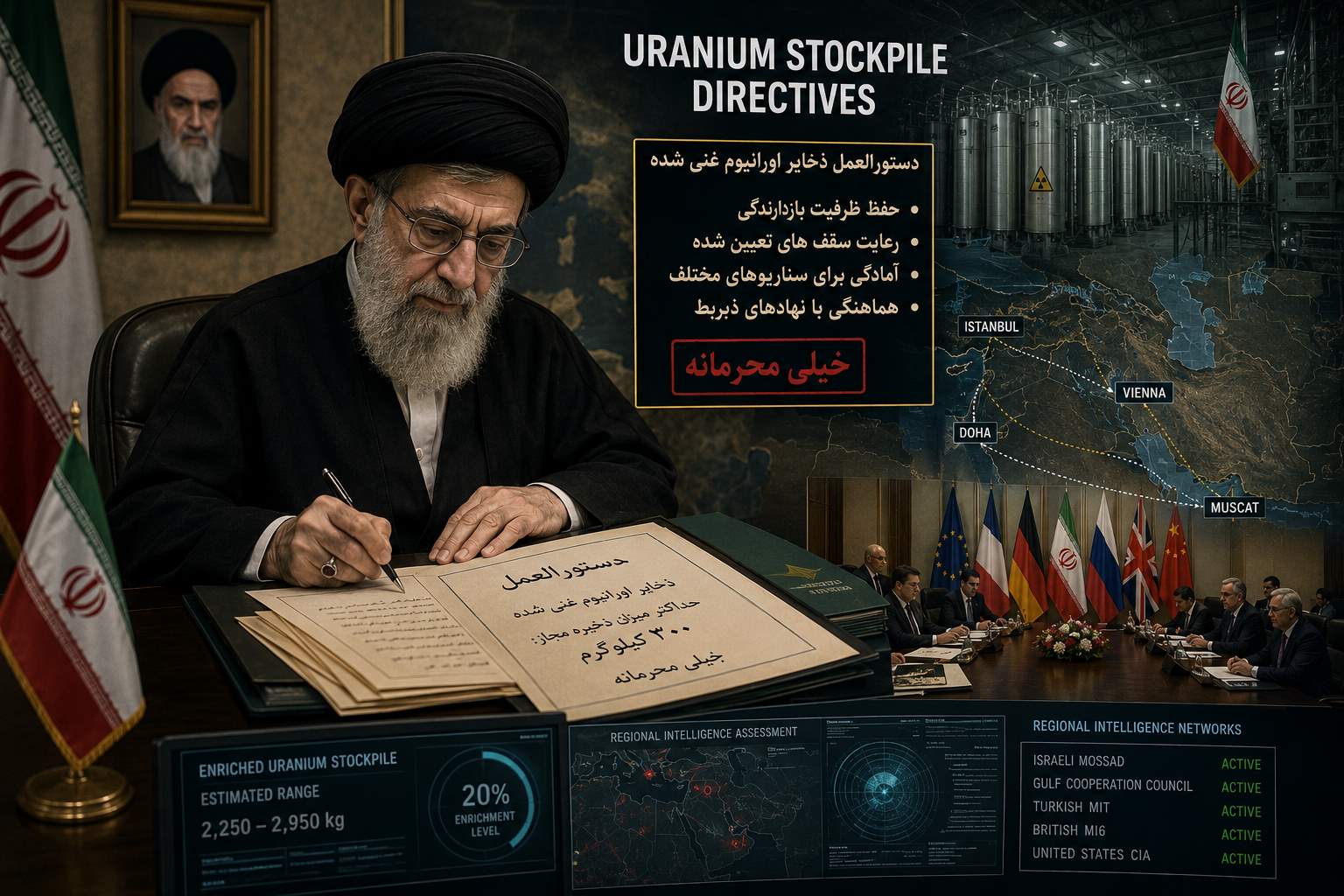
Directives from Tehran regarding enriched nuclear material limits signal tactical flexibility as multilateral talks resume, amid close observation by regional intelligence networks.
Published: May 22, 2026
Last Updated: May 22, 2026
Byline: Staff Writer, Global War News
The Iranian leadership has issued a series of highly specific internal directives aimed at capping the country’s stockpiles of highly enriched uranium. The orders, which circulate amidst a broader diplomatic push in Western capitals, mark a notable shift in Tehran’s strategic posturing as back-channel communications regarding its nuclear infrastructure formally reopen.
The directives follow an intensification of closed-door diplomatic engagements involving European mediators and regional intermediaries. While Western defense analysts remain cautious about the long-term structural implications of the directives, the move appears intended to establish a baseline for negotiations, signaling an openness to freeze specific technical advancements in exchange for targeted sanctions relief.
The tracking of these internal policy shifts highlights the complex nature of contemporary counter-proliferation diplomacy, where internal state decrees are closely parsed by foreign intelligence services to gauge a regime’s true operational thresholds.
Technical Directives and the Stockpile Cap
According to detailed intelligence reports published by Reuters, which cited high-ranking Israeli official channels, the supreme command in Tehran issued instructions to technical teams at the Natanz and Fordow fuel enrichment plants. The directives explicitly command technicians to pause further accumulation of uranium enriched to 60% purity, a threshold that international experts categorize as technically close to weapons-grade material.
The reporting indicates that the policy adjustment was authorized directly by Mojtaba Khamenei, who has assumed an increasingly prominent role in overseeing the Islamic Republic’s strategic defense portfolios and diplomatic strategy.
While the official state media apparatus in Tehran has not broadcast the texts of these instructions, international nuclear watchdogs have observed a stabilization in the operating configurations of specific centrifuge cascades within the country’s heavily fortified enrichment complexes.
Under the framework outlined in the intercepted briefs, Iran intends to maintain its existing volume of highly enriched material but will actively downblend any newly processed surpluses into lower-concentration forms, specifically the 5% to 20% purity ranges utilized for civilian medical research and nuclear power generation.
The implementation of these caps provides a temporary technical pause, preventing the stockpile from crossing critical mass thresholds that would trigger automatic military response protocols from regional adversaries.
Re-opening of Diplomatic Channels
The issuance of the stockpile directives coincides with a coordinated resumption of multilateral diplomatic tracks across several European capitals. Diplomatic sources indicate that senior Iranian negotiators have engaged in unpublicized, exploratory talks in Vienna and Geneva with representatives from the European Union, alongside indirect involvement from American envoys.
The primary objective of these renewed sessions is to construct a transitional framework to succeed the lapsed Joint Comprehensive Plan of Action (JCPOA). Western diplomats, speaking anonymously to international wire services, noted that Tehran’s willingness to cap its 60% enriched material serves as a necessary prerequisite for sustaining any serious dialogue regarding the unfreezing of overseas financial assets and the mitigation of secondary energy banking restrictions.
However, the disclosure of these directives through Israeli official channels underscores the deep-seated skepticism pervading the regional security apparatus. Officials in Jerusalem have publicly stressed that tactical pauses in enrichment do not equate to a dismantling of nuclear infrastructure.
They argue that Iran retains the technical knowledge and advanced centrifuge hardware necessary to rapidly accelerate enrichment activities if diplomatic tracks fail to meet Tehran’s economic demands.
Analysis: Strategic Timing and Economic Motivations
From a geopolitical and warfare analysis perspective, the timing of these directives points toward a calculated effort by the Iranian leadership to manage multiple domestic and external pressures simultaneously. The Iranian economy continues to face significant structural strains, driven by years of comprehensive international trade restrictions, currency depreciation, and localized energy shortages.
By offering a verifiable cap on its most sensitive nuclear material, the regime seeks to achieve three distinct tactical outcomes:
- Sanctions Mitigation: Securing immediate waivers or partial compliance exemptions for oil shipments to Asian markets, thereby generating essential hard-currency inflows to stabilize internal markets.
- Deterrence Management: Defusing the immediate risk of pre-emptive military strikes against its defense and industrial infrastructure by staying below the perceived “red lines” established by Western powers.
- Negotiating Leverage: Utilizing its existing, frozen stockpiles as a primary bargaining chip, ensuring that any future comprehensive treaty must begin with significant concessions from the international community.
The involvement of Mojtaba Khamenei in these directives is particularly significant for long-term stability mapping. His direct intervention signals to both domestic factions and external observers that the strategic decisions surrounding the nuclear portfolio carry the full weight of the state’s central authority, reducing the likelihood of policy reversals by rogue elements within the technical ministries.
Outlook and What to Watch
In the coming weeks, the primary indicator of the validity of these directives will be the upcoming quarterly monitoring reports issued by the International Atomic Energy Agency (IAEA). Inspectors from the global watchdog are scheduled to conduct on-site physical inventory verifications at Fordow and Natanz, which will provide the first independent, empirical confirmation of whether the enrichment caps are being strictly maintained on the ground.
Observers should also closely monitor the reaction of the United States Congress and regional Gulf partners to the reopening of the diplomatic channels. If the initial transitional framework yields measurable progress, it could lead to a formal de-escalation of maritime security measures in the Persian Gulf and a stabilizing of global energy transit risks.
Conversely, any evidence that enrichment activities have been covertly maintained or diverted to undeclared sites will likely collapse the fragile diplomatic track, triggering a rapid return to heightened regional military alerts.
Source Disclosure Note: This report is based heavily on primary investigative coverage published by Reuters on May 21, 2026, which synthesized data obtained via verified Israeli official intelligence channels and European diplomatic briefs. Technical specifications regarding uranium enrichment categories and centrifuge configurations are sourced from public situational updates provided by the International Atomic Energy Agency (IAEA) and analytical briefs from the Institute for Science and International Security.
This article is based on publicly available reporting from named international news agencies and attributed official statements. All claims about ongoing events are attributed to their original sources. Analysis sections represent the editorial interpretation of reported facts and do not constitute advocacy for any party to the described conflict. AI tools may be utilized for image generation to assist in explaining complex concepts, as well as for refining grammar, spelling, and other linguistic enhancements. However, all original content is produced, fact-checked, and revised by the editorial team. This publication does not take political positions on active military conflicts.