
Iran’s New Supreme Leader Takes Power as US-Israel War With Iran Escalates
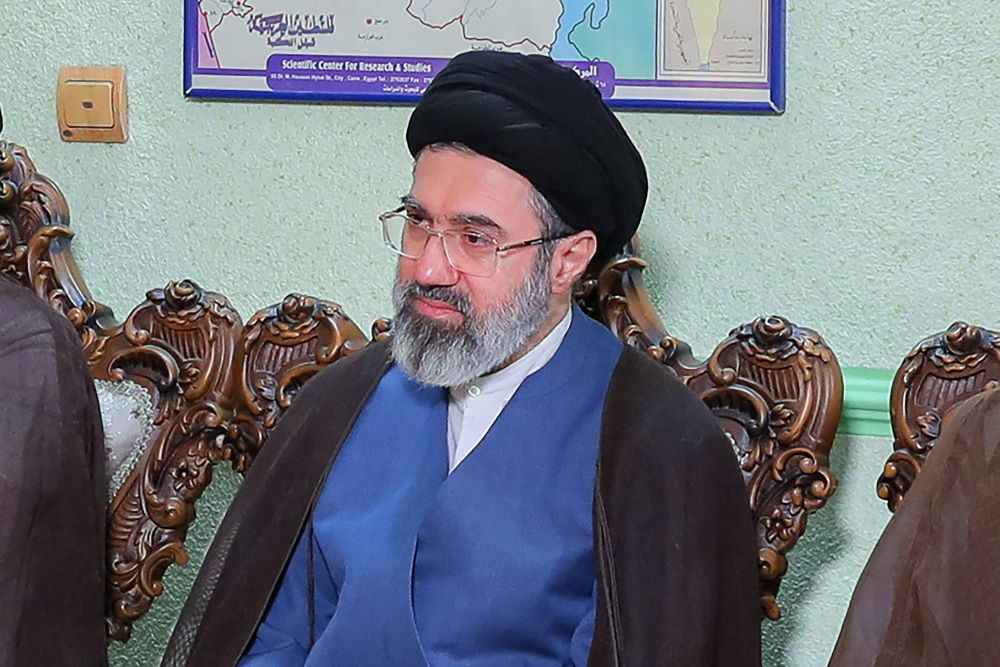
Iran has officially appointed Mojtaba Khamenei as the country’s new Supreme Leader, just over a week after the assassination of Ayatollah Ali Khamenei in joint United States–Israeli air strikes on Tehran. The leadership change comes as Iran faces what many analysts call the most serious crisis in the Islamic Republic’s 47-year history.
The 56-year-old cleric, long seen as a powerful figure within Iran’s political establishment, was formally selected by the Assembly of Experts on Sunday to succeed his father. The decision came quickly despite the ongoing war and rising tensions across the Middle East.
Support From Iran’s Leadership and Military
Soon after the announcement, senior officials and powerful institutions, including the Islamic Revolutionary Guard Corps (IRGC) and the Iranian armed forces, pledged their loyalty to the new leader.
Ali Larijani, secretary of the Supreme National Security Council, urged Iranians to unite behind Mojtaba Khamenei during the escalating conflict. Meanwhile, Parliament Speaker Mohammad Bagher Ghalibaf described following the new supreme leader as a “religious and national duty.”
Although Mojtaba Khamenei has never held elected office, he has spent decades within the inner circle of power, building strong ties with Iran’s clerical leadership and the IRGC.
A Hardline Leader During Wartime
Political analysts believe his appointment signals continuity within Iran’s leadership, with little expectation of immediate policy moderation.
Observers note that Mojtaba Khamenei largely shares his father’s hardline stance toward the United States and Israel, suggesting that tensions with Western powers could intensify while the war continues.
Some analysts say his rise could strengthen the influence of conservative factions within Iran’s ruling establishment, reducing the likelihood of quick negotiations as the conflict enters its second week.
However, experts say the situation could evolve depending on how the war develops.
A Message of Defiance
Many analysts view the appointment as a direct message to Washington and Tel Aviv.
According to regional experts, the move demonstrates that Iran’s political system remains intact despite attempts to weaken it through military action.
Members of the Assembly of Experts, the 88-member body responsible for selecting the supreme leader, said they reached a decision quickly despite what they called “aggression from America and the Zionist regime.”
The clerical body emphasized that the future leadership of Iran will be determined solely by the Iranian system, rejecting outside pressure.
Rising Tensions With the United States
The appointment is expected to further strain relations with US President Donald Trump, who previously warned that Mojtaba Khamenei would be an “unacceptable” choice to lead Iran.
Trump also suggested that any new Iranian leader would need US approval to remain in power, comments that Iranian officials strongly rejected.
Iranian leaders insisted that only the Iranian nation can decide its leadership, dismissing outside involvement in the country’s political system.
War Intensifies Across the Region
The leadership transition comes amid intensifying military conflict.
Over the weekend, Israeli air strikes targeted several oil facilities in and around Tehran, sending thick smoke across the capital city.
At the same time, Iran’s IRGC announced that it has enough weapons and resources to continue missile and drone attacks for up to six months.
Officials also warned that more advanced long-range missiles could soon be deployed if the conflict escalates further.
Meanwhile, the United States has not ruled out sending ground troops into Iran, even as Washington claims the war could be nearing its final stage.
Uncertain Path Ahead
Analysts say there is no clear path to ending the conflict, which could continue for weeks or even months.
With a new leader in power and regional tensions rising, the Middle East now faces a critical and unpredictable period that could reshape the balance of power across the region.
Source: Al Jazeera