
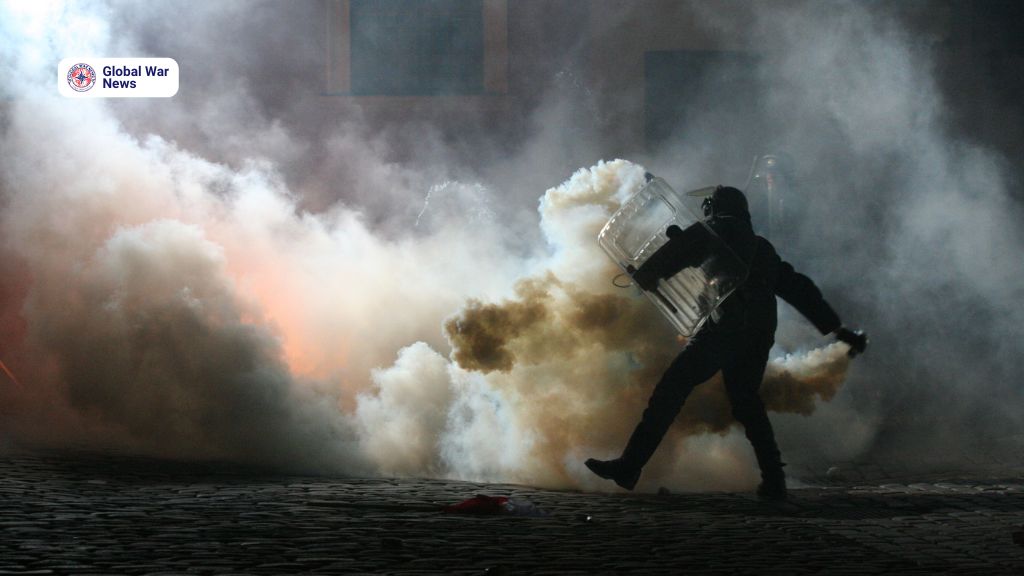
As the Russia-Ukraine war enters day 1,329, new attacks on Kharkiv, rising NATO military aid, and political turmoil in Odesa highlight another tense chapter in Europe’s ongoing conflict.
Fighting Intensifies Across Ukraine
Overnight, Russian forces unleashed a fresh wave of glide bombs and drone strikes on Kharkiv, Ukraine’s second-largest city. The attacks struck the city’s main hospital, wounding seven people and forcing the evacuation of 50 patients, according to regional governor Oleh Syniehubov.
Russia’s Ministry of Defence claimed to have seized control of Balahan, a small village in the Donetsk region, marking another advance in the east.
In southern Ukraine, a United Nations aid convoy came under fire near Bilozerka in the Kherson region. The UN described the attack as “utterly unacceptable” after two trucks were set ablaze by Russian-operated drones. Thankfully, no injuries were reported.
Meanwhile, authorities ordered the evacuation of families from dozens of villages around Kupiansk, citing a worsening security situation. Syniehubov confirmed that 409 families, including 601 children, were told to leave 27 localities — a number later expanded to 40.
Russia is also expected to strengthen its military ranks, with a new law allowing up to two million reservists to be mobilized for the war effort.
Across Ukraine, power outages struck Kyiv and several regions as energy networks struggled under the pressure of recent Russian attacks. National operator Ukrenergo said lingering damage to the country’s power grid continues to disrupt supplies.
At the Zaporizhzhia nuclear power plant, work is set to begin this week to restore external power links after three weeks of relying on emergency generators. Russian diplomat Mikhail Ulyanov called for a “local ceasefire” to ensure safe repair work.
Military Aid and NATO Efforts
As ammunition supplies dwindle, NATO defence ministers are meeting to rally fresh military support for Ukraine. The Kiel Institute for the World Economy reported a sharp decline in European weapons deliveries over the summer.
Still, several countries are stepping up:
- The United Kingdom delivered more than 85,000 drones to Ukraine in the past six months.
- Germany’s Finance Minister Lars Klingbeil vowed continued funding to “secure Ukraine’s defence capabilities for years.”
- NATO allies are coordinating with the United States to ramp up pressure on Russian President Vladimir Putin.
Political Shake-Ups in Ukraine
In a dramatic political move, President Volodymyr Zelenskyy stripped Odesa’s mayor Gennadiy Trukhanov of his Ukrainian citizenship after revelations that he may hold Russian citizenship. Trukhanov, who denied the claims, vowed to challenge the decision in Ukraine’s Supreme Court and, if needed, at the European Court of Human Rights.
Zelenskyy announced plans to install a military administration in Odesa, citing ongoing security concerns.
Other figures, including ballet dancer Sergei Polunin and pro-Kremlin politician Oleg Tsaryov, were also reportedly stripped of citizenship for ties to Russia.
Meanwhile, US President Donald Trump voiced disappointment in Putin, saying he was “very disappointed” by Moscow’s persistence in the war. Trump is scheduled to meet Zelenskyy in Washington, DC, later this week to discuss air defence and long-range strike capabilities.
Ukrainian Prime Minister Yulia Svyrydenko, also in Washington, said her talks with US officials focus on energy security, sanctions, and strategic cooperation.
Regional Tensions and Global Reactions
In Europe, Polish Foreign Minister Radoslaw Sikorski warned that the continent must prepare for possible Russian strikes deep into Europe, calling for a regional “drone wall” along NATO’s eastern flank.
Germany’s Foreign Minister Johann Wadephul criticized both Russia and China, accusing Moscow of spying and disinformation and Beijing of undermining global stability.
Cyber warfare also escalated as pro-Russian hackers crippled Germany’s public procurement portal for nearly a week, disrupting government-business communications.
In response to NATO spending disputes, Trump threatened trade penalties against Spain for not raising its defence budget to 5 percent of GDP, calling the move “disrespectful to NATO.”
Meanwhile, Sweden announced plans to establish its first emergency grain reserves in the north, investing 575 million kronor ($60 million) to safeguard food supplies amid growing regional instability.
Economic Fallout
The Russia-Ukraine war continues to strain global business confidence. European Economic Commissioner Valdis Dombrovskis warned that the conflict is hurting US companies invested in Europe, with $19.2 trillion in US-owned assets affected by ongoing uncertainty.