
U.S.-Iran conflict intensifies with deadly aircraft crash, massive troop deployment, and rising tensions in the Strait of Hormuz
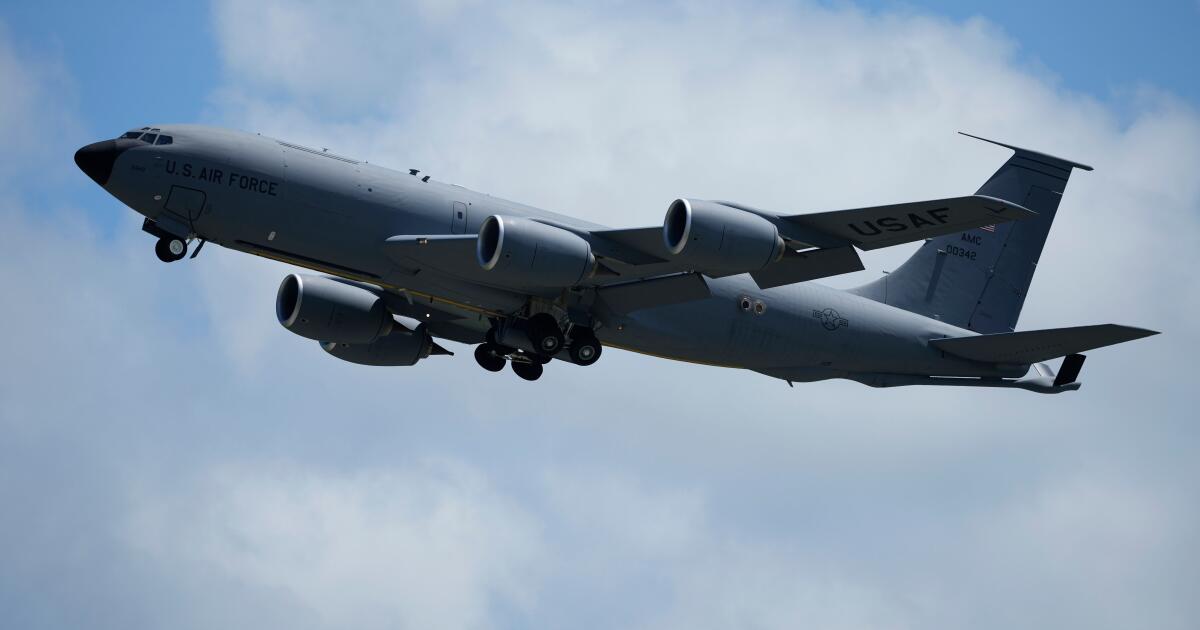
The U.S.-Iran war escalated Friday after six American airmen were killed when a U.S. refueling aircraft crashed in western Iraq, according to the U.S. Central Command. The tragedy raises the U.S. military death toll to 13 since the conflict began.
The aircraft involved was a KC-135 refueling tanker, which went down in “friendly airspace.” The Pentagon confirmed that another aircraft was involved in the incident but landed safely, and officials stressed that the crash was not caused by hostile or friendly fire.
Defense Secretary Pete Hegseth honored the fallen service members during a briefing at the Pentagon.
“American heroes, all of them,” Hegseth said. “We will greet those heroes at Dover, and their sacrifice strengthens our resolve to complete this mission.”
The incident is currently under investigation.
U.S. prepares for major escalation
The crash came as the United States prepares its heaviest round of strikes yet against Iran, part of a two-week joint U.S.-Israeli military campaign targeting Iranian military infrastructure.
According to Iranian officials, more than 1,300 civilians have been killed since the bombing campaign began on February 28, with buildings, factories, and military complexes destroyed across the country.
Hegseth made it clear that the U.S. military campaign would continue without compromise.
“No quarter, no mercy for our enemies,” he said.
2,500 Marines ordered to Middle East
At the same time, the Pentagon confirmed that about 2,500 U.S. Marines are being deployed to the Middle East.
The Marines will travel aboard the USS Tripoli amphibious assault ship, currently stationed in Japan, and are expected to arrive in the region within two weeks.
The deployment will add warships, fighter jets, and additional troops to support American forces already operating in the Middle East.
The move comes amid speculation that the United States could launch further operations against Iranian strategic locations, including Kharg Island, Iran’s main oil export hub.
Trump signals shifting war goals
President Donald Trump initially downplayed plans to target Kharg Island, saying the location was “not high on my list.” However, he later stated on social media that U.S. forces had carried out bombing raids on military targets on the island.
Trump claimed the strikes destroyed military facilities while leaving oil infrastructure intact, but warned that he could change strategy if Iran disrupts global shipping routes.
“I can change my mind in seconds,” Trump said.
When asked when the conflict might end, Trump responded simply:
“When I feel it — feel it in my bones.”
Strait of Hormuz blockade disrupts global markets
Meanwhile, Iran continues to threaten the Strait of Hormuz, one of the world’s most critical oil shipping routes.
The International Energy Agency warned the conflict has created the largest supply disruption in the history of the global oil market. Oil prices have surged about 40%, reaching nearly $95 per barrel since the war began.
The blockade has left around 1,000 ships stranded in the Persian Gulf, including energy tankers carrying oil and gas shipments destined for global markets.
Iran has also attacked vessels attempting to pass through the strait, intensifying fears of a major global energy crisis.
The United Kingdom Maritime Trade Operations reported 20 security incidents affecting ships in the region during March.
Fertilizer shortages threaten global food supply
The disruption is also affecting global agriculture.
More than one-third of the world’s fertilizer trade passes through the Strait of Hormuz, and prices for some key compounds have jumped up to 35%, reaching three-year highs.
Zippy Duvall, president of the American Farm Bureau Federation, warned the situation could increase farming costs and reduce crop yields.
“This is not only a threat to food security, but it could also increase inflation across the U.S. economy,” Duvall said in a letter to the White House.
Drone attacks spread across the region
The conflict is also expanding geographically.
On Friday, debris from an intercepted Iranian drone caused a fire in Dubai’s International Financial Center, though the damage was reported as minor.
At the same time, European countries have increased military involvement. The United Kingdom, France, and Italy have deployed naval forces near Cyprus, which has become a key strategic hub for Western operations.
Meanwhile, Israel said its strikes in Iran and Lebanon are intensifying, while Hezbollah launched retaliatory missile and drone attacks.
In Lebanon’s city of Sidon, at least eight civilians were killed and nine wounded during the latest violence, according to Lebanon’s Health Ministry.
Iran vows continued retaliation
Iran’s Supreme Leader Mojtaba Khamenei, who has not appeared publicly since taking power, issued a statement promising continued retaliation against the United States and Israel.
“Our revenge will be never ending,” he said, referencing both the recent attacks and the death of the former supreme leader.
Tehran continues to view its control over the Strait of Hormuz as its most powerful leverage in the conflict.
Source: LA Times