
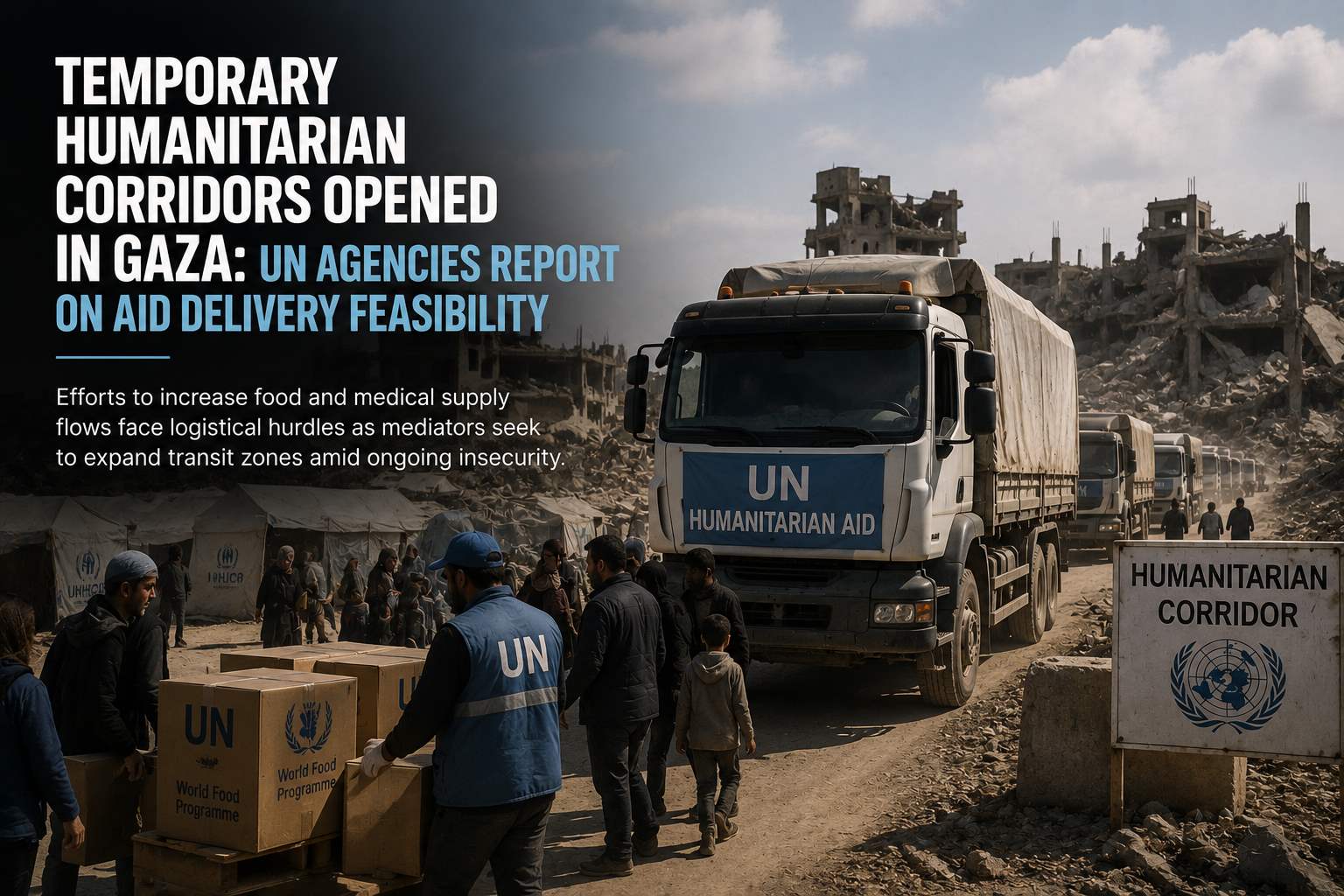
Efforts to increase food and medical supply flows face logistical hurdles as mediators seek to expand transit zones amid ongoing insecurity.
May 7, 2026
Last updated: May 7, 2026
By Staff Writer, Global War News
International aid agencies have begun utilizing newly designated temporary humanitarian corridors in Gaza, aiming to address critical shortages of food and medical supplies. The opening of these routes follows weeks of diplomatic pressure from the “Board of Peace” mediators in Cairo, who have sought to decouple immediate humanitarian relief from the broader, stalled negotiations regarding a permanent ceasefire.
According to a report from the United Nations Office for the Coordination of Humanitarian Affairs (OCHA), the feasibility of these corridors depends heavily on “deconfliction” agreements, mechanisms where aid coordinates movements with military forces to avoid being targeted. While some trucks have successfully transited, UN officials state that the current volume remains significantly below the 600-truck-per-day target established in earlier frameworks.
Logistical Barriers and Security Risks
The primary challenge for aid delivery remains the physical state of the infrastructure and the proximity of active combat zones. Reports from the World Food Programme (WFP) indicate that several primary roads are currently impassable due to unexploded ordnance and rubble.
As reported by Reuters, the “Yellow Line” zones—areas where forces were expected to withdraw to facilitate aid, remain a point of tactical friction. While the corridors are technically open, aid convoys have reportedly faced significant delays at inspection points. UN Under-Secretary-General for Humanitarian Affairs, Tom Fletcher, stated in a recent briefing that “a corridor is only as effective as the security guarantees that back it,” noting that several convoys had to turn back this week due to localized skirmishes.
The Economic and Health Impact of Supply Volatility
The inconsistency of aid delivery has had a direct impact on local market stability and public health. According to data from the World Health Organization (WHO), the lack of consistent fuel delivery has left approximately 65% of remaining water desalination plants in Gaza operating at a fraction of their capacity.
The economic impact extends to the surrounding region. As reported by the Egyptian Cabinet and cited by Anadolu Agency, the continued necessity of high-security logistics for aid has contributed to the broader $10 billion loss in Suez Canal-related revenues, as regional instability continues to deter standard commercial maritime traffic.
Analysis: Humanitarian Relief as a Diplomatic Lever
The opening of these temporary corridors represents a “middle-path” strategy by mediators. By focusing on “feasibility” rather than a permanent settlement, the UN and regional partners are attempting to prevent a total humanitarian collapse while the larger political deadlock in Cairo continues.
However, observers note that these corridors are often fragile. Without a transition to the “Phase Two” agreements, which include broader military withdrawals, these routes function more as a pressure-release valve than a sustainable solution. The reliance on daily, case-by-case security guarantees means that any single localized incident can halt the entire supply chain, leaving millions in a state of perpetual uncertainty.
What to Watch
The upcoming UN Security Council meeting later this month will likely review the first two weeks of data from these new corridors. Key indicators of success will include whether the average daily truck count rises above 300 and if fuel deliveries are permitted to reach northern sectors. Additionally, watch for any shifts in the “Board of Peace” proposal that might offer more permanent security guarantees for aid workers, as the current “temporary” status of the corridors remains a primary concern for international NGOs.
Sources: UN OCHA Daily Situation Report (May 2026), Reuters regional coverage, WFP Logistics Briefing, WHO Health Cluster Bulletin, Anadolu Agency economic report.
This article is based on publicly available reporting from named international news agencies and attributed official statements. All claims about ongoing events are attributed to their original sources. Analysis sections represent the editorial interpretation of reported facts and do not constitute advocacy for any party to the described conflict. AI tools may be utilized for image generation to assist in explaining complex concepts, as well as for refining grammar, spelling, and other linguistic enhancements. However, all original content is produced, fact-checked, and revised by the editorial team. This publication does not take political positions on active military conflicts.