
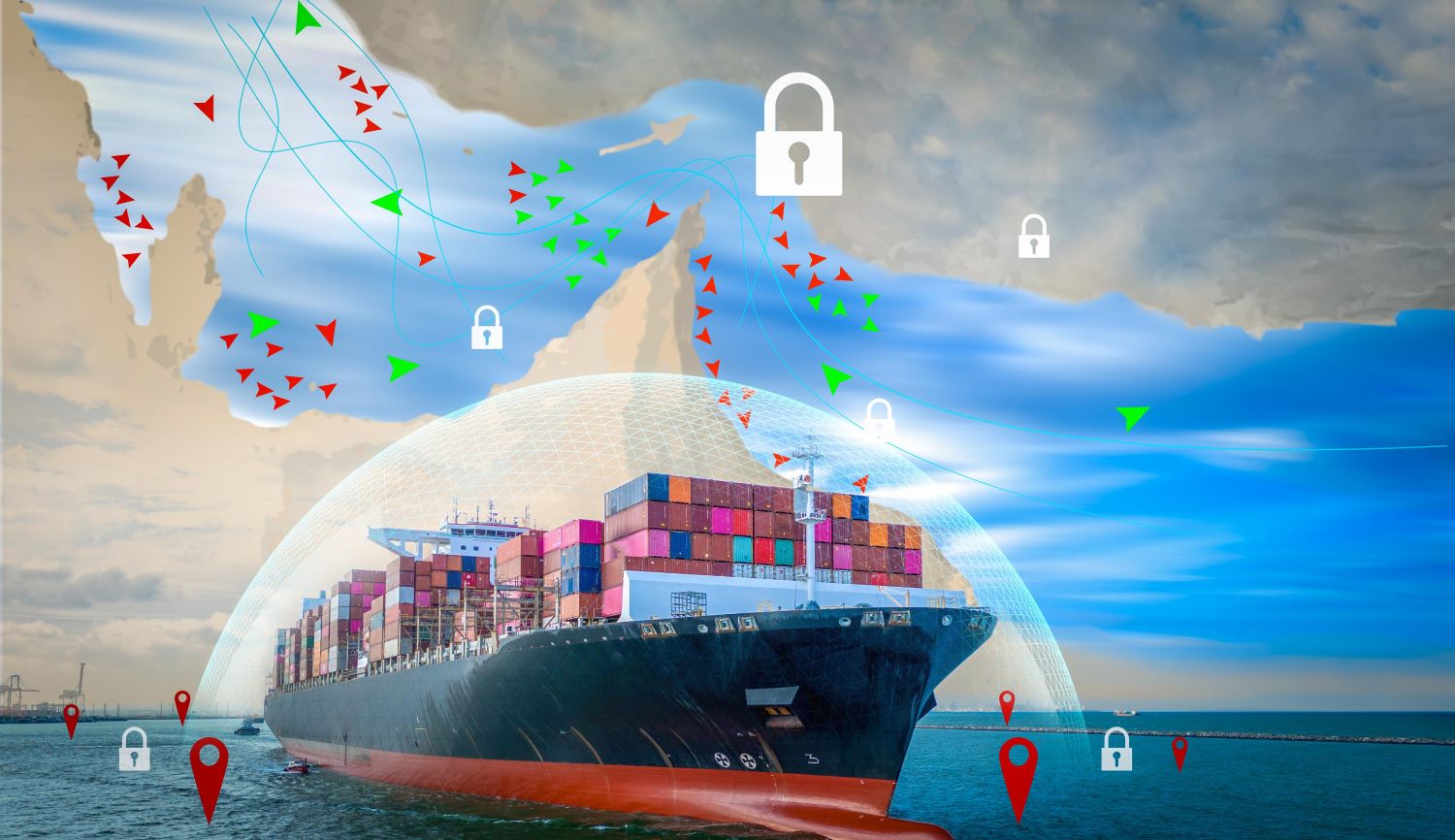
Tehran’s freshly deployed Persian Gulf Strait Authority introduces mandatory transit approvals and steep fees, undercutting international law and forcing a costly bifurcation of global shipping networks.
Publication Date: May 21, 2026
Last Updated: May 21, 2026
By Global War News Editorial
The economics of global energy transit underwent a structural shift this week. On May 20, 2026, Iran’s newly established Persian Gulf Strait Authority (PGSA) officially disclosed the boundaries of a “controlled maritime zone” spanning the entire width of the Strait of Hormuz. Moving beyond the kinetic disruptions that have characterized the regional conflict since late February, Tehran has formalised an administrative framework that mandates prior coordination and explicit authorization for all commercial vessels seeking transit.
The immediate consequence for the global economy is the institutionalisation of a maritime toll system where safe passage is conditioned on administrative approval and financial compliance. Industry data indicates that the freedom of navigation long guaranteed under international treaties has been replaced by a restrictive, selective access model. For shipping firms, financiers, and energy consumers, the implementation of these rules introduces severe compliance risks, higher insurance premiums, and a fragmented regulatory landscape that will likely persist long after active hostilities subside.
The New Regulatory Matrix
According to statements published on record by the PGSA, the boundaries of the newly declared management supervision area extend from a line connecting Kuh Mobarak in Iran to the south of Fujairah in the United Arab Emirates (UAE) at the eastern entrance, to a line connecting Qeshm Island to Umm al-Quwain in the UAE at the western gate.
Under the directives issued by the Iranian Supreme National Security Council, vessel operators must now submit detailed manifests via digital channels prior to entering the corridor. The required disclosures include comprehensive documentation of ownership, hull and machinery insurance policies, complete crew manifests, and explicit cargo specifications.
The formalization of this administrative architecture transforms the chokepoint from a contested combat zone into a heavily regulated bottleneck. Security analysts monitoring the region report that the Islamic Revolutionary Guard Corps (IRGC) Navy is actively enforcing these requirements from bases on Qeshm Island, conducting security inspections and vetting transiting hulls.
Tolls, Sanctions, and Financial Friction
The core economic friction lies in the financial conditions tied to these transit permits. Maritime intelligence reports indicate that the PGSA has begun enforcing a live toll regime. While an official public tariff has not been formally published by Tehran, international shipping logicians and data firms, including Windward, have documented instances where commercial vessel operators paid up to $2 million per transit to secure safe passage. Iranian officials have also floated a structured cargo toll of approximately $1.00 per barrel for crude oil shipments.
This payment mechanism creates an acute legal dilemma for international shipping companies, driven by two conflicting pressures:
- The Iranian Mandate: The PGSA requires these fees to be settled either in Iranian rials—requiring the opening of local accounts—or in Chinese yuan.
- The US Countermeasure: On May 1, 2026, the US Department of the Treasury’s Office of Foreign Assets Control (OFAC) issued formal guidance warning that any payments made to Iranian-linked entities for passage through the strait constitute prohibited transactions.
Consequently, non-US firms complying with Iran’s transit fees risk exposure to secondary US sanctions, potentially cutting them off from the dollar-denominated global financial system. This reality has driven a massive portion of remaining transit traffic “dark.” On-ground monitoring data from early May identified that out of 167 commercial-size vessels operating within the Strait of Hormuz area, 146 had deactivated their Automated Identification Systems (AIS) to obscure their compliance with the Iranian regime.
The Legal and Sovereign Clash
The implementation of the PGSA’s control zone has triggered an intense international legal dispute regarding the status of strategic chokepoints. Under Articles 37 to 44 of the United Nations Convention on the Law of the Sea (UNCLOS), the Strait of Hormuz is recognized as an international strait governed by the regime of “transit passage.” Article 44 explicitly states that coastal states shall not hamper or suspend transit passage for foreign vessels.
The Conflict of Customary Law: Because Iran has signed but never ratified UNCLOS, Tehran maintains that it is bound only by customary international law. Iranian authorities argue that the narrower standard of “innocent passage” applies, granting coastal states the right to suspend transit if national security is threatened.
Furthermore, because the newly declared Iranian control zone visually extends across the strait into waters under the jurisdiction of the UAE and adjacent to Oman, it has generated quiet diplomatic friction within the Gulf Cooperation Council (GCC). Iranian Foreign Minister Abbas Araghchi stated publicly during a recent diplomatic visit to India that the strait is an “exclusively Omani-Iranian waterway,” claiming there are no international waters between them. Oman has remained publicly silent on the matter, while Western diplomats contend that the imposition of arbitrary tolls and nationality-based restrictions is entirely unlawful.
Global Economic Implications and the Fragmented Strait
The implementation of the permit system is driving a clear bifurcation of international maritime trade. The shipping market is splitting into distinct categories based on geopolitical alignment:
| Vessel Category | Access Status | Operational Impact |
| Israel-Linked | Total Ban | Complete denial of entry; routing around the Cape of Good Hope. |
| US & Hostile-Linked | High Restriction | Severe scrutiny; high risk of interception or refusal by the IRGC. |
| Geopolitically Neutral / Compliant | Conditional Access | Subject to PGSA permits, $2M average toll fees, and dark operations to avoid US sanctions. |
| Chinese-Flagged / Aligned | Approved Transit | Granted passage following diplomatic understandings, though terms regarding fees remain opaque. |
The broader economic fallout manifests directly in global supply chains. While a brief diplomatic opening in mid-April temporarily eased total closures, the re-imposition of these administrative controls keeps shipping volumes at a fraction of pre-conflict levels, when the chokepoint carried roughly 20% of global seaborne petroleum.
War-risk ship insurance premiums for the strait, which sat at 0.125% of hull value before the February escalations, have stabilized at elevated rates between 0.2% and 0.4%. For a Very Large Crude Carrier (VLCC) valued at $100 million, this adds up to $400,000 in immediate operating costs per single transit, a expense ultimately passed down to global energy consumers.
What to Watch
As the PGSA cements its administrative presence, the primary variable to monitor is the level of compliance by major international shipping lines. If maritime operators systematically accept the permit framework and pay the associated fees, it risks establishing a permanent precedent where coastal states can commercialize and restrict international chokepoints.
The secondary factor is the enforcement posture of the US Navy and allied coalitions. With Washington warning governments against complying with the permit system, any active physical intervention to prevent vessels from paying tolls—or to protect non-compliant ships from Iranian enforcement, could spark a fresh wave of maritime escalations in the Gulf.
Source Disclosure Note: This report relies on official statements broadcasted by Iran’s Supreme National Security Council and state media outlets; maritime operational updates, AIS tracking data, and behavioral analytics compiled by Windward; reporting from international news wires including Reuters and Al Jazeera; and legal briefs on international maritime law from independent legal practices.
This article is based on publicly available reporting from named international news agencies and attributed official statements. All claims about ongoing events are attributed to their original sources. Analysis sections represent the editorial interpretation of reported facts and do not constitute advocacy for any party to the described conflict. AI tools may be utilized for image generation to assist in explaining complex concepts, as well as for refining grammar, spelling, and other linguistic enhancements. However, all original content is produced, fact-checked, and revised by the editorial team. This publication does not take political positions on active military conflicts.