


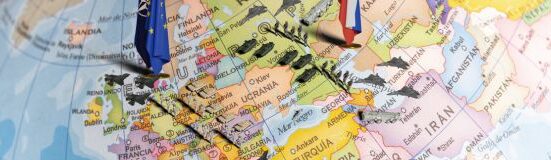

The war in Ukraine dominates the headlines, a brutal conflict displacing millions and shaking the global order. But to truly understand this present crisis, we must delve into the past. The roots of the war stretch back far beyond February 2022, reaching back to the fateful events of 2014.
In that year, Ukraine’s President Viktor Yanukovych, seen as beholden to Russia, was ousted after a wave of popular protests. Russia responded by annexing Crimea, a strategically important peninsula with a majority Russian population, and backing separatists in eastern Ukraine. This ignited a bloody conflict in the Donbas region that claimed thousands of lives and simmered for years.
The annexation of Crimea was a watershed moment. It shattered the post-Cold War order in Europe and signaled a new era of assertive Russian foreign policy. It also exposed the deep ethnic and political divisions within Ukraine, particularly between the more pro-Western west and the more pro-Russian east.
These divisions were fueled by decades of history. Ukraine has long been a crossroads between empires, caught between the influence of Russia and the West. After the collapse of the Soviet Union, Ukraine gained independence, but its relationship with Russia remained complex. Many Ukrainians, particularly in the east, have cultural and familial ties to Russia.
Since 2014, the West has imposed sanctions on Russia and provided military aid to Ukraine. However, these efforts failed to deter a full-scale invasion in 2022.
The war in Ukraine is not simply a product of recent events. It is the culmination of a long and complex history. Understanding the shadows cast by 2014 is essential to grasping the current crisis and its potential future trajectory.