
A humanitarian catastrophe reaches a breaking point as monitoring agencies document a systematic campaign of ethnic targeting
April 24, 2026
Last Updated: 16:45 UTC
By Global War News Editorial
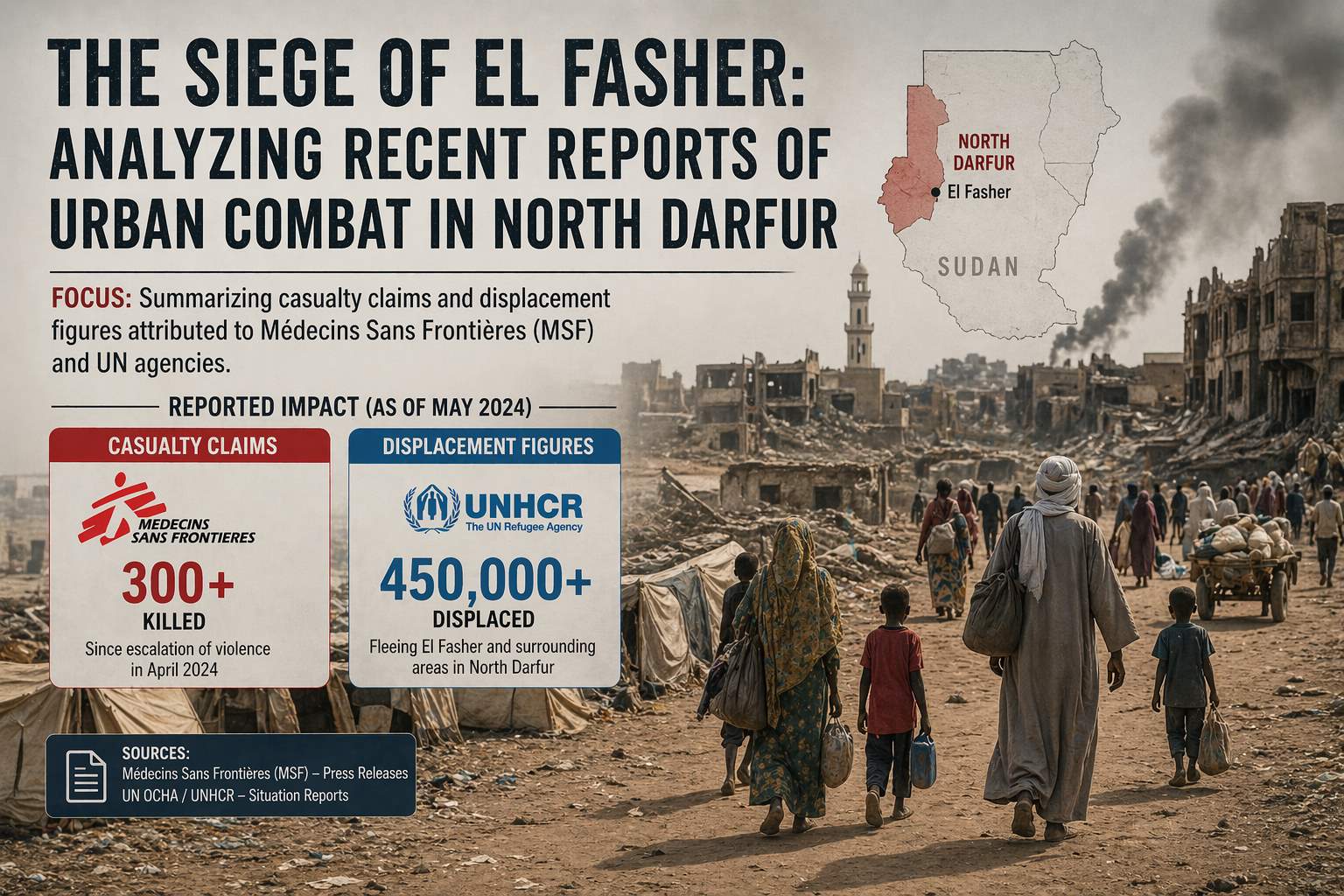
The fall of El Fasher, the last major urban stronghold in North Darfur previously held by the Sudanese Armed Forces (SAF), has transitioned from a prolonged military siege into an acute humanitarian crisis. According to a series of reports released in April 2026 by United Nations agencies and Médecins Sans Frontières (MSF), the city has become the site of what international monitors are now characterizing as a coordinated campaign of mass violence following its capture by the Rapid Support Forces (RSF) in late 2025.
As of April 24, the situation remains critical for the remaining civilian population. Humanitarian organizations have raised alarms over “absolute horror” in the city’s residential quarters, where urban combat has reportedly given way to house-to-house raids and the collapse of the local healthcare infrastructure.
Casualty Claims and the “Three-Day Massacre”
The most significant data regarding the scale of the violence originates from the UN Human Rights Office (OHCHR) and the UN Independent Fact-Finding Mission for Sudan. According to their February and April 2026 briefings:
- Documented Killings: UN monitors documented at least 6,000 killings in the first 72 hours following the city’s capture. This figure includes over 4,400 individuals killed within the city limits and an additional 1,600 targeted along exit routes as they attempted to flee.
- Targeted Locations: Reports specifically highlighted a massacre at the Al-Rashid dormitory of El Fasher University, where approximately 500 civilians sheltering from the fighting were killed by heavy weapons fire.
- Surgical Interventions: MSF teams, despite immense security constraints, reported treating over 7,700 patients for physical violence across their Sudan operations in the last year, with a significant concentration of gunshot wounds arriving from the El Fasher front.
Displacement and the Regional “Famine Path”
The siege and subsequent capture of El Fasher have catalyzed a fresh wave of displacement that is destabilizing the wider Kordofan and Darfur regions. According to the International Organization for Migration (IOM) and UN data released in April 2026:
- Recent Surge: Approximately 127,000 individuals were newly displaced specifically from El Fasher town between October 2025 and March 2026.
- Total Figures: Sudan is now recognized as the site of the world’s largest displacement crisis, with nearly 11.6 million people internally displaced. In North Darfur, the concentration of IDPs in sites like the Zamzam camp has created what the UN characterizes as “IPC Phase 5” conditions—an indicator of catastrophic famine.
- Exit Route Perils: Survivors interviewed by Refugees International at the Chad border reported summary executions and sexual violence occurring at RSF checkpoints along the main roads leading away from the city.
Analysis: The “Hallmarks of Genocide”
Analysts and international legal experts have suggested that the conduct documented in El Fasher represents a shift from conventional urban warfare to “genocidal violence.” A report released by the UN Fact-Finding Mission on April 15, 2026, titled “Sudan: Hallmarks of Genocide in El-Fasher,” concluded that the RSF acted with “intent to destroy, in whole or in part” the Zaghawa and Fur communities.
Observers note that the 18-month siege served to systematically weaken the population through starvation and medical deprivation before the final assault. This raises questions about the failure of international prevention mechanisms, as multiple warning signs—including satellite imagery from the Yale Humanitarian Research Lab, had predicted a mass casualty event months before the city fell. It remains unclear how the international community will respond to the specific evidence of foreign-backed mercenaries reportedly aiding in the city’s capture.
Closing Summary
The siege of El Fasher has evolved into a defining moment of the Sudan conflict, marked by documented mass killings and unprecedented displacement. While MSF and UN agencies continue to provide what limited aid they can through contested corridors, the scale of the humanitarian need has far outpaced the international response. With over 6,000 dead in the opening days of the city’s capture and hundreds of thousands now in the path of famine, El Fasher stands as a grim testament to the collapse of civilian protection in Darfur.
Sources: This article is based on reports and press releases from the UN Human Rights Office (OHCHR), Médecins Sans Frontières (MSF), the International Organization for Migration (IOM), and the UN Independent Fact-Finding Mission for Sudan. Additional evidence regarding satellite imagery and mercenary involvement was sourced from the Yale Humanitarian Research Lab and Refugees International.
This article is based on publicly available reporting from named international news agencies and attributed official statements. All claims about ongoing events are attributed to their original sources. Analysis sections represent the editorial interpretation of reported facts and do not constitute advocacy for any party to the described conflict. AI tools may be utilized for image generation to assist in explaining complex concepts, as well as for refining grammar, spelling, and other linguistic enhancements. However, all original content is produced, fact-checked, and revised by the editorial team. This publication does not take political positions on active military conflicts.