
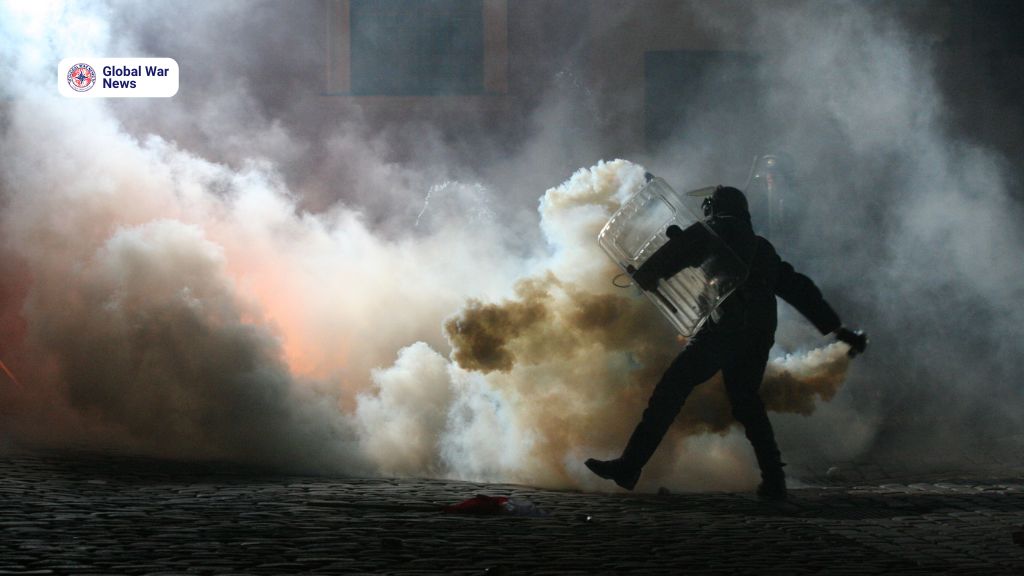
Ukrainian troops pull back from key villages under relentless Russian attacks, marking one of the toughest moments in the southern front of the ongoing Russia–Ukraine war.
The war in Ukraine has entered another critical phase as Ukrainian forces pulled back under intense Russian pressure in the Zaporizhia region, following some of the fiercest fighting seen in months.
Ukraine’s top military commander, Oleksandr Syrskii, admitted that the situation has “significantly worsened” in parts of southern Ukraine after the army withdrew from five frontline villages. The decision came amid overwhelming Russian artillery fire and relentless assaults that have devastated defensive positions.
“Using its numerical superiority in personnel and materiel, the enemy advanced in fierce fighting and captured three settlements,” Syrskii said on Tuesday.
Heavy Losses and Relentless Shelling
The Ukrainian Army reported that it ordered a withdrawal after the “de facto destruction of all shelters and fortifications” due to the massive bombardment. Russian forces reportedly launched more than 2,000 artillery shells at Ukrainian positions, destroying bunkers and trenches that had withstood months of warfare.
Despite the retreat, Ukrainian commanders said fighting continues for control of three other villages northeast of Huliapole, a key town in the southeastern Zaporizhia region.
Syrskii noted that Russian troops used heavy fog to infiltrate between Ukrainian lines, exploiting poor visibility to advance. However, he emphasized that Russia paid a heavy price, saying, “Every metre of our land costs Russia hundreds of military lives.”
Russian Advances on Multiple Fronts
The setback in Zaporizhia coincides with Russian claims of progress in the eastern Ukrainian cities of Pokrovsk and Kupiansk. Russian war bloggers released videos showing troops riding motorcycles and battered vehicles as they entered Pokrovsk—dubbed by Moscow media as “the gateway to Donetsk” for its strategic value.
Russia’s Ministry of Defence also announced that its troops had taken control of eastern Kupiansk, capturing an oil depot and several train stops in the process. Ukrainian officials, however, dispute reports of full encirclement, insisting that supply routes remain open through neighboring Myrnohrad.
Military observers warn that Ukraine’s thinning front lines, caused by troop shortages and Russia’s growing drone superiority, have made defensive operations increasingly difficult after more than three and a half years of war.
Zelenskyy: Situation “Difficult but Not Hopeless”
During a visit to the southern Kherson region, President Volodymyr Zelenskyy acknowledged the “difficult” situation in Zaporizhia and Pokrovsk. He noted that weather conditions—including heavy fog and rain—had favored Russian attacks, complicating Ukrainian countermeasures.
Still, Zelenskyy struck a determined tone, saying that Ukrainian forces had achieved “some results” in Kupiansk and remained committed to defending every position along the front.
Meanwhile, General Syrskii told U.S. media that Russia has concentrated an estimated 150,000 troops in its push toward Pokrovsk, part of a long-term strategy to threaten Ukrainian supply lines and consolidate control in eastern Ukraine.
A Critical Moment in the War
As both sides trade claims and losses, the battle for Zaporizhia stands as a stark reminder of the war’s shifting momentum. Ukraine’s military resilience continues to be tested under mounting pressure, while Russia seeks to exploit every weakness along the front.
What happens in the southeastern front could shape the next stage of this war—and the balance of power across Ukraine’s battlefields.
Conclusion
Ukraine’s withdrawal from several villages in Zaporizhia reflects the harsh realities of modern warfare and the toll of a prolonged conflict. With fighting intensifying across multiple fronts, every development matters. Follow us for real-time updates, share your thoughts below, and join the conversation about Ukraine’s path forward in this defining moment of the war.