
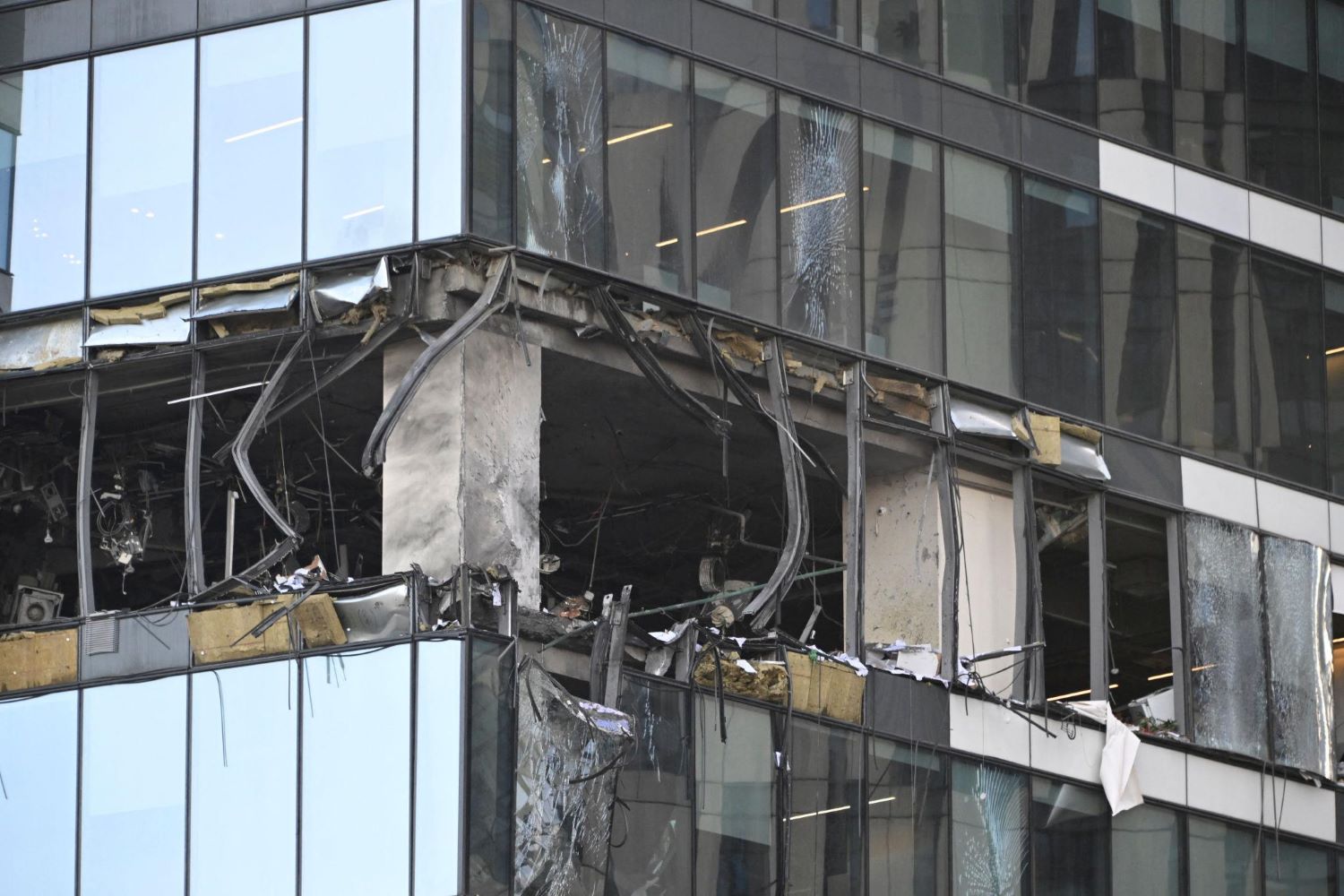
Air defenses intercept multiple unmanned aerial vehicles as debris falls cause civilian casualties and localized infrastructure damage across western Russia.
Publication Date: May 18, 2026
Last Updated: May 18, 2026
Byline: Global War News Editorial
A series of coordinated Ukrainian drone strikes targeting Moscow and several western Russian regions has left five people dead, according to statements from local and regional authorities. The long-range aerial assault, which took place overnight, triggered air defense activations across multiple federal subjects, causing temporary flight disruptions at capital airports and scattered fires from falling debris.
The Russian Ministry of Defense stated that its electronic warfare and air defense units intercepted the majority of the inbound unmanned aerial vehicles. However, local officials confirmed that falling wreckage breached civilian structures in residential areas outside the capital and within border provinces, marking one of the most lethal single-day drone incursions reported inside Russian territory this quarter.
The government in Kyiv has not officially claimed direct responsibility for the specific launch sites, maintaining its standard operational policy of ambiguity regarding kinetic actions inside the Russian Federation. However, Ukrainian military intelligence sources, speaking anonymously to international wire services, indicated that the strikes targeted logistics networks and energy nodes connected to the Russian military framework.
Regional Breakdown of Casualties and Physical Damage
The most severe casualties occurred in the Belgorod region, which directly borders Ukraine. According to a public statement by regional Governor Vyacheslav Gladkov, a drone detonation in a residential sector of a border village resulted in the immediate deaths of three civilians. Gladkov reported that an additional two individuals were hospitalized with shrapnel wounds after a separate strike damaged a local utility warehouse.
In the Moscow region, the attacks forced the Federal Air Transport Agency to temporarily suspend arrivals and departures at Vnukovo and Domodedovo international airports. Moscow Mayor Sergei Sobyanin stated via his official Telegram channel that at least two drones were downed over the Ramenskoye district, located southeast of the capital city center.
Sobyanin confirmed that debris from an intercepted drone struck an apartment complex, causing a localized fire that resulted in the deaths of two residents. Emergency services deployed to the scene contained the blaze within two hours, and regional authorities have promised financial compensation to the affected families. Additional drone interceptions were reported by state media in the Kursk and Voronezh regions, though local governors there reported no human casualties.
Intelligence Context and Targeted Infrastructure
The cross-border operations follow weeks of intensifying aerial friction between the two combatants. While the Russian Ministry of Defense claimed that over thirty drones were neutralised across four regions, independent security analysts tracking open-source radar data suggested that the flight paths indicated a deliberate attempt to saturate local Pantsir and S-400 air defense batteries.
A report by the Interfax news agency noted that secondary explosions were observed near an electrical substation in the Bryansk region following an intercept. Local authorities downplayed the incident, stating that the regional energy grid experienced no major interruptions, though emergency repair teams remained on standby.
In Kyiv, official commentaries remained focused on broader defensive actions. While the General Staff of the Armed Forces of Ukraine did not reference the Moscow strikes in its morning briefing, it highlighted ongoing efforts to neutralize Russian reconnaissance corridors along the front lines. Independent military observers note that Ukraine has steadily increased its domestic production of long-range attack drones, utilizing low-radar-signature materials to bypass sophisticated electronic jamming arrays along the border.
Context and Background: The War of Attrition in the Skies
The conflict has increasingly expanded beyond the immediate frontline sectors in eastern and southern Ukraine into a symmetric drone campaign affecting urban centers. Since early 2025, Ukraine has frequently launched long-range assets toward Russian industrial installations, oil refineries, and military staging areas to disrupt the supply chains fueling the Russian ground campaign.
Russian forces have concurrently maintained a high-frequency missile and drone campaign targeting Ukraine’s energy infrastructure, which has left portions of the country dependent on rolling blackouts and emergency Western power imports. The United Nations Human Rights Monitoring Mission in Ukraine has repeatedly noted that the ongoing cross-border strikes continue to exact a severe toll on civilian populations on both sides of the internationally recognized border.
Previous diplomatic efforts by European and global leaders to establish an exclusion zone around civilian energy and residential infrastructure have failed to gain traction. Both Moscow and Kyiv view deep-strike capabilities as crucial elements of their broader strategies of domestic deterrence and economic attrition.
Analysis: Escalation Risks and Air Defense Saturation
Observers note that the latest strikes demonstrate the persistent gaps in continental air defense systems when facing low-altitude, asymmetric threats. Even when intercept rates remain statistically high, the kinetic impact of falling debris over densely populated municipal areas like Moscow ensures that civilian casualties remain a recurring consequence of long-range drone warfare.
For the Kremlin, the regular penetration of airspace near the capital presents a distinct political challenge, contradicting official narratives that domestic security remains entirely insulated from the front lines. The choice to temporarily close major commercial airports highlights the immediate economic and logistical friction these operations introduce into the Russian domestic economy.
Conversely, for Ukraine, these strikes serve to compel the Russian military command to make difficult choices regarding asset allocation. By forcing Moscow to keep sophisticated air defense systems stationed deep inside its own territory to protect civic infrastructure, Kyiv successfully limits the number of anti-aircraft systems available to shield frontline Russian offensive operations in the Donbas.
What to Watch
The immediate focus will turn to the scale of Russia’s anticipated retaliatory response. Historically, major drone incursions targeting Moscow have been followed within 48 to 72 hours by waves of Russian strategic missile strikes against Ukrainian command nodes or energy facilities.
Additionally, international energy analysts will monitor whether subsequent Ukrainian launches adjust their targeting parameters to focus more heavily on oil export terminals in the Black and Baltic seas, a move that could directly impact global crude pricing frameworks.
Source Disclosure Note: This report is compiled from official statements issued by Moscow Mayor Sergei Sobyanin, Belgorod Governor Vyacheslav Gladkov, and the Russian Ministry of Defense. Ukrainian perspectives are drawn from briefings by the General Staff of the Armed Forces of Ukraine and reporting by international wire services including Reuters, the Associated Press, and Interfax. Additional context regarding civilian impacts is sourced from official publications of the United Nations Human Rights Monitoring Mission.
This article is based on publicly available reporting from named international news agencies and attributed official statements. All claims about ongoing events are attributed to their original sources. Analysis sections represent the editorial interpretation of reported facts and do not constitute advocacy for any party to the described conflict. AI tools may be utilized for image generation to assist in explaining complex concepts, as well as for refining grammar, spelling, and other linguistic enhancements. However, all original content is produced, fact-checked, and revised by the editorial team. This publication does not take political positions on active military conflicts.