
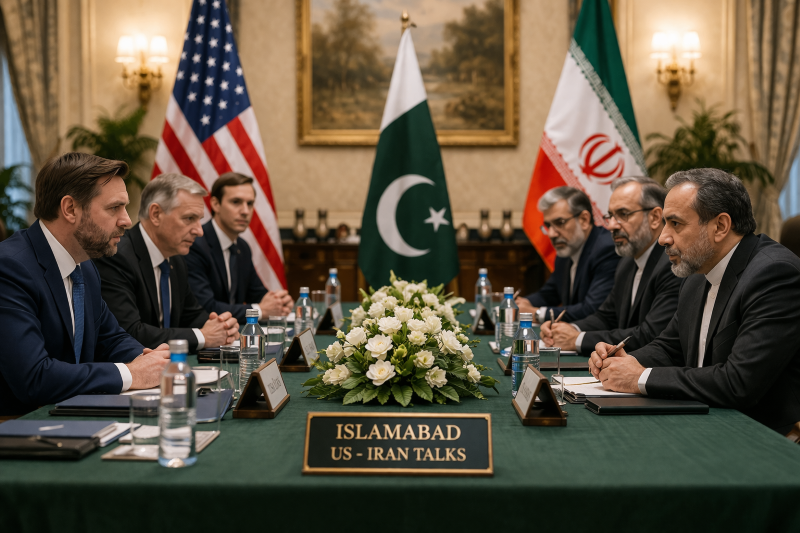
US Iran Talks in Islamabad Aim to Sustain Ceasefire and Dialogue
High-stakes US Iran talks have begun in Islamabad, with Pakistan setting a modest but critical goal: keep negotiations alive and extend the fragile ceasefire between the two sides.
A Modest Goal: Keep the Talks Alive
Rather than expecting a breakthrough, Pakistani officials are focused on ensuring that dialogue continues between United States and Iran. The talks follow a two-week ceasefire agreement, offering a brief pause after weeks of intense conflict.
Diplomatic sources say the primary objective is simple—find enough common ground to sustain future negotiations and avoid a return to escalation.
High-Level Delegations Arrive
The United States delegation is led by Vice President JD Vance, alongside senior officials including Steve Witkoff and Jared Kushner. Iran is expected to be represented by top leaders, including Foreign Minister Abbas Araghchi.
Despite the high-profile presence, expectations remain cautious, with both sides holding firm on key issues.
Proximity Talks: Dialogue Without Direct Contact
Negotiations are being conducted in a “proximity format”, meaning the two sides remain in separate rooms while Pakistani mediators shuttle messages between them.
This indirect approach reflects the deep mistrust between Washington and Tehran but also highlights Pakistan’s role as a neutral mediator.
Regional Tensions Threaten Progress
The biggest risk to the talks lies beyond the negotiation table. Ongoing Israeli strikes in Lebanon have raised tensions, with Iran warning that continued attacks could derail the ceasefire.
Disagreements persist over whether Lebanon is included in the truce, exposing fragile fault lines in the broader regional conflict.
Key Issues Still Divide Both Sides
Major sticking points remain unresolved:
- The U.S. seeks limits on Iran’s nuclear programme
- Iran demands sanctions relief and recognition of its rights
- The Strait of Hormuz remains a critical pressure point for global energy markets
These issues underline the complexity of reaching a long-term peace deal.
Global Support and Diplomatic Momentum
Pakistan has received strong backing from global leaders, with multiple countries expressing support for its mediation efforts. This surge in diplomatic engagement reflects confidence in Islamabad’s ability to facilitate dialogue.
A Fragile Path Forward
While expectations are low, even a small agreement to continue talks would mark a significant step toward de-escalation.
For now, Pakistan’s strategy is clear: create breathing space for peace, even if a final resolution remains distant.
Source: Al Jazeera