
Republicans skeptical, Democrats welcome temporary truce as negotiations with Tehran begin
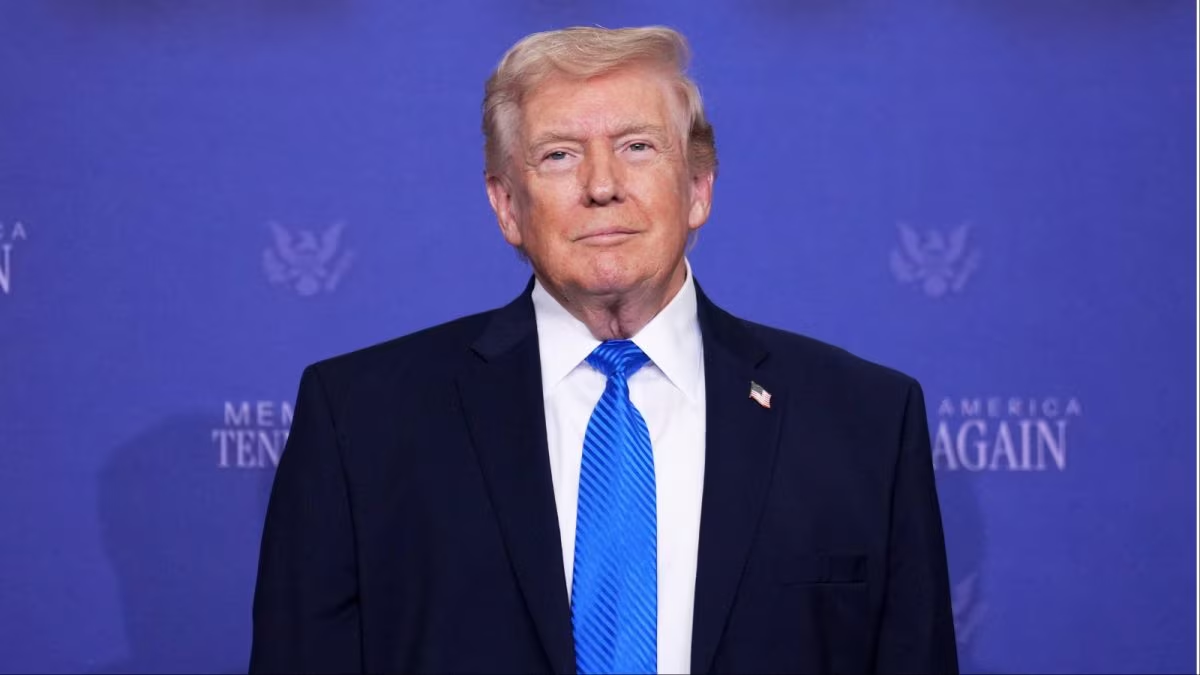
US politicians have expressed a mix of caution and relief following President Donald Trump’s announcement of a two-week ceasefire with Iran, which also reopens the Strait of Hormuz. The truce pauses hostilities and sets the stage for talks aimed at ending the conflict, but reactions in Washington highlight sharp political divisions over accountability, diplomacy, and the legality of the war.
Republican Reactions: Skepticism and Caution
Some of Trump’s Republican allies, particularly Iran hawks, voiced doubt about the ceasefire’s durability. Senator Lindsey Graham, a prominent Trump supporter, said he valued diplomacy but remained “extremely cautious” about the details of the deal.
Graham emphasized that Iran’s previous attacks on the Strait of Hormuz and its uranium enrichment program remain major concerns. He insisted that lawmakers would closely review any agreement to ensure the US does not reward hostile behavior.
Far-right figures close to Trump, like activist Laura Loomer, warned the ceasefire “will fail” and argued that negotiations provide little benefit to the US, while commentator Mark Levin noted that Iran remains a persistent threat despite the pause in fighting.
Democratic Reactions: Relief and Calls for Accountability
Democrats largely welcomed the truce but stressed the need for accountability over the war. Senator Ruben Gallego expressed relief that US troops are now safer, while Ed Markey called the conflict “illegal” and urged Congress to take action against Trump for bypassing constitutional authority.
Progressive voices, including Congresswoman Alexandria Ocasio-Cortez, warned that the ceasefire “changes nothing” regarding Trump’s responsibility, citing his unauthorized escalation of military strikes and threats against civilians. Advocacy groups, like DAWN, called for a Congressional investigation into the origins of the war and civilian casualties.
The Ceasefire Context
The truce follows a dramatic escalation that began on February 28, when US and Israeli strikes killed Iranian Supreme Leader Ayatollah Ali Khamenei. Subsequent attacks, including a strike on a girls’ school in Minab, killed hundreds of civilians, primarily children. In retaliation, Iran launched missile and drone attacks and closed the Strait of Hormuz, creating global economic disruption.
Trump described a 10-point plan from Tehran as a “workable basis for negotiation,” reportedly including sanctions relief and control over the strait, though critics warn that allowing Iran this leverage could be a “history-changing win.”
Key Takeaways
- The ceasefire pauses hostilities but is temporary and does not resolve underlying conflicts.
- Republicans remain cautious, warning that Iran’s military and nuclear activities are still a threat.
- Democrats and progressives support the pause but demand accountability for the war and civilian deaths.
- The reopening of the Strait of Hormuz eases global energy tensions but leaves Iran with strategic leverage.
- Congressional oversight and investigations are expected to scrutinize Trump’s war decisions.
The US-Iran ceasefire offers a brief window for negotiations with Tehran, but political divisions and unresolved issues suggest the path to a lasting peace will be complex and contentious.
Source: Al Jazeera