


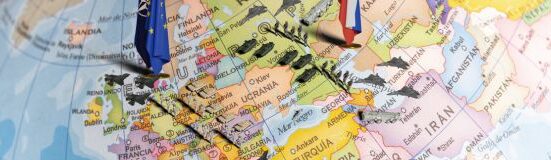


Ukrainian President Volodymyr Zelensky has announced that his forces are currently holding down 50,000 Russian troops in the Kursk region of Russia, limiting Moscow’s ability to launch attacks within Ukraine. In his daily address, Zelensky stated that the ongoing Ukrainian operation in Kursk was having a significant impact on Russia’s military strength, even as skepticism remains from some Western allies about its effectiveness.
According to the Institute for the Study of War, when Ukraine began its unexpected incursion into Kursk in early August, Russia had stationed around 11,000 troops there. However, reports from The New York Times suggest that Russia has managed to bolster its forces in Kursk without needing to redeploy troops from the conflict in Ukraine, reportedly receiving assistance from North Korean soldiers who are being prepared for a counter-offensive.
Zelensky explained that the operation in Kursk was crucial for weakening Russia’s offensive capabilities inside Ukraine. “Our forces are holding back 50,000 of the occupier’s army personnel, preventing them from being deployed to other fronts on Ukrainian territory,” Zelensky said. He also highlighted that Ukraine’s presence in Kursk was critical in preventing Russian assault units from advancing into the Donetsk region, a key battleground for months.
Ukraine’s Commander-in-Chief, Gen. Oleksandr Syrskyy, also noted that without the Ukrainian forces in Kursk, Russia’s best assault units would likely be attacking Ukraine’s positions in Donetsk, where heavy fighting continues. The region remains one of the most contested areas in the war, with reports of both sides targeting infrastructure, including a dam near the Ukrainian-controlled town of Kurakhove.
The New York Times also reports that Russia’s planned counter-offensive in Kursk could involve up to 50,000 Russian and North Korean troops, according to US and Ukrainian officials. Moscow, however, has not confirmed the deployment of North Korean soldiers. Both nations have been strengthening their ties since Russia’s international isolation, and North Korea has reportedly sent significant military hardware to Russia, including ballistic missiles.
The growing alliance between North Korea and Russia has raised concerns in the West, with NATO officials suggesting that Pyongyang is benefiting from Russia’s military technology. Meanwhile, discussions on the war continue in various international forums, including speculation about the potential impact of Donald Trump’s recent victory in the US presidential race on the conflict’s trajectory.