
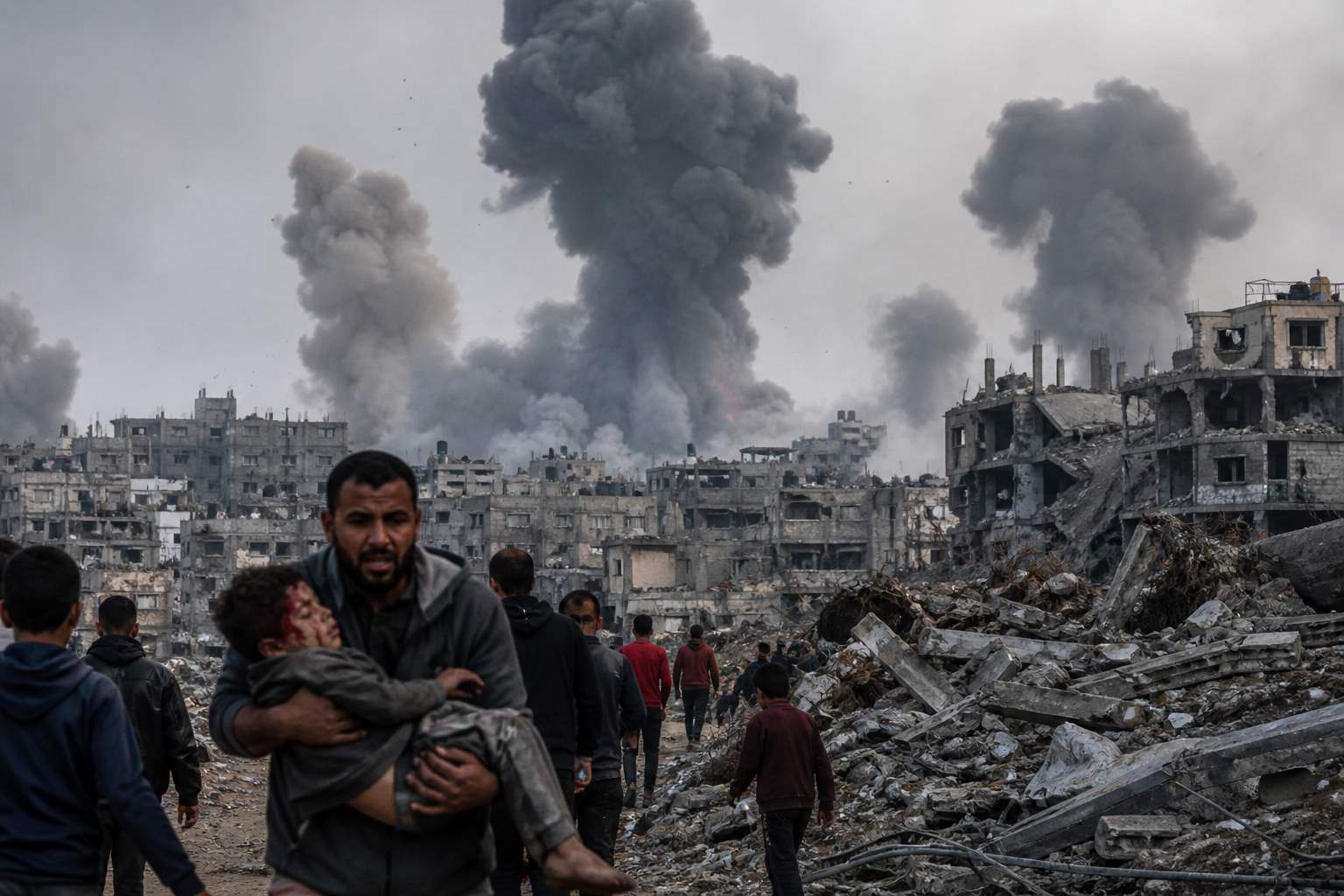
Local health officials and IDF statements provide conflicting data on impact as operations intensify in northern areas.
May 5, 2026
By Global War News Editorial
Renewed military activity in northern Gaza has resulted in a significant rise in reported casualties over the last 24 hours. According to statements from local health officials in the district, several strikes targeted residential sectors in areas previously designated as evacuation zones. These officials report that the influx of wounded has overwhelmed the remaining functional medical points in the north, which are currently operating with minimal supplies.
The Israel Defense Forces (IDF) issued a statement confirming that their units are conducting “targeted operations” against reorganized militant cells in the northern districts. The IDF maintained that these strikes are based on precise intelligence and are intended to dismantle infrastructure used to launch projectiles into Israeli territory. They noted that warnings were issued to the remaining civilian population prior to the commencement of the current phase of the operation.
The discrepancy between reported civilian impact and military objectives remains a central point of international concern. While local medical sources assert that a high proportion of the casualties are non-combatants, the IDF stated that its operations are focused on armed combatants. Independent verification of these figures remains difficult due to restricted access for international observers and the ongoing nature of the combat.
Context and Background
The northern districts of Gaza have been a focal point of intense military engagement since the escalation of the conflict. Despite previous declarations that militant infrastructure in these areas had been largely dismantled, recent weeks have seen a resurgence of skirmishes. This suggests a pattern of tactical reorganization by armed groups, leading to a cycle of renewed military intervention.
Economically, the continued focus on the north has further disrupted the fragile aid corridors. The World Food Programme has previously indicated that the northern population faces the highest risk of food insecurity due to the logistical challenges of delivering supplies through active combat zones.
Analysis: The Challenge of Verifiable Data
The current spike in reported casualties highlights the persistent “information gap” that characterizes this conflict. Because international media access is limited, the global community relies on two primary, yet conflicting, narratives: the figures provided by the Gaza-based health ministry and the operational summaries from the IDF.
Observers note that without a neutral third-party verification mechanism on the ground, casualty figures are often utilized as tools of psychological and information warfare. For the intelligent reader, this necessitates a cautious approach to any specific number cited by either side. The escalation in the north also raises questions about the long-term viability of “clear and hold” strategies in densely populated urban environments, as militant groups appear able to filter back into areas once the primary military force rotates out.
Current Status and Outlook
As of May 5, military operations in the northern districts show no signs of immediate cessation. International mediators, including representatives from Qatar and Egypt, reportedly continue to seek a framework for a humanitarian pause, though official statements suggest that significant gaps remain between the parties regarding the terms of a ceasefire. The immediate outlook for the northern districts is one of continued volatility, with civilian movement likely to remain restricted by active “red zones.”
Source Disclosure: This report incorporates information from official IDF press releases, public statements from Gaza-based health authorities as reported by Reuters and the Associated Press, and humanitarian situation reports from the World Food Programme.
This article is based on publicly available reporting from named international news agencies and attributed official statements. All claims about ongoing events are attributed to their original sources. Analysis sections represent the editorial interpretation of reported facts and do not constitute advocacy for any party to the described conflict. AI tools may be utilized for image generation to assist in explaining complex concepts, as well as for refining grammar, spelling, and other linguistic enhancements. However, all original content is produced, fact-checked, and revised by the editorial team. This publication does not take political positions on active military conflicts.